
Blooming
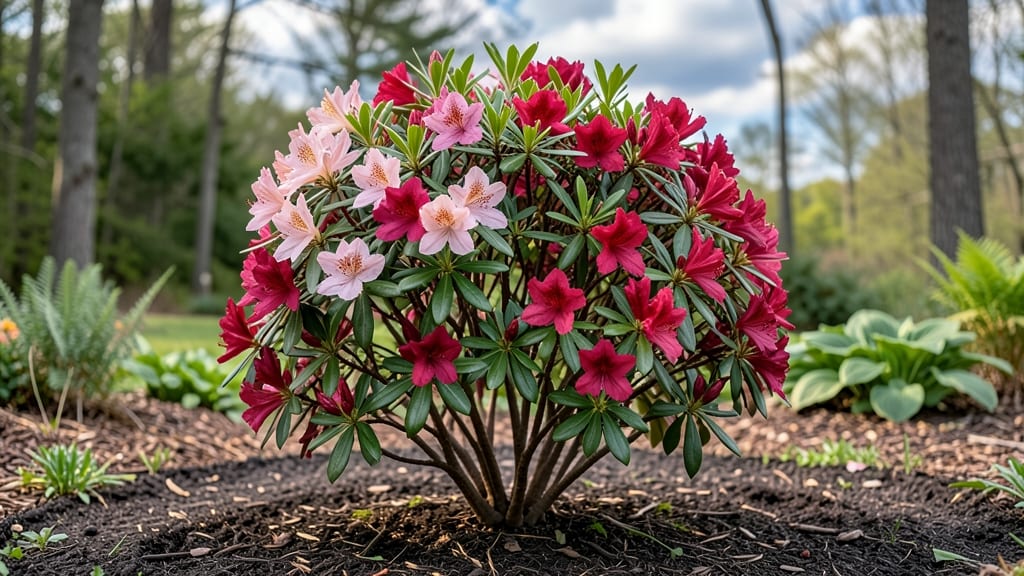
Azaleas bloom in Michigan between late April and early June, with early varieties like Knaphill opening in late spring and later types such as Girard’s reaching peak bloom in early summer, influenced by frost patterns and regional microclimates.
Michigan's azalea blooming window varies by cultivar, with early varieties often pushing through snowmelt in late April while late bloomers may wait until June. 🌸 The state's USDA zones 5-6 create a delicate balance—some hardy hybrids like Rhododendron can handle light frosts, while tropical varieties need shelter.
Gardeners in northern Michigan typically see blooms 2-3 weeks later than those in southern regions due to temperature differences.
For best results, plant azaleas in partially shaded areas with acidic soil (pH 4.5-6.0) and mulch heavily to protect roots from winter temperature swings.
Pruning right after blooming encourages stronger next-year flowers, while late frosts can damage delicate buds—covering plants with frost cloth during late spring cold snaps often extends the bloom period by 1-2 weeks.
💡 In This Article
- Michigan Azalea Blooming Seasons by Variety
- Optimizing Azalea Bloom Time in Michigan Gardens
Michigan azalea blooming seasons by variety
Michigan's azalea blooming seasons hinge on cultivar type and hardiness. Early bloomers like Knaphill (a Rhododendron hybrid) typically open their vibrant flowers in late April to early May, often just as snowmelt reveals the landscape.
These varieties have adapted to handle light frosts, with buds forming the previous fall and requiring 1,000-1,200 chill hours below 45°F to trigger blooming. In contrast, late varieties such as Girard's may wait until late May or early June, aligning with warmer temperatures that reduce frost risk.
The state's USDA hardiness zones 5-6 create distinct timing variations. Northern Michigan gardens (zone 5) often see blooms 2-3 weeks later than southern regions (zone 6) due to colder spring temperatures.
For example, Rhododendron canescens, a native species, blooms in June in northern areas but may flower as early as May in southern Michigan. Frost-sensitive cultivars like Enzian (a German hybrid) require careful protection, as late frosts below 28°F can destroy buds entirely.
Color plays a subtle role in bloom timing too. Darker blooms like deep reds often emerge slightly later than lighter pinks or whites because their pigmentation requires more warmth to develop fully.
The Exbury hybrids, known for their compact growth, typically bloom 1-2 weeks earlier than their larger Girard's counterparts, making them ideal for northern Michigan gardens where seasons are shorter.
Gardeners should note that azalea blooming windows can shift by 1-2 weeks annually based on winter severity. Harsh winters with prolonged sub-zero temperatures may delay blooming, while mild winters can advance it.
This variability explains why some years see azaleas flowering in April while others wait until June—it's not just about the calendar, but the cumulative effect of seasonal weather patterns.
For those planning garden displays, consider planting a mix of early, mid, and late bloomers. This staggered approach ensures continuous color from late April through June. For instance, pairing Knaphill (early) with Girard's (late) creates a 6-week bloom window—a gardener's dream for extended seasonal interest.
One fascinating mechanism is how azaleas "bud out" in stages. The terminal buds (at the tips of branches) often open first, followed by lateral buds along the stems. This sequential blooming can extend each plant's display by 7-10 days, making even single varieties appear more abundant. 🌸