
Blooming
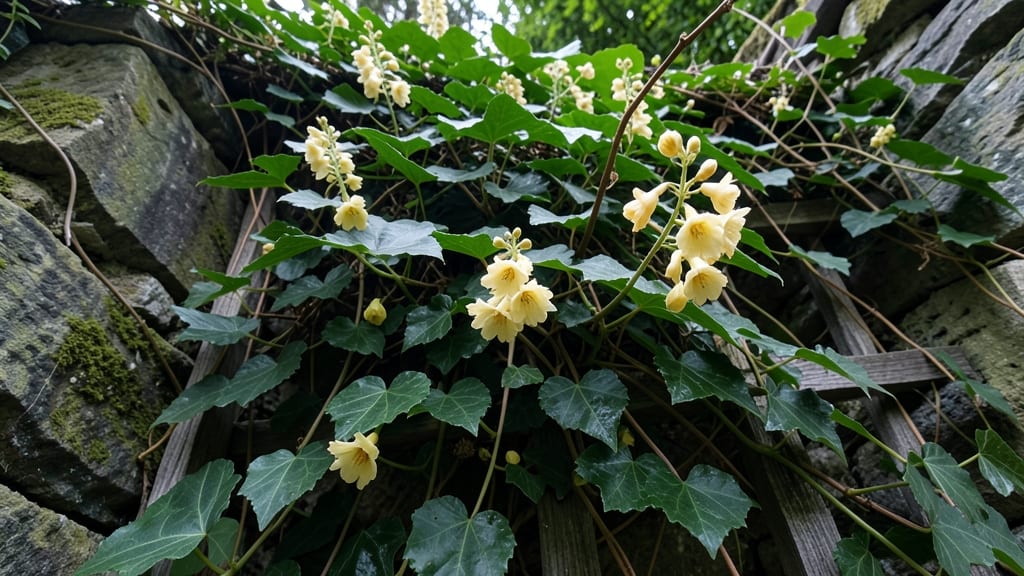
Transform your vertical space into a blooming paradise with these 10 climbing plants that deliver non-stop summer color. Whether you crave sun-drenched vines or shade-loving beauties, these varieties ensure your garden stays vibrant from June through September—and sometimes beyond!
Clematis Jackmanii: The Queen of Summer Climbers
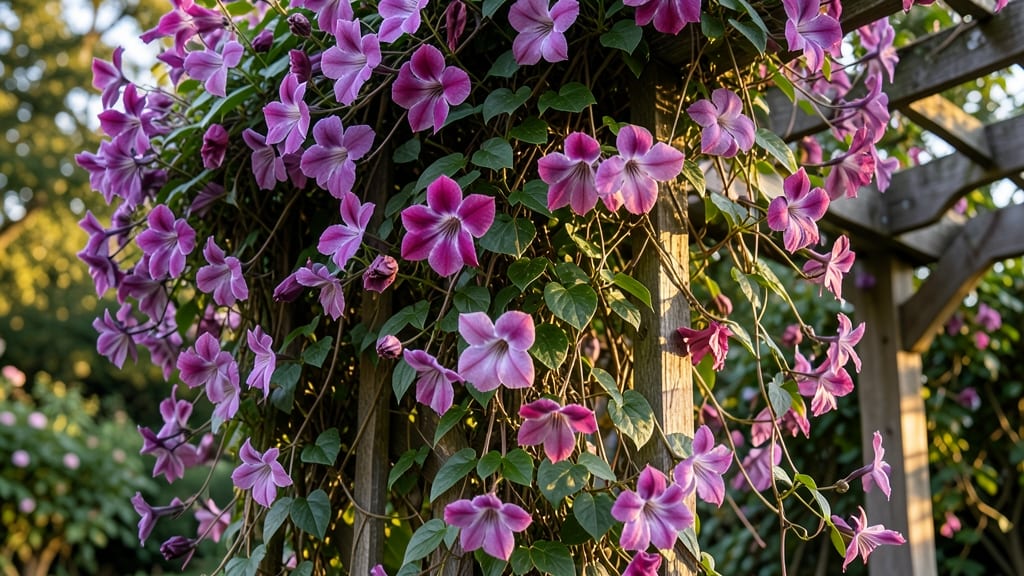
If you want a climbing plant that turns heads with its deep purple-pink blooms from early summer until frost, Clematis Jackmanii is the undisputed queen. This vigorous variety produces unmatched repeat blooms, making it a showstopper on trellises, arbors, or pergolas where it can soak up 6+ hours of full sun daily.
For best results, pair it with deep-rooted companions like roses or barberry to create a balanced root system—this prevents the clematis from competing for moisture. Prune in late winter or early spring to encourage lush growth, and feed with a phosphate-rich fertilizer every 4-6 weeks during the blooming season. The secret to its success? Planting it slightly deeper than the root ball to protect the stems from harsh sunlight.
This variety is perfect for gardeners who want low-maintenance yet high-impact vertical color—ideal for small spaces, cottage gardens, or even urban balconies with sturdy supports. 🌻
Passionflower Vine: Exotic Blooms for Hummingbird Gardens
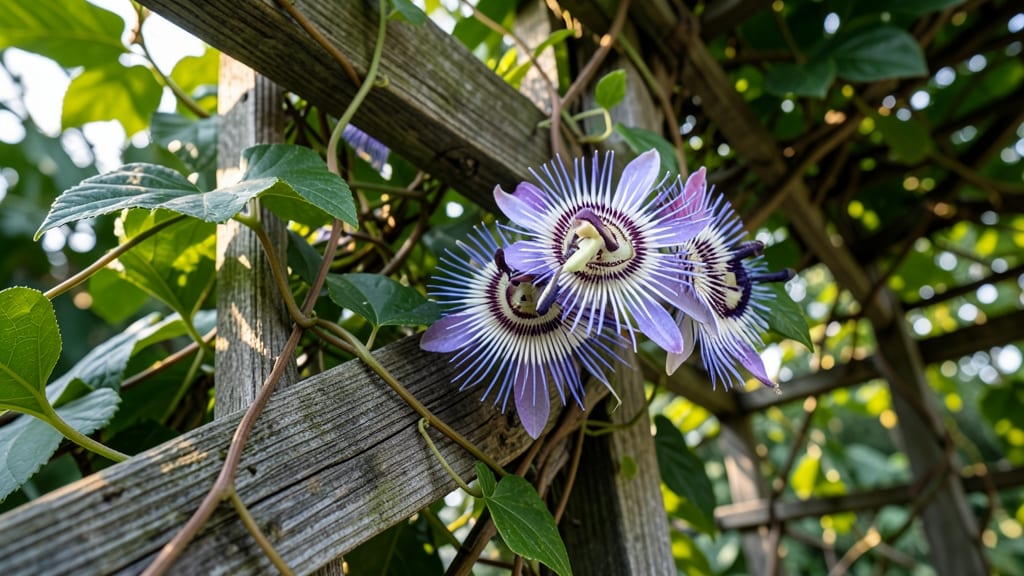
Bring a touch of the tropics to your garden with passionflower vine (Passiflora), a stunning climber that thrives in partial shade while attracting hummingbirds with its exotic, intricate blooms. This vine produces vibrant purple, white, or blue flowers shaped like delicate, layered masterpieces—perfect for adding drama to pergolas, fences, or trellises.
Beyond its beauty, passionflower offers a dual-purpose harvest: its edible fruit (passion fruit) ripens in late summer, providing a tangy treat for you and wildlife. Plant in well-draining soil and water moderately—it tolerates drought once established. Prune lightly in early spring to encourage bushier growth and more blooms.
This vine is ideal for gardeners who love low-maintenance climbers with high rewards, especially in USDA zones 7-11. The hummingbirds will thank you too! 🌿
Morning Glory: Fast-Growing Annual for Instant Color
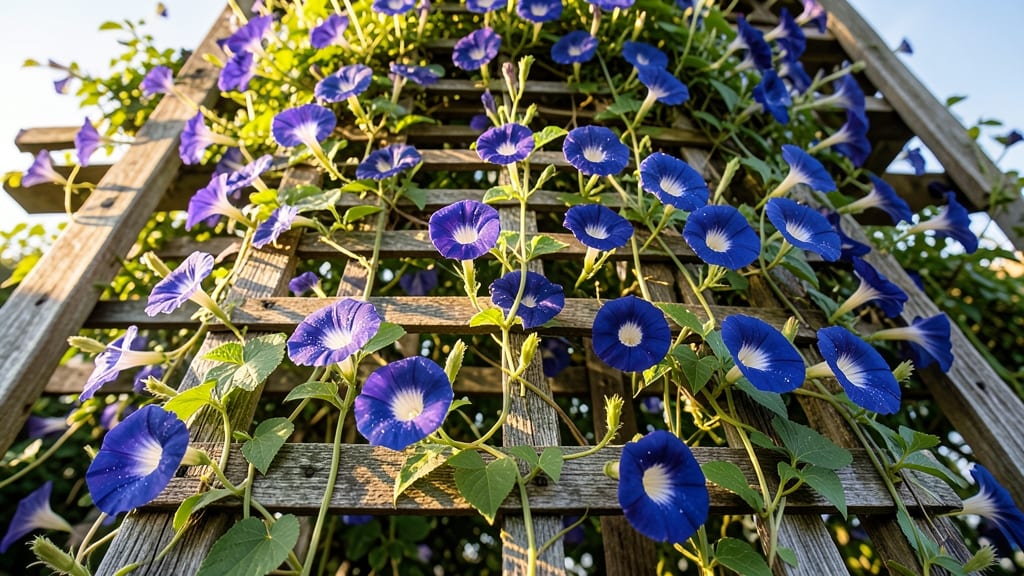
Want to transform a bare trellis or balcony into a riot of color in just a few weeks? Morning glories are the ultimate fast-track annual, sprouting from seed to bloom in under 60 days—often overnight, thanks to their namesake habit of opening fresh flowers each morning.
These self-seeding champions thrive in full sun and adapt effortlessly to trellises, containers, or even fence posts. Choose from classic blue varieties like 'Heavenly Blue' or soft pink 'Starlight' for a dreamy effect. For maximum impact, scatter seeds directly in the soil—no transplanting required—and watch them scramble upward at a rate of 10+ inches per week.
Perfect for beginners, urban gardeners, or anyone craving low-effort summer color, morning glories reward minimal care with maximal drama. Just remember to deadhead spent blooms to encourage more flowers—though many varieties will happily reseed for next year's show. ✨
Honeysuckle Lonicera Periclymenum: Fragrant Summer Perfume
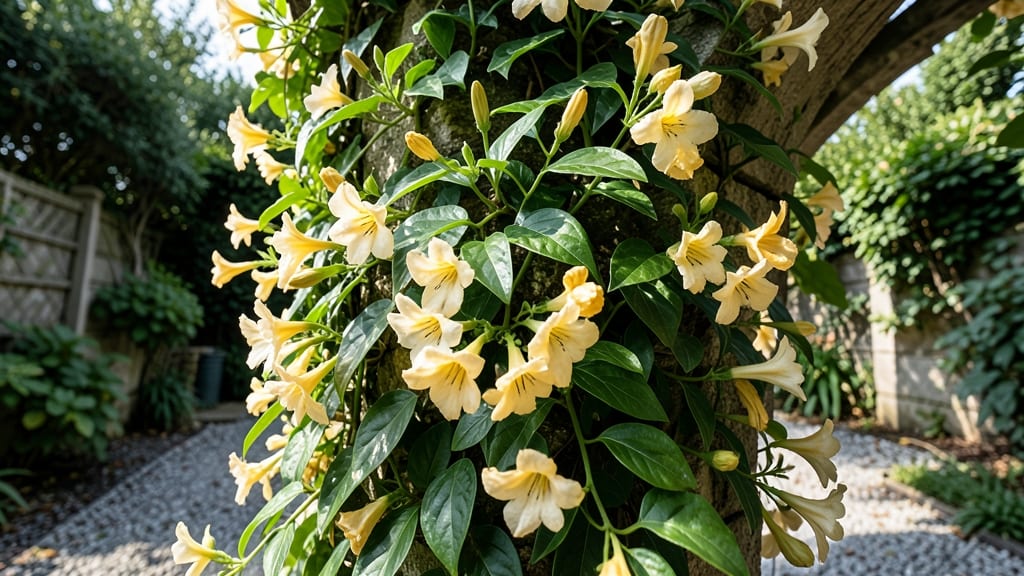
Transform your garden into a fragrant sanctuary with honeysuckle (Lonicera periclymenum), a climbing vine that fills the air with sweet perfume from early summer until frost. Unlike many climbers, it thrives in both partial shade and full sun, making it versatile for almost any vertical space.
This butterfly magnet produces tubular, golden-yellow flowers that bloom continuously, creating a natural perfume that lingers in the evening breeze. Plant it near patios, trellises, or fences—its drought-tolerant nature means less watering once established. Prune lightly after flowering to encourage bushier growth and more blooms next season.
Perfect for beginners or busy gardeners, honeysuckle adds year-round interest with its glossy foliage and persistent blooms. 🌿
Star Jasmine Trachelospermum Jasminoides: Night-Blooming Elegance
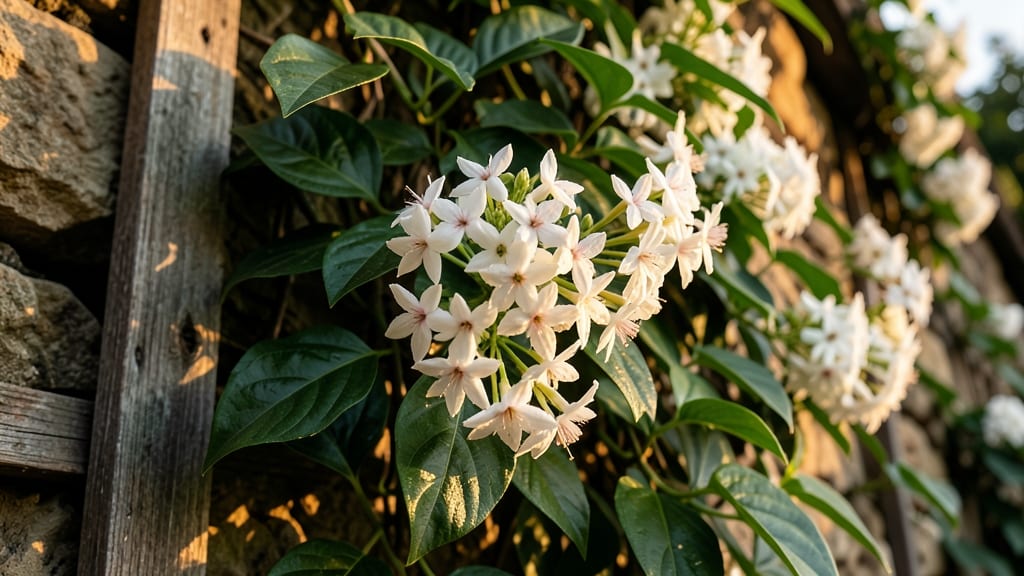
If you love the idea of a garden that smells as good as it looks, star jasmine (Trachelospermum jasminoides) delivers with its intoxicatingly sweet fragrance that fills the air as its white star-shaped flowers open in the late afternoon. Unlike many climbers that bloom in the morning, this vine saves its best performance for twilight hours, making it perfect for evening strolls or romantic garden dinners.
This evergreen vine thrives in full sun to partial shade, making it incredibly versatile for trellises, arbors, or as a living screen along fences. It’s also drought-tolerant once established, so it’s ideal for gardeners who want low-maintenance beauty. Prune lightly after flowering to maintain shape, and watch it reward you with year-round glossy foliage and seasonal blooms. The glossy, dark green leaves add texture even when flowers fade.
Star jasmine is especially magical for urban gardeners with small spaces or those who want to create a fragrant privacy screen without sacrificing sunlight. Its adaptability and intoxicating scent make it a standout for both practical and sensory gardens. 🌿
Sweet Pea Lathyrus Odoratus: Edible Fragrance for Containers
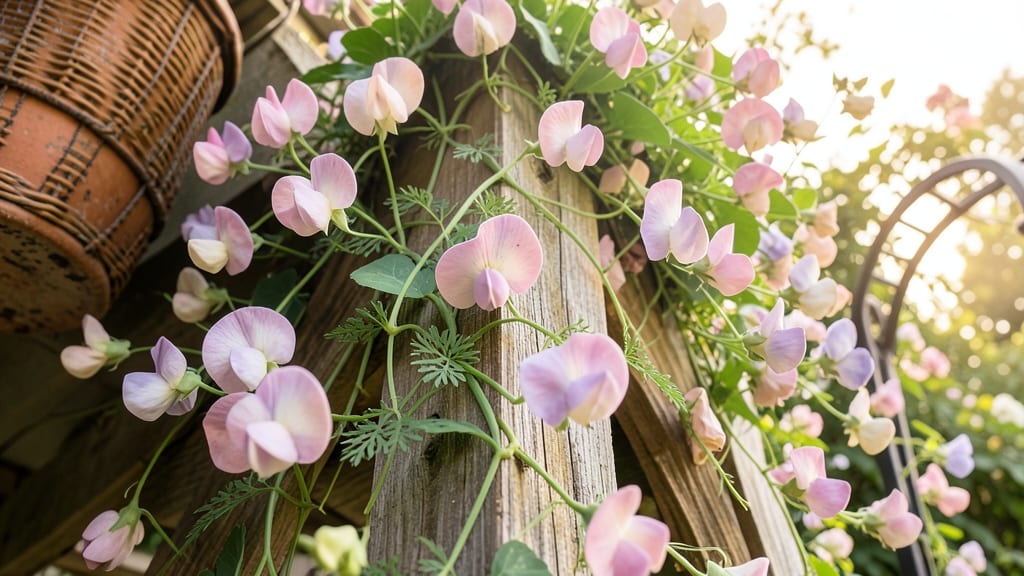
Add a whimsical touch to your garden with sweet pea (Lathyrus odoratus), a fragrant climber that doubles as a delicate edible flower. These pastel blooms—ranging from blush pink to lavender—create a romantic cascade perfect for containers, hanging baskets, or small trellises in full sun.
Sweet peas thrive in cool weather and bloom prolifically from early summer until frost, making them ideal for season-long color. Plant seeds directly in well-draining soil and provide a sturdy support like a tomato cage or obelisk. Deadhead spent blooms to encourage more flowers, and enjoy their sweet, clover-like scent—plus, you can pluck the blossoms for salads or floral arrangements!
This variety is perfect for urban gardeners, cottage-style beds, or balcony planters where space is limited but fragrance is cherished. 🌷
Wisteria Floribunda: Dramatic Purple Cascades for Large Spaces
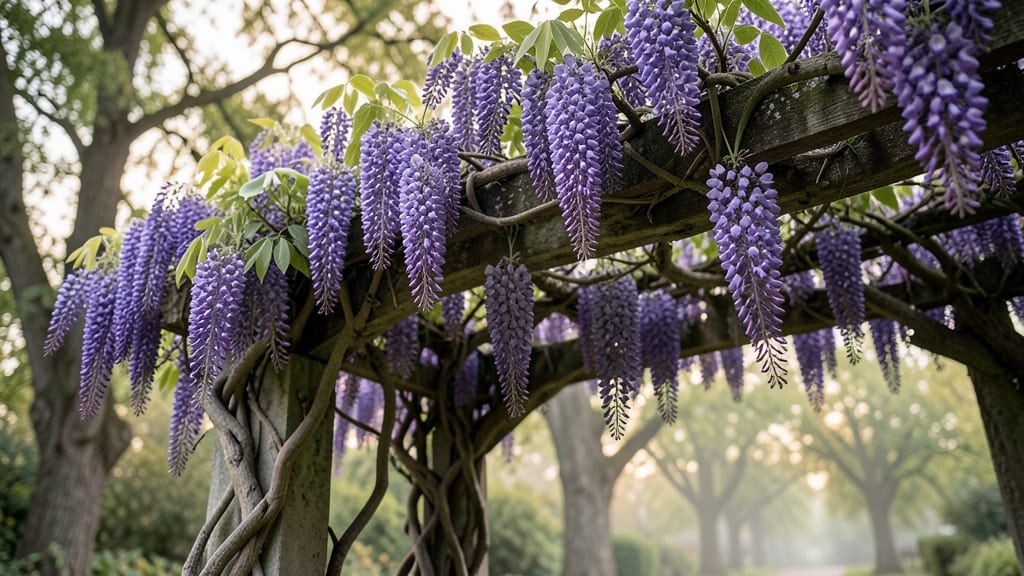
If you're ready to make a bold statement in your garden, Wisteria Floribunda delivers dramatic purple cascades that transform any large space into a romantic retreat. This vigorous climber produces foot-long racemes of fragrant blooms in late spring, creating a breathtaking vertical display that lasts for weeks—ideal for pergolas, arbors, or sturdy trellises where it can fully express its grandeur.
For this sun-loving powerhouse, you'll need 6+ hours of direct sunlight daily and a strong support structure capable of handling its 20+ foot vines and heavy flower clusters. Plant in well-draining soil enriched with organic matter, and water deeply during establishment. The key to managing Wisteria Floribunda is pruning—conduct major pruning in late winter to control size and shape, while removing old wood encourages fresh growth and more abundant blooms next season.
This isn't a plant for beginners—it demands space, patience, and commitment—but the reward is unmatched vertical drama that elevates any garden. Perfect for experienced gardeners with large properties or those dreaming of a Japanese-inspired garden with sweeping floral curtains. ✨
Cobaea Scandens: Cup-and-Saucer Vine for Shady Spots
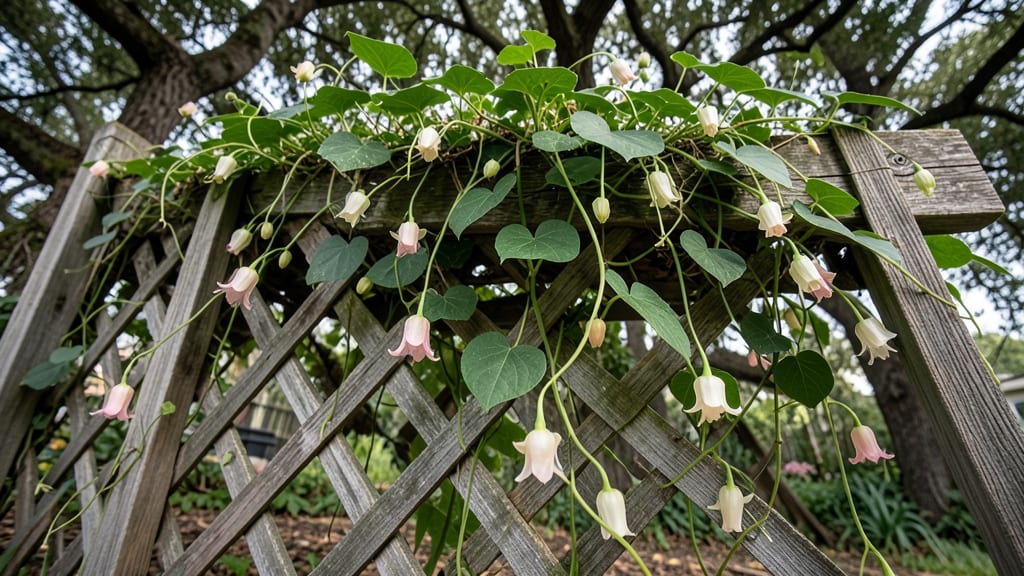
If your garden has shady spots that feel overlooked, Cobaea scandens—the cup-and-saucer vine—will turn them into whimsical focal points. This fast-growing annual produces bell-shaped flowers in soft white and delicate pink, dangling like tiny lanterns from its heart-shaped leaves, perfect for adding charm to arbors, trellises, or fences where sunlight is limited.
Thriving in partial to full shade, this vine is a cool-climate hero, flourishing even where other climbers struggle. Plant it in well-draining soil and provide a sturdy support—it can climb 10+ feet in a single season! Deadhead spent blooms to encourage more flowers, and watch as it transforms bare walls into a romantic, fairy-tale-like display by midsummer.
Ideal for gardeners in USDA zones 2-10, this vine is the secret weapon for shady gardens, urban courtyards, or even container growing—just ensure it gets some indirect light. Its dreamy blooms will have your neighbors asking for the name of this magical climber! 🌷
Black-Eyed Susan Vine Thunbergia Alata: Bright Orange Summer Showstopper
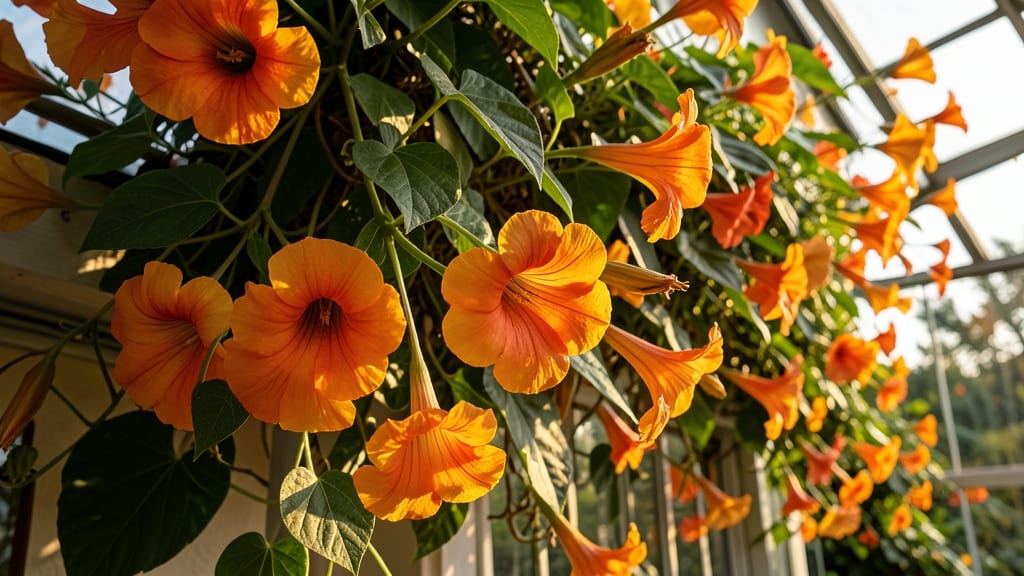
If you're craving a bold splash of color that lasts all summer, Black-Eyed Susan Vine (Thunbergia alata) delivers with its vibrant orange and yellow trumpet-shaped blooms. This tropical beauty thrives in full sun, making it perfect for warm climates, greenhouses, or sun-drenched balconies where it can climb trellises or cascade from containers.
The real magic? Its self-cleaning seed pods—once flowers fade, they drop seeds naturally, ensuring next year's display without messy deadheading. Water when the top inch of soil dries, and feed monthly with a balanced fertilizer for continuous blooms. With minimal care, this vine rewards you with non-stop color from June through frost.
Ideal for gardeners in USDA zones 10-11 (or as an annual in cooler areas), it's the perfect choice for those who want high-impact, low-maintenance drama with minimal effort. 🌻
Ivy Honeysuckle Lonicera Henryi: Drought-Tolerant Shade Lover

If your garden has shady corners where most climbers refuse to thrive, ivy honeysuckle (Lonicera henryi) is your secret weapon. This underrated vine sports dark green, ivy-like foliage paired with clusters of fragrant yellow flowers that bloom from spring through summer—all while requiring minimal water once established.
Perfect for drought-tolerant shade gardens, it clings effortlessly to walls, fences, or trellises without aggressive growth. Plant in moist but well-draining soil and provide partial to full shade—it handles humidity better than sun-loving climbers. The semi-evergreen leaves add year-round interest, while its butterfly-friendly blooms extend the garden's life cycle. Prune lightly after flowering to maintain shape and encourage denser growth.
This is the ideal choice for urban gardeners, shade-loving enthusiasts, or anyone craving low-maintenance vertical beauty. Its adaptability makes it a standout for problem areas where other climbers fail. 💚