
Blooming
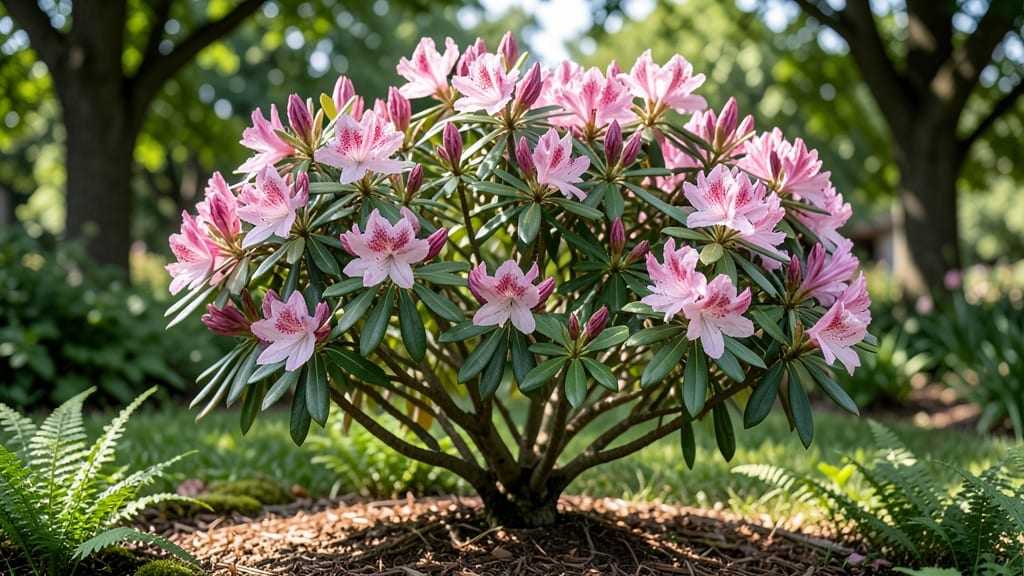
Azaleas don't bloom all summer; they flower most intensely in spring, with some late-season types lasting into early summer. Climate and care determine how long blooms persist, while summer heat often shortens their display.
Azalea blooming follows a natural seasonal rhythm tied to temperature shifts.
Most varieties rely on cooler spring weather to trigger flower production, with peak displays lasting 4-6 weeks. 🌸 Some late-blooming types, like 'Southern Indica' or 'George Taber,' may extend flowers into June, but only if daytime temperatures stay below 85°F.
Heat stress after peak bloom causes buds to drop prematurely, which is why I always monitor my plants' shade needs during summer months—especially in southern climates where prolonged heat is common.
What's interesting is how azaleas respond to daylight changes. Unlike some plants that bloom continuously, azaleas use a combination of temperature sensitivity and daylight hours to regulate their flowering cycle. This biological clock means you can't force summer blooming—even with extra care.
Instead, focus on post-bloom maintenance like light pruning (after flowers fade) and consistent watering to support next year's buds.
💡 In This Article
- Azalea Bloom Cycles: How Heat and Variety Affect Flowering Seasons
- Extending Azalea Blooms: Pruning, Watering, and Heat Management Tips
Azalea bloom cycles: how heat and variety affect flowering seasons
Azalea blooming is triggered by a complex interplay of temperature and daylight, primarily occurring when daytime temperatures hover between 50-70°F during their dormant winter months. This chilling requirement—similar to what apples need for fruit production—signals the plant to shift from vegetative growth to flower bud formation.
Once buds form, they require consistent 60-70°F days and cooler nights (55°F) to open fully, which explains why spring is their prime blooming window. 🌸
The variety makes a significant difference in bloom timing. Early-season types like 'Hino Crimson' typically bloom in late April, while late-season varieties such as 'Southern Indica' may extend flowers into June—though only if summer temperatures stay below 85°F.
Heat stress above 90°F triggers a physiological response where the plant prioritizes survival over flower production, causing buds to drop within 3-5 days of exposure. This is why azaleas in southern climates often have shorter bloom seasons compared to their northern counterparts.
Daylight length also plays a role, though it's less critical than temperature. Azaleas are considered "short-day" plants, meaning they respond to decreasing daylight hours in autumn to prepare for spring blooming. However, unlike poinsettias (another short-day plant), azaleas don't require strict photoperiod control—they're more influenced by temperature cues.
This is why you won't see continuous summer blooming, even with supplemental lighting. The plant's internal clock is hardwired to expect cooler conditions for optimal flowering.
What most gardeners don't realize is that azaleas form next year's flower buds during the current growing season—specifically in late summer and early fall. These buds develop at the tips of new shoots and require consistent moisture and balanced nutrients (like 10-10-10 fertilizer) to mature properly.
If summer heat causes drought stress, these future buds may fail to develop, leading to reduced blooms the following spring. This is why post-bloom care is just as important as the flowering season itself.
Consider this comparison: A well-cared-for 'George Taber' azalea in Atlanta might bloom for 6-8 weeks in spring, while the same variety in Houston—where summer temperatures frequently exceed 95°F—may only bloom for 3-4 weeks before heat stress takes over.
The difference lies in how quickly the plant's metabolic processes shift from flowering to survival mode. 🌡️
For gardeners in hot climates, selecting heat-tolerant varieties like 'George L. Taber' or 'Formosa' can extend the bloom window slightly, but even these won't bloom continuously. The key is managing environmental conditions rather than expecting summer-long displays.
Strategic afternoon shade (using 30-50% shade cloth) and deep watering (1-2 inches per week) can help mitigate heat stress and preserve existing blooms longer.