
Blooming
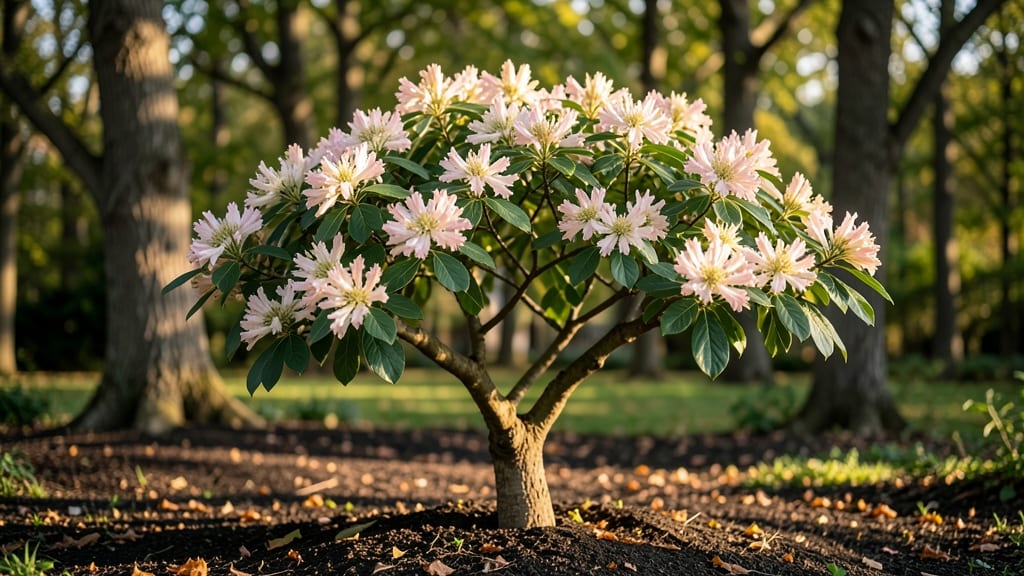
A dogwood bloom looks like a delicate four-petaled flower with showy bracts in creamy white, soft pink, or deep red surrounding a tiny central cluster. These starburst-shaped blooms appear in spring, paired with glossy green leaves, while fall transforms them into fiery red or purple foliage displays.
A dogwood's signature appearance starts with those eye-catching bracts—modified leaves that frame the true flowers like a natural halo. 🌸 The blooms themselves are small and four-lobed, often overlooked in favor of their vibrant outer show.
What makes them truly special is their seasonal transformation: spring's floral display gives way to summer's clusters of bright red berries, which birds adore, before the foliage turns into autumn's fiery palette.
Each species has its own twist—some like Cornus kousa have larger, more rounded bracts, while Cornus florida offers classic starburst shapes that gardeners love for their timeless beauty.
These trees aren't just pretty faces—they're landscape stars year-round.
The glossy leaves provide lush green backdrops in summer, while their winter exfoliating bark adds texture to dormant gardens. 🌿 What's fascinating is how their colors change with the seasons, making them one of the most dynamic plants for any yard or park setting.
💡 In This Article
- Identifying Dogwood Flower Types and Seasonal Changes
- Best Dogwood Varieties for Year-Round Garden Beauty
Identifying dogwood flower types and seasonal changes
The most iconic dogwood, Cornus florida, showcases its signature starburst blooms in late spring, featuring four creamy-white petals surrounded by four larger, showy bracts that create the illusion of a single flower.
These bracts can measure 1-1.5 inches wide and appear in shades ranging from pure white to soft pink, with some cultivars like 'Rubra' displaying deep rose hues. The true flowers themselves are tiny—just 0.25 inches across—and clustered in the center, often overlooked by admirers focused on the bracts' dramatic display.
In contrast, Cornus kousa (also called Korean dogwood) presents a more rounded, almost lantern-like bloom with bracts that curve backward, creating a unique three-dimensional effect.
Its flowers typically measure 2-3 inches in diameter and come in shades of pink, red, or white, with some varieties like 'Milky Way' featuring double blooms that resemble peonies.
What sets this species apart is its papery, four-lobed bracts that remain attached longer than other dogwoods, often lasting 4-6 weeks instead of the usual 2-3 weeks for Cornus florida.
The seasonal transformation begins in summer when the flowers give way to clusters of bright red berries that birds eagerly devour. These berries develop from the central flower cluster and typically ripen in late summer to early fall.
The foliage then undergoes its most dramatic change: while spring leaves are glossy green, autumn transforms them into fiery reds, purples, or oranges depending on the cultivar. For example, 'Cherokee Princess' displays deep purple foliage in fall, while 'Stellar Pink' maintains its pinkish hue longer than other varieties.
What's fascinating about dogwoods is their bark's winter character—when the leaves fall, the exfoliating bark reveals itself in layers of gray, brown, and cinnamon hues. This textural contrast makes dogwoods stand out even in dormant seasons.
The key to identifying species lies in these details: Cornus florida has horizontal branch layers, while Cornus kousa grows more upright with a vase-like shape. 🌿 The berries also differ—Cornus florida produces single berries, whereas Cornus kousa forms clusters of 3-5.
Light conditions play a crucial role in their appearance: dogwoods planted in full sun develop more vibrant bracts and foliage colors, while those in partial shade may produce paler blooms.
The pH level of the soil (ideally 5.0-6.5) affects leaf color intensity too—acidic soils enhance the reds and purples in autumn. This is why gardeners often amend clay soils with pine needles or sulfur to create optimal growing conditions for these color displays.
Consider this visual timeline for a Cornus florida tree:
- Late April-May: Starburst blooms with white/pink bracts
- June-August: Glossy green leaves with developing berries
- September-October: Fiery red/purple foliage with ripe berries
- Winter: Exfoliating bark with horizontal branch layers