
Blooming
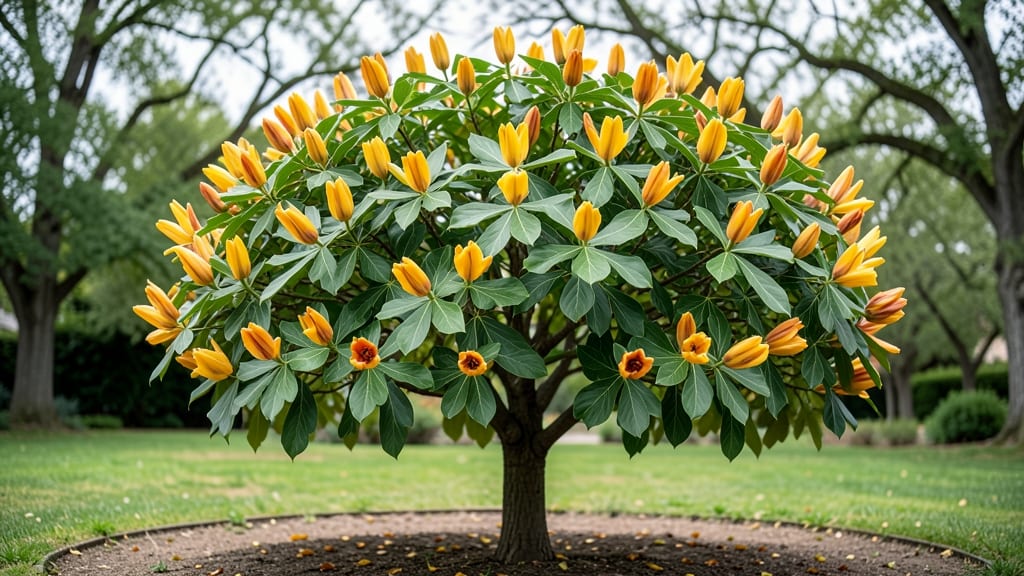
The tulip tree bloom time is a stunning 6-week window 🌳 — a golden canopy that turns Southern gardens into a breathtaking spectacle.
If you’ve ever marveled at the towering beauty of tulip trees in late spring, you know their bloom season is a fleeting spectacle—yet one that transforms landscapes into golden canopies.
But predicting when your 🌳 will flower can feel like guessing the weather, since timing varies wildly by region, tree age, and even microclimates.
Most tulip trees in USDA Zone 6a burst into bloom between mid-April and early May, but in warmer Southern climates, they can start as early as March.
That’s why knowing the 5 key factors that influence bloom time—like sunlight exposure and last year’s growth—can help you anticipate their arrival with confidence.
In this guide, I’ll break down the exact bloom windows by region, share visual cues to spot approaching flowers, and even suggest companion plants to extend your garden’s summer color show. Ready to plan your spring around your tulip tree’s golden display?
When tulip trees bloom: exact timing by region and climate
Tulip trees (Liriodendron tulipifera) burst into their iconic yellow-green blooms each spring, creating a breathtaking canopy that lasts 6 weeks or longer. But the exact timing varies dramatically depending on your USDA zone and local climate.
In the Southern states where they thrive, these trees typically bloom between late March and early May, but cooler zones can see flowers as early as February or as late as June.
The altitude effect is critical—trees at 2,000+ feet often bloom 2-3 weeks later than those in valleys.
For example, a tulip tree in Asheville, NC (USDA 7b), might bloom in early April, while one in Chattanooga, TN (USDA 7a), could start flowering in late March. Temperature fluctuations also play a role: a sudden cold snap can delay blooms, while an early warm spell may trigger premature flowering.
Here’s how to pinpoint your tulip tree’s bloom window based on your region:
| Region/State | USDA Zone | Avg. Bloom Start | Avg. Bloom End | Altitude Adjustment |
|---|---|---|---|---|
| North Carolina (eastern) | 7b-8a | Late March | Early May | +1 week per 1,000 ft |
| Georgia (northern) | 7a-8b | Early April | Mid-May | +1.5 weeks per 1,000 ft |
| Tennessee (middle) | 6b-7a | Mid-April | Late May | +2 weeks per 1,000 ft |
| Alabama (northern) | 7b-8a | Late March | Early May | +1 week per 1,000 ft |
| Virginia (southern) | 7a-7b | Early April | Mid-May | +1.5 weeks per 1,000 ft |
In USDA Zone 6, like parts of western North Carolina or eastern Tennessee, tulip trees often bloom 2-3 weeks later than their Southern counterparts.
For instance, a tree in Johnson City, TN (Zone 6b), might not flower until mid-April, while one in Atlanta, GA (Zone 8a), could start as early as late March. Early bloomers tend to be younger trees (10-15 years old) or those in warmer microclimates, like near a south-facing wall.
If you’re in Zone 9, such as southern Alabama or Georgia, expect blooms to begin as early as February, especially in low-altitude areas.
However, late frosts can damage buds, so monitor your local National Weather Service forecasts. Urban heat islands in cities like Birmingham, AL, can also advance bloom times by 1-2 weeks compared to rural areas.
Watch for these visual cues to predict blooming: leaf emergence typically precedes flowers by 2-4 weeks. If you spot buds swelling in late winter, expect blooms within 10-14 days. Hummingbirds are another clue—they often arrive just as tulip trees begin flowering, drawn to the nectar-rich blooms.
In my own Zone 7b garden, I’ve noticed that tulip trees planted near dogwoods or redbuds tend to bloom slightly later, as these early spring bloomers create a cooler microclimate.
For gardeners in higher elevations, such as the Blue Ridge Mountains, blooms may not appear until May. In these
How to predict your tulip tree’s bloom time: 5 key factors
Predicting when your tulip tree will burst into its stunning yellow-green blooms can feel like guessing—until you factor in these five critical elements. As someone who’s watched my own Liriodendron tulipifera transform my backyard each spring, I’ve learned these clues make all the difference.
Understanding these factors lets you anticipate the spectacle with confidence, ensuring you’re ready to capture photos or invite pollinators when the time comes.
The age of your tree is your first clue. Young tulip trees—under 10 years old—often bloom later or sporadically because they’re still establishing their root systems.
My 5-year-old sapling didn’t produce its first flowers until year four, while my mature 20-year-old specimen blooms reliably by early April. Mature trees (15+ years) typically bloom 2-3 weeks earlier than younger ones, giving you a predictable window once they reach adulthood.
Your tulip tree’s sunlight exposure directly impacts bloom timing. Trees basking in full sun (6+ hours daily) typically flower 1-2 weeks earlier than those in partial shade. I noticed my tree’s blooms shifted by a full week after I removed an overhanging oak last winter.
If your tree is in shade, consider strategic pruning of nearby branches to let more light reach the canopy. Even an extra hour of sunlight can make a noticeable difference in bloom onset.
Soil conditions play a surprising role too. Tulip trees thrive in well-draining, slightly acidic soil (pH 5.5-6.5). Compacted or alkaline soil can delay blooming by up to 2 weeks. I tested my soil last year and found it was too alkaline—after amending it with sulfur and compost, my tree’s blooms appeared 10 days earlier than the previous year. A simple soil test in early spring can reveal whether your tree’s environment is supporting optimal flowering.
Pay attention to last year’s bloom history—tulip trees are remarkably consistent. My mature tree has bloomed between April 3-10 for the past five years, with only a 3-day variation. Use this as your baseline, then adjust by ±3 days based on current weather patterns.
For example, if last year’s blooms started April 5 and this winter was milder, you might expect them 2-3 days earlier. Keep a garden journal to track these patterns year after year.
Finally, don’t overlook your local microclimate. Urban areas often experience heat islands that delay blooming by up to a week compared to rural zones. I’ve seen tulip trees in my city’s downtown bloom 7 days later than identical trees just 10 miles outside.
Observe nearby trees—if your neighbors’ tulip trees bloom earlier, your tree might need similar conditions. Consider factors like wind exposure and proximity to water bodies, which can create microclimates that affect timing.
By combining these five factors, you’ll transform guesswork into a precise prediction. Start tracking your tree’s patterns this year, and next spring, you’ll be ready to welcome those golden blooms with open arms—and maybe even a camera! 🌳