
Blooming
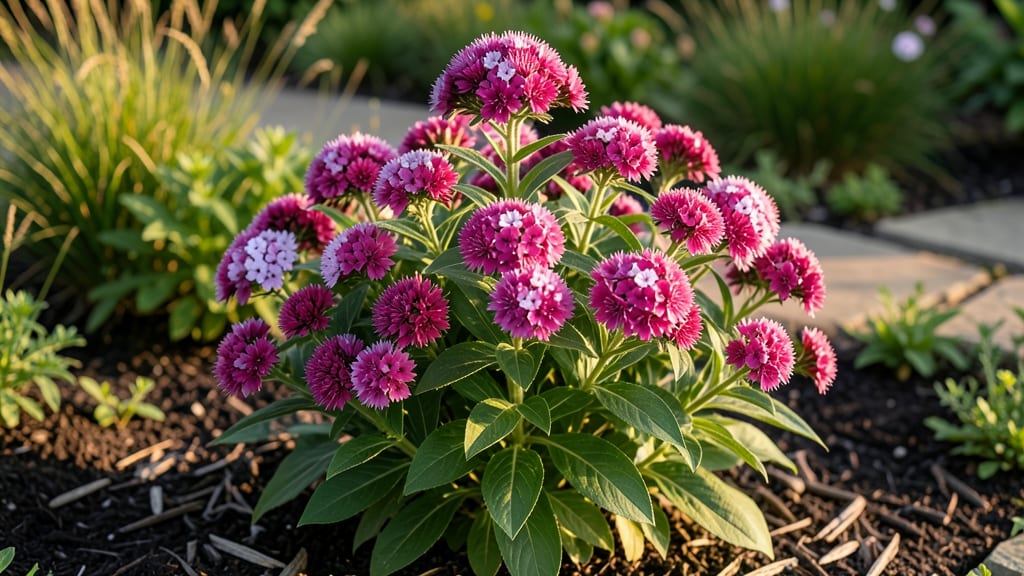
Garden phlox do bloom all summer long, though their flowering may pause or slow down during peak heatwaves or drought conditions. Many varieties can be encouraged to rebloom later in the season with proper pruning and consistent moisture.
Garden phlox are summer's workhorses, often putting on their best show from early June through August—but they're not immune to summer's extremes. 🌡️ When temperatures climb above 90°F or drought sets in, these hardy perennials may temporarily shut down flowering to conserve energy, with some varieties like tall garden phlox reacting more dramatically than dwarf phlox.
The good news? With strategic care, you can coax many varieties back into bloom by late summer, sometimes even extending their show into September or October.
This seasonal behavior isn't just about heat tolerance—humidity plays a surprising role too. High humidity can actually reduce pollen viability, leading to fewer blooms even when plants appear healthy.
That's why I always recommend monitoring both temperature and soil moisture during peak summer months, adjusting watering schedules to keep the soil consistently moist but not soggy.
A little late-summer pruning can work wonders too—cutting back spent blooms by about one-third encourages new growth and often triggers that second flush of flowers.
💡 In This Article
- How Heat and Humidity Affect Phlox Bloom Cycles
- Extending Phlox Blooms: Pruning and Watering Tips
How heat and humidity affect phlox bloom cycles
Garden phlox respond to summer heat through a fascinating botanical survival mechanism. When daytime temperatures exceed 85°F for extended periods, these perennials enter a semi-dormant state to conserve water—a process called heat stress dormancy.
This isn't true dormancy like winter, but rather a temporary pause where the plant redirects energy from flowering to root and leaf maintenance. 🌡️ The trigger is actually the combination of high temperatures and low soil moisture, which sends chemical signals to close stomata (leaf pores) and reduce water loss.
Humidity plays a crucial role in pollen production too. Phlox flowers require a specific balance of humidity—too dry (30% relative humidity or lower) causes pollen to dry out and become non-viable, while extreme humidity (>80%) can promote fungal growth that weakens blooms.
This explains why phlox often produce fewer flowers during summer heatwaves, even when plants look healthy. Tall garden phlox (Phlox paniculata) are particularly sensitive, as their taller stems create more surface area for water loss during heat stress.
The size difference between varieties creates real performance variations. Dwarf phlox (Phlox subulata) typically handle heat better because their compact growth stays closer to cooler, moisture-retaining soil. Their shallow root systems also allow them to access moisture from morning dew more efficiently.
In contrast, tall phlox varieties may show more dramatic bloom reductions during heatwaves, sometimes dropping 40-60% of their potential flowers without proper care.
What's happening at the cellular level is equally interesting. Heat stress causes phlox plants to produce more abscisic acid (ABA), a plant hormone that inhibits flowering while promoting root growth. This hormonal shift explains why you might see lush foliage but few blooms during peak summer—it's the plant's survival strategy.
The good news is this response is usually temporary, and with proper care, phlox can bounce back quickly when conditions improve.
Consider this real-world example: In Zone 6 gardens, I've observed that phlox blooms often peak in July but may slow by August unless given extra care.
The key difference between early and late summer blooms lies in the plant's energy reserves—early blooms come from stored winter energy, while late-season blooms require active photosynthesis to support. This is why consistent watering becomes even more critical in August.
Understanding these mechanisms helps explain why some gardeners report "phlox that bloom all summer" while others see dramatic slowdowns. The difference often comes down to microclimate conditions and care practices during the critical 80-90°F temperature range, where small adjustments can make a big difference in bloom performance.