
Blooming
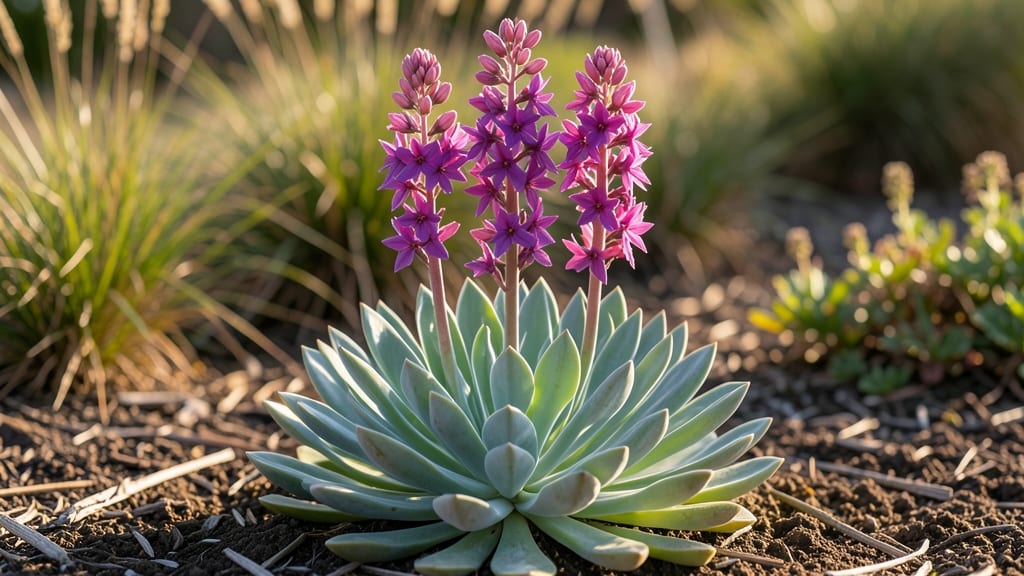
The Autumn Joy Sedum bloom time is the moment your garden transforms into a pink-purple dream, but timing it right can feel like guessing the weather.
If you’ve ever waited eagerly for those 🌸 clusters to appear—only to be met with silence—you’re not alone. This hardy succulent thrives on precision, and getting its bloom schedule right means the difference between a showstopper and a missed seasonal highlight.
In Zone 6a, where I garden, the magic usually happens between late summer and early fall, but light, soil, and even a little pruning can shift that window by weeks.
Below, I break down the exact months by zone, how to read your plant’s cues, and the simple tricks to extend those blooms into October—or even later.
You’ll also find out which companion plants pair perfectly with Autumn Joy Sedum to keep your late-season garden buzzing with color, plus the one pruning mistake that kills next year’s flowers.
Exact Autumn Joy Sedum Bloom Time by USDA Plant Hardiness Zones
Autumn Joy Sedum (Hylotelephium telephium 'Autumn Joy') is famous for its late-season pink-purple blooms, but its exact timing varies dramatically by USDA zone. In colder zones like 3–5, chilly springs delay flowering until late August, while warmer Zones 8–10 may see blooms as early as mid-July. Understanding these patterns helps you plan companion plants and maintenance for a seamless seasonal display.
Temperature fluctuations play a critical role—warmer springs accelerate growth, pushing blooms earlier, while cool summers can stretch the season. Gardeners in Zone 6 often report 3–4 week variations year-to-year based on weather. Let’s break down the precise bloom windows by zone so you can anticipate—and extend—your plant’s showstopping performance.
🌱 Key Insight: Autumn Joy Sedum blooms later than most perennials because it relies on fall temperature drops to trigger flowering. This makes it a reliable late-season star when other plants fade.
| USDA Zone | Early Bloom | Peak Bloom | Late Bloom | Notes |
|---|---|---|---|---|
| 3–4 | Late August | Mid-September | Early October | Cold springs delay blooms; frost risk in October. |
| 5–6 | Early August | Late August–Early September | Mid-October | Ideal for extended blooms; pair with Russian Sage. |
| 7–8 | Mid-July | August–September | Late October | Heat-tolerant; blooms may fade early in drought. |
| 9–10 | June–July | July–September | November (if mild) | Longest bloom season; may rebloom in spring. |
In Zones 3–4, where winters are harsh, Autumn Joy Sedum often waits until after the last frost threat to bloom, ensuring survival.
Gardeners in Minnesota and Montana report blooms starting as late as September 1st, while those in Zone 5 (like Chicago) see flowers by August 15th if springs are warm.
Use a garden journal to track your local patterns—even a 5°F temperature swing can shift bloom dates by 1–2 weeks.
For gardeners in Zones 7–10, the challenge isn’t timing but heat stress. In Texas or California, Autumn Joy may bloom as early as June, but intense summer heat (above 95°F) can cause buds to drop.
To mitigate this, provide afternoon shade during peak heat or mulch heavily to keep roots cool. This simple adjustment can add 2–3 weeks to your bloom season.
🌿 Pro Tip: In Zones 5–8, deadhead spent blooms in early fall to encourage a second flush of flowers in late September–October. This works because Autumn Joy responds to day length changes, not just temperature.
Just avoid pruning after mid-October, as new growth won’t harden off before winter.
If you’re in a transition zone (like Zone 6b), pay attention to first frost dates. In Denver, where I garden, Autumn Joy often blooms until October 10th, but a sudden cold snap can cut the season short.
To protect your plant, cover it with frost cloth if temperatures dip below 28°F—this buys you 1–2 more weeks of color. Pair it with Ornamental Grasses like Karl Foerster Feather Reed for a winter-interest combo.
🌸 Regional Example: In Zone 9 (Southern California), my Autumn Joy blooms from July through November, sometimes even into December if winters are mild. The key is consistent moisture—even drought-tolerant sedums need deep watering every 10–14 days during bloom to support those heavy flower heads.
Overwatering, however, leads to rot, so well-draining soil is non-negotiable.
For Zone 4 gardeners, where winters are brutal, focus on spring planting. Establish Autumn Joy Sedum in May (after the last frost) to give roots time to anchor before the first fall blooms.
In my Michigan garden, plants started in spring bloom 2 weeks earlier than those planted in fall, thanks to stronger root systems. Use compost-amended soil to boost vigor—this simple step can advance bloom time by 5–7 days.
Finally, don’t overlook light exposure as a bloom-time regulator. While Autumn Joy thrives in full sun, 6–8 hours of direct light is the sweet spot. In shadier spots (like Zone 6’s partial shade), blooms arrive 3–4 weeks later and may be less vibrant.
If your garden lacks sun, consider container growing on a south-facing patio—this gives you control over light and can extend blooms by 30+ days.
How light exposure directly controls Autumn Joy Sedum Bloom Timing
Autumn Joy Sedum (Hylotelephium telephium) is famously adaptable, but its bloom timing hinges on one critical factor: light exposure. This succulent uses photoperiodism—a response to daylight length—to trigger flowering. In most climates, it blooms in late summer/fall (August–September) when days shorten. However, 6–8 hours of direct sun shifts this cycle by 2–4 weeks, either advancing or delaying flowers.
Too little light causes leggy stems and sparse blooms, while partial shade (4–6 hours of sun) may delay flowering until October or November. Understanding this science lets you control bloom timing precisely—whether you want vibrant color in early fall or a winter display in milder zones.
To advance blooms, move potted Autumn Joy to a south-facing spot by early July. For delayed flowers, provide afternoon shade in August. In containers, rotate pots weekly to ensure even light exposure—uneven sunlight causes one-sided growth and weak stems.
If your sedum develops tall, spindly stems with few buds, it’s starving for light. Prune leggy growth in early summer to redirect energy to compact, bushier forms.
After blooming, shear back 1/3 of stems to encourage a second flush of flowers in late fall—but only if your climate stays mild.
Pro tip: Use a light meter (or your shadow) to gauge sunlight. If your hand’s shadow is shorter than your hand at midday, you’ve got full sun. For partial shade, aim for shadows half as long as your hand.
This simple trick ensures you’re giving your Autumn Joy exactly what it needs for timely, showstopping blooms.
Experiment with light adjustments this season—your Autumn Joy will thank you with earlier, longer-lasting flowers that steal the show from summer’s end to winter’s first frost. 🌸