
Blooming
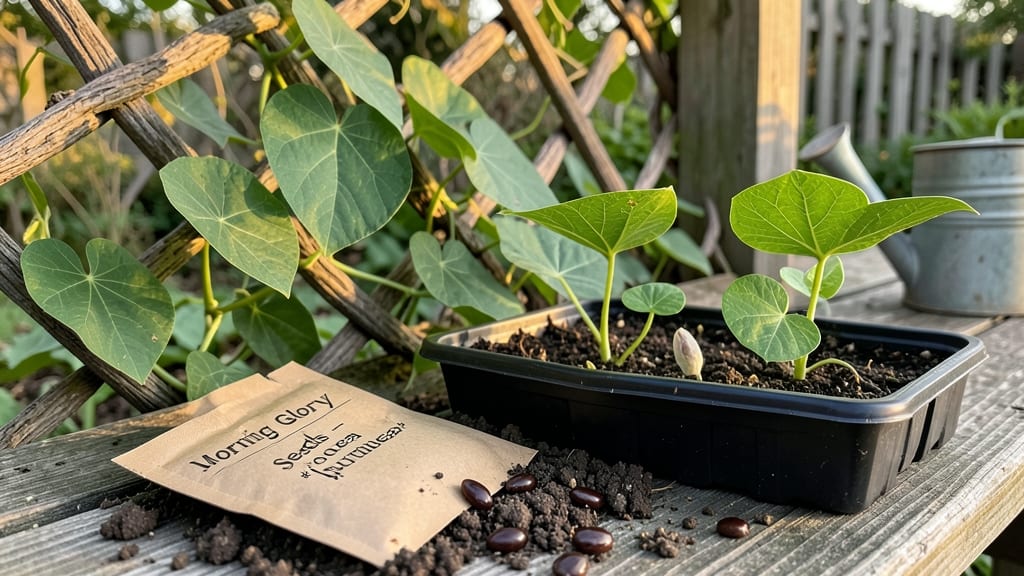
Morning glories bloom from seed in as little as 4 weeks with the right soil warmth and variety, though most gardeners wait 6-8 weeks for those iconic trumpet-shaped blooms to appear.
If you’ve ever wondered why your morning glory seeds seem to take forever to bloom—or how to speed up the process—soil temperature, variety selection, and planting timing are the keys to unlocking vibrant flowers in weeks instead of months.
In USDA Zone 6a, where spring soil lingers cool, planting after the last frost (around mid-April) ensures faster germination and blooms by early summer. But in warmer zones, you can start seeds indoors 4-6 weeks before your last frost date to get a head start.
Below, I’ll break down the fastest-growing varieties, soil temperature triggers, and simple tricks to coax blooms weeks earlier—so you’re not waiting until July for your garden to burst into color.
How long until morning glory blooms from seed: variety-specific timelines
Morning glories (Ipomoea spp.) are famous for their rapid growth, but their bloom times vary dramatically depending on the variety and growing conditions. Some varieties burst into vibrant blooms in just 4-6 weeks, while others take 8-12 weeks to reach their first flowers.
Understanding these timelines helps you plan your garden for maximum impact and avoids disappointment when waiting for those iconic trumpet-shaped blooms.
Fast-blooming varieties like Heavenly Blue (Ipomoea purpurea) often reward gardeners with flowers in as little as 30-45 days from seed, while slower-growing types like Japanese morning glory (Ipomoea nil) may take closer to 70-90 days.
The key difference lies in their genetic growth rates and environmental triggers. Let’s break down the specifics so you can choose the perfect variety for your timeline and climate.
| Variety | Germination Time | Bloom Time (Seed to Flower) | Height | Color |
|---|---|---|---|---|
| Heavenly Blue (Ipomoea purpurea) | 5-10 days | 30-45 days | 6-10 ft | Blue |
| Scarlet O'Hara (Ipomoea purpurea) | 7-14 days | 40-55 days | 8-12 ft | Red |
| Flying Saucer (Ipomoea nil) | 7-14 days | 50-70 days | 8-10 ft | Multi-color |
| Star of Bethlehem (Ipomoea nil) | 10-14 days | 60-80 days | 6-8 ft | White/Blue |
| Dwarf Morning Glory (Ipomoea nil) | 5-10 days | 45-60 days | 3-5 ft | Pink/Purple |
Tracking your morning glory’s progress from seed to bloom involves monitoring three critical stages: germination, seedling growth, and flower bud formation. Most seeds sprout within 5-14 days when soil temperatures are ideal (60-85°F).
Once sprouted, seedlings typically grow 1-2 inches per day under optimal conditions, with vines reaching maturity in 4-8 weeks depending on the variety.
To ensure you’re on track, start by planting seeds in well-draining soil with a trellis or fence nearby for support. Mark your planting date and use a garden journal to note when sprouts appear and when the first buds form.
For example, if you plant Heavenly Blue on May 1st, expect the first blooms around late May to early June, assuming consistent warmth and sunlight.
If your morning glories aren’t blooming on schedule, check for common delays like cool soil temperatures, overcrowding, or nutrient deficiencies. Slow growth often signals a need for more sunlight or a soil boost with compost.
In my experience, Japanese morning glories (Ipomoea nil) are particularly sensitive to temperature fluctuations, so I always plant them after the last frost in my USDA Zone 7 garden to avoid stunted growth.
For container gardeners, dwarf varieties like Dwarf Morning Glory are ideal because they bloom faster in limited space and reach heights of just 3-5 feet. These varieties are perfect for balconies or small patios where space is constrained, yet they still deliver vibrant blooms in 45-60 days.
Pair them with a small trellis or cage to guide their growth upward and maximize your viewing enjoyment.
One of my favorite tricks to speed up blooming is to pre-soak seeds overnight before planting. This reduces germination time by 2-3 days and gives seedlings a head start. Additionally, using black plastic mulch to warm the soil can shave off another 1-2 weeks from the blooming timeline.
These small adjustments make a big difference, especially in cooler climates where slow growth is common.
Remember, morning glories are annuals, meaning they complete their life cycle in one season. Once they bloom, they’ll produce seeds for the next year, often reseeding themselves if left undisturbed. This makes them a low-maintenance choice for gardeners who want quick color and minimal effort.
Plan your planting schedule around your desired bloom time—whether you’re aiming for early summer displays or late-season color—and enjoy the show!
With the right variety and care, your morning glory vines can transform your garden into a lush, floral paradise in just a few short weeks. Start with fast-blooming types like Heavenly Blue or Scarlet O'Hara for instant gratification, or experiment with slower varieties for a more extended display.
Either way, the wait is always worth it when those trumpet-shaped blooms
Soil temperature triggers: when to plant morning glory seeds for fastest blooms
Morning glory seeds need the right soil temperature to germinate quickly and bloom within weeks—not months. The sweet spot for germination is between 60°F and 85°F, with ideal growth occurring at 70°F to 75°F.
If your soil is cooler, seeds may take weeks to sprout or rot, while temperatures above 85°F can stress seedlings. Understanding these triggers helps you time your planting for vibrant blooms by summer.
Regional planting windows vary widely across the USDA zones 3-11. In cooler climates (zones 3-5), wait until after the last frost date (typically late April to early May) and soil reaches 60°F.
Warmer zones (6-11) can start as early as March, but avoid planting when nighttime temps drop below 50°F. Use a soil thermometer to check—it’s the only way to be sure.
| Factor | Optimal Range | Bloom Timeline | Acceleration Tip |
|---|---|---|---|
| Soil Temp for Germination | 60°F–85°F | 4–8 weeks to bloom | Use black plastic mulch to warm soil |
| Ideal Growth Temp | 70°F–75°F | 3–6 weeks to first bloom | Plant in south-facing beds for warmth |
| USDA Zone 3–5 | Wait for 60°F+ soil | 6–10 weeks to bloom | Start indoor seedlings with heat mat |
| USDA Zone 6–11 | Plant March–April | 4–6 weeks to bloom | Direct sow after last frost |
If your soil is too cool, don’t wait—use a heat mat or black plastic mulch to raise temperatures by 5°F–10°F. Lay mulch 1–2 weeks before planting to warm the soil faster.
For container growing, place pots on a heat mat or in a sunny window until soil reaches 65°F. This can shave off 2–3 weeks from your blooming timeline.
Slow growth? Check for these red flags: yellowing leaves (overwatering), stunted stems (cool soil), or no buds (low light). Morning glories thrive in full sun (6+ hours), so move seedlings to a sunnier spot if they’re leggy.
If buds form but don’t open, it’s often due to nighttime temps below 55°F—use row covers to protect them.
For the fastest blooms, plant fast-growing varieties like Ipomoea purpurea (heavenly blue) or Ipomoea nil (dwarf varieties) in well-drained, fertile soil. Add a balanced fertilizer (5-10-10) at planting to fuel early growth.
With the right soil temp and care, you’ll see those first trumpet-shaped blooms in as little as 4–6 weeks—not months!
Pro tip: Mark your calendar for 2–3 weeks after planting to check for sprouts. If nothing emerges in 21 days, the seeds may have rotted—try replanting with fresh seeds. Patience pays off, but soil temp is the #1 factor in speeding up those dreamy morning glory blooms! 🌸