
Blooming
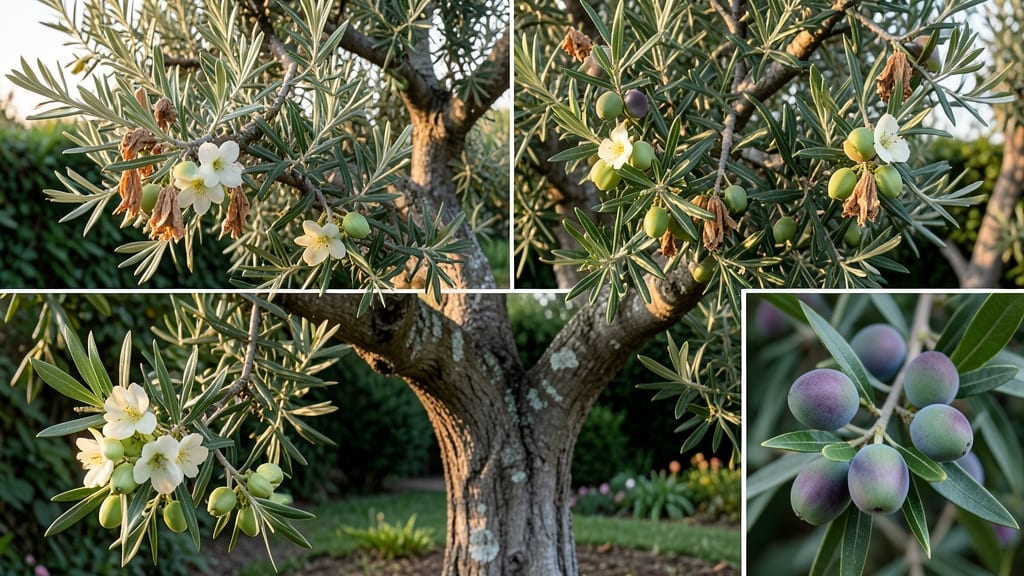
Understanding the olive tree bloom stages 🫒 is your key to predicting harvests and spotting trouble early—because what looks like a healthy branch today could be a future fruitless disaster if you miss the signs.
Watching an olive tree bloom is like witnessing nature’s slow-motion masterpiece—each stage reveals clues about its health, productivity, and future harvest. But how do you recognize the subtle differences between early buds and full flower clusters?
From tiny green buds in late winter to the fragrant white blossoms of spring, each phase depends on temperature, sunlight, and care. In Mediterranean climates (zones 8-10), blooms kick off in February, but cooler regions may see delays.
Miss the window, and you risk weak flowers—or worse, no fruit at all.
Here’s your step-by-step guide to decoding the stages, troubleshooting common mistakes, and giving your tree the best shot at a bountiful bloom. Let’s dive in.
Olive tree bloom stages explained: visual timeline from bud to flower
Understanding your olive tree’s bloom stages is like reading its health diary—each phase tells a story about its future fruit production. From tiny dormant buds to vibrant flower clusters, recognizing these stages helps you anticipate care needs and troubleshoot issues before they arise.
In Mediterranean climates, blooms typically appear in late winter to early spring, but timing can shift in cooler regions.
Olive trees are self-pollinating, meaning they don’t need cross-pollination, but healthy blooms still require proper conditions. The transition from buds to flowers is delicate—too much water stress or nutrient imbalance can halt progress.
By learning to spot each stage, you’ll know exactly when to adjust your care routine for optimal flowering.
🌱 Key Visual Cues: Look for greenish buds in winter, followed by tiny white or pale yellow flowers in spring. Healthy blooms will have a sweet scent and dense clusters. Any brown or sparse flowers may signal stress.
| Stage | Visual Description | Seasonal Timing | Care Focus |
|---|---|---|---|
| Dormant Buds | Tiny, greenish swellings on branches | Late winter (Jan-Feb) | Prune dead branches; reduce watering |
| Pre-Flowering | Bud elongates into small white tips | Early spring (Feb-Mar) | Apply balanced fertilizer (5-10-10) |
| Full Bloom | White/yellow flowers in dense clusters | Mid-spring (Mar-Apr) | Ensure consistent moisture; avoid overwatering |
| Post-Flowering | Flowers wilt; tiny olives appear | Late spring (Apr-May) | Monitor for pests (e.g., olive fruit fly) |
In stage 1 (dormant buds), your tree is preparing for bloom after winter. These buds look like tiny green bumps along branches. If you see brown or shriveled buds, your tree may be water-stressed or nutrient-deficient.
This is the perfect time to prune any dead or crossing branches to improve airflow and sunlight penetration.
By stage 2 (pre-flowering), buds begin to elongate into small white tips, signaling active growth. This phase lasts 2-3 weeks in Mediterranean climates but may extend in cooler regions. Fertilize lightly with a low-nitrogen formula (e.g., 5-10-10) to support flower development without encouraging excessive foliage growth.
When you reach stage 3 (full bloom), your tree will burst into dense clusters of white or pale yellow flowers, often accompanied by a sweet fragrance. This is the most critical window for pollination—hand-pollinate if needed in low-wind areas.
Avoid heavy pruning during this stage, as it can stress the tree and reduce flowering.
After blooming, stage 4 (post-flowering) begins as flowers wilt and tiny olives form. This phase requires consistent moisture to support fruit development. Watch for pests like olive fruit flies and diseases such as peacock spot. Reduce nitrogen-heavy fertilizers to prevent excessive leaf growth at the expense of fruit.
For Mediterranean climates, blooms typically peak in March-April, while temperate zones may see delays until April-May. If your tree blooms late or sparsely, check for overwatering, poor drainage, or root damage. Adjust care immediately to encourage future blooms.
Pro tip: Take monthly photos of your tree’s branches to track progress. Comparing images from dormant buds to full bloom helps you spot patterns and intervene early if stages seem delayed or abnormal.
🌿 Remember, olive trees are slow growers—don’t rush their bloom cycle. Patience and consistent care during each stage will reward you with healthier flowers and a better harvest in the coming seasons.
Year-by-year olive tree flowering patterns: what to expect in spring
Olive trees don’t rush into flowering—patience is key, especially for young trees. In their first 3 years, expect little to no blooms as they focus on root and branch development. A 3-year-old tree might produce a handful of flowers, but fruit won’t mature until year 4 or 5.
This gradual progression mirrors their Mediterranean roots, where survival often trumps reproduction in harsh conditions.
By years 4-6, your olive tree enters its prime blooming phase if cared for properly. In USDA Zones 8-10, flowering typically peaks in late winter to early spring (February-March), triggered by cooler temperatures followed by warming days.
Mature trees (10+ years) can produce thousands of flowers, though only a fraction will develop into fruit due to natural pollination limits.
- 🌱 Year 1-3: No flowers; focus on root establishment and basic branch structure. Prune aggressively to encourage future bloom sites.
- 🌿 Year 4-6: First visible blooms appear in spring. Expect 50-200 flowers per tree, with 10-30% fruit set if pollinated.
- 🌳 Year 7-10: Peak flowering with 1,000+ flowers. Fruit production stabilizes; monitor for overcropping stress.
- 🫒 Year 11+: Mature bloom cycles with seasonal consistency. Watch for declining vigor in temperate climates (e.g., California vs. Mediterranean).
Climate plays a critical role in bloom timing and success. In Mediterranean climates, olive trees bloom reliably due to cool, wet winters followed by warm, dry springs.
However, in temperate zones like Zone 7 or colder, flowering can be delayed or sparse if winters are too mild or springs arrive late.
For example, a Zone 8 tree in Georgia may bloom in March, while a Zone 9 tree in Arizona might start as early as February.
Stress signals often appear before blooms—watch for yellowing leaves, premature leaf drop, or stunted flower clusters. These could indicate overwatering, nutrient deficiencies (like zinc or boron), or pest damage (e.g., olive fruit fly).
In young trees, excessive nitrogen can delay flowering by encouraging leafy growth over reproductive structures. Always test soil pH (ideal: 6.0-8.0) to rule out nutrient lockout.
Regional variations extend beyond timing. In coastal California, olive trees often bloom earlier due to milder winters, while inland areas may see delayed blooms if frost lingers.
To encourage consistent flowering, mimic Mediterranean conditions: reduce watering in late summer to signal dormancy, and apply balanced fertilizer (e.g., 5-10-10 NPK) in early spring before buds swell.
Remember, patience rewards—a well-cared-for olive tree can live for centuries and produce fruit for decades. By understanding these year-by-year patterns, you’ll not only predict bloom cycles but also troubleshoot issues early to ensure your tree thrives. 🌱