
Blooming
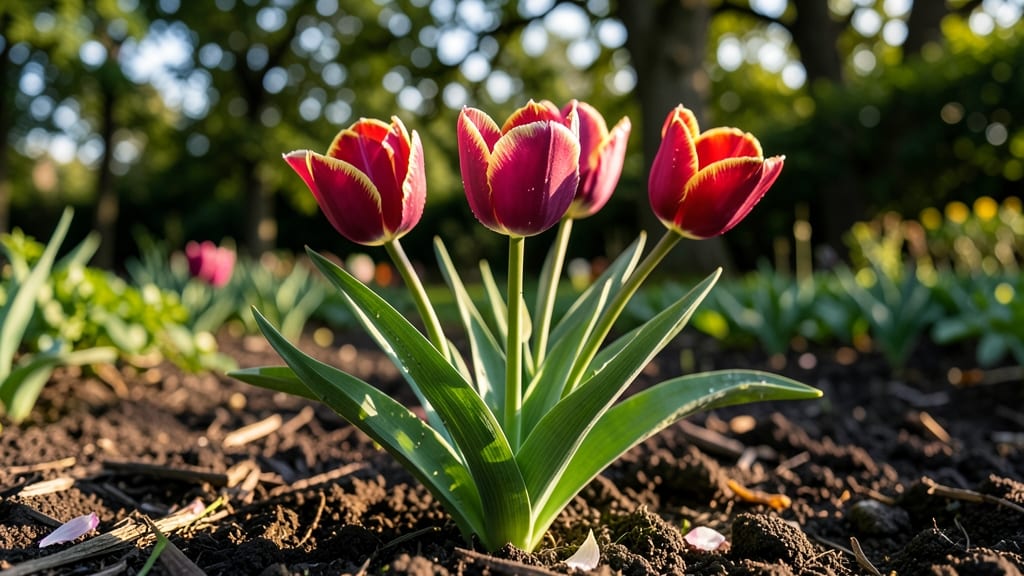
Tulips reach their full bloom in late April or May—when your garden bursts into color and the air hums with their sweet fragrance. 🌸 I’ve learned the hard way that skipping care during this peak moment means shorter displays and weaker stems.
The secret to prolonging their show lies in simple adjustments: watering at the base, removing spent blooms, and protecting them from sudden frost. During this stage, tulips need consistent moisture but hate soggy roots—think of it like giving them a drink without drowning them.
I’ve found that mulching around the base keeps the soil cool and retains just enough water for those purple spikes to stand tall. Companion plants like hyacinths or daffodils also help by reflecting sunlight and deterring pests.
The real magic happens when you photograph them at their peak—soft morning light captures their delicate petals best. A quick trim of the stems after blooming redirects energy to next year’s flowers. This simple routine turns a one-time show into a garden tradition that returns every spring.
For those who want to stretch the season, deadheading faded blooms and fertilizing lightly after flowering encourages stronger bulbs for next year. The key is balance: too much care now, and you risk weakening the bulb for future growth.
But done right, your tulips will reward you with years of effortless, fragrant displays.
📚 In This Guide
- What you need
- Instructions
- Tips and common mistakes
- Wrapping up and next steps
What you need
- ● Tulip bulbs: 10–20 high-quality Tulipa bulbs (e.g., 'Queen of Night,' 'Purple Prince,' or 'Darwin Hybrid' for frost resistance). Choose size 12 (60–75mm) or larger for robust blooms.
- ● Well-draining soil: 5–10 bags of garden loam mixed with perlite or sand (ratio: 3 parts soil to 1 part amendment) to prevent rot.
- ● Compost: 2–3 gallons of aged compost or organic fertilizer (5-10-10 NPK ratio) for nutrient-rich soil.
- ● Mulch: 3–5 inches of straw, pine needles, or shredded bark to insulate bulbs in winter.
- ● Garden trowel or bulb planter (for precise planting depth: 6–8 inches deep).
- ● Gloves (heavy-duty for digging and frost protection).
- ● Watering can or hose with a gentle spray nozzle (avoid oversaturating bulbs).
- ○ Soil pH tester (optional)—aim for 6.0–7.0 pH; amend with lime or sulfur if needed.
- ○ Frost cloth (optional) for early spring protection in Zone 3–5 climates.
- ● Sunlight: 6+ hours of full sun daily (south-facing beds ideal).
- ● Climate: Plant bulbs in fall (6–8 weeks before first frost) for winter chilling.
- ● Drainage: Ensure no standing water—tulips hate soggy roots!
- ● Patience: Blooms take 4–6 weeks post-spring thaw. 💡 Pro tip: Mark planting spots with stakes to avoid disturbing bulbs!
Step-by-step guide to growing fragrant purple tulips that thrive year after year
Here’s how I coax those bold purple blooms to return reliably—even in colder climates.
🌱 Step 1: Select and Prepare Your Tulip Bulbs
Choose frost-hardy tulip varieties like ‘Purple Prince’ or ‘Queen of Night’ for their deep purple hue and resilience. Inspect each bulb for firmness—soft spots mean rot. Soak bulbs in lukewarm water for 4-6 hours before planting to rehydrate them after storage. This jumpstarts root growth and ensures stronger stems.
Real talk: I always plant bulbs in October or November, about 6-8 weeks before the ground freezes. The cold period actually helps tulips set roots, so don’t rush. If your zone has mild winters, aim for late fall when temps drop to 40°F at night. Planting too early can encourage premature sprouting.
🪴 Step 2: Plant Bulbs Deep and Spaced for Long-Lasting Blooms
Dig holes 6-8 inches deep—that’s twice the bulb’s height—and space them 4-6 inches apart. Tulips need room to grow without crowding, which weakens stems and reduces flower size. Mix the native soil with a handful of compost (about 1 cup per bulb) to improve drainage and fertility.
Place the bulb pointy side up—yes, it matters. Cover it with soil, then water deeply until the ground feels moist 2 inches down. Mulch with 2-3 inches of straw to insulate roots through winter. This protects bulbs from freezing and thawing cycles, which can crack them.
☀️ Step 3: Provide Sun and Patience for Next Spring’s Display
Tulips thrive in full sun to partial shade—at least 6 hours of sunlight daily. In hot climates, afternoon shade prevents bulbs from overheating. I always mark their location with stakes or flags since they’ll disappear under foliage by spring.
Here’s the thing—no watering after planting until shoots emerge in spring. Overwatering in fall can rot bulbs before they’ve established roots. Instead, rely on natural rainfall. Come spring, when 2-inch green shoots appear, water 1 inch per week to encourage strong stems.
✂️ Step 4: Deadhead and Feed for Next Year’s Performance
Once blooms fade, snip spent flowers but leave the foliage until it yellows naturally. This process—called deadheading—prevents seed production, which drains energy from the bulb. Let leaves die back on their own; they’re the plant’s solar panels, storing nutrients for next year’s blooms.
After foliage yellows, fertilize with a balanced 10-10-10 mix (about 1 tablespoon per bulb) and water deeply. This replenishes nutrients lost during flowering. In Zone 5 and colder, I add 2-3 inches of mulch in fall to shield bulbs from harsh winters—frost won’t kill them, but freeze-thaw cycles can.
⏰ Step 5: Rotate and Refresh for Long-Term Success
After 3-4 years, tulip blooms weaken as bulbs divide and energy depletes. Dig up bulbs in late summer when foliage turns brown. Separate offsets (baby bulbs) and replant half immediately while the rest get a cool, dry storage spot (like a garage) until fall. This keeps your display vibrant year after year.
I know it seems like a lot of waiting, but tulips reward patience. Those bold purple spikes in spring are worth every step—especially when they return stronger each year. The secret? Planting deep, feeding wisely, and never rushing the process.
Tips & tricks for perfect purple tulip blooms
These simple strategies will help you grow tulips that thrive through frost and return year after year.
Soaking Secret: That 4-6 hour soak in lukewarm water isn't just about hydration—it's a health check. Discard any bulbs that float (they're hollow inside) or have soft spots. The soak also helps bulbs recover from storage, giving them a head start on root growth. I like to soak mine in a bucket with a splash of hydrogen peroxide (1 part to 10 parts water) to prevent fungal issues.
Planting Depth Matters: Those 6-8 inches of soil coverage might seem deep, but it's essential for strong stems. Shallow planting (less than 4 inches) leads to floppy stems that flop over. I always use a measuring tape to verify depth—no guessing! For clay soil, add a handful of sand to the planting hole to improve drainage, especially in colder climates.
Winter Protection Strategy: The 2-3 inches of straw mulch isn't just decoration—it's insulation. In Zone 5 and colder, I double that to 4-5 inches for extra protection. The mulch prevents soil temperature fluctuations that can crack bulbs during freeze-thaw cycles. Pro tip: Use straw, not hay (which can contain weed seeds), and keep it away from bulb stems to prevent rot.
Spring Watering Cues: Waiting for those 2-inch green shoots to appear before watering is crucial. Before that, bulbs are still dormant and can rot from excess moisture. Once shoots emerge, I set a rain gauge nearby to track that 1 inch per week. In dry climates, I water in the morning to reduce evaporation and fungal risks.
Pro Tips for Full Bloom Tulip
- These simple strategies will help you grow tulips that thrive through frost and return year after year.
- Soaking Secret: That 4-6 hour soak in lukewarm water isn't just about hydration—it's a health check.
- Planting Depth Matters: Those 6-8 inches of soil coverage might seem deep, but it's essential for strong stems.
Frequently asked questions
Got questions about achieving those showstopping full-bloom tulips that stand tall against frost? You’re not alone! Here are answers to the most common queries—because every gardener deserves a purple spike victory.
How long does it take for tulips to reach full bloom from planting?
Most tulip varieties take 5–7 weeks to bloom after breaking dormancy in spring. Early bloomers (like ‘Apeldoorn’) may flower in 4–5 weeks, while late varieties (e.g., ‘Darwin Hybrid’) can take up to 8 weeks. Pro tip: Plant bulbs in fall (6–8 weeks before frost) for optimal timing!
Can tulips bloom in cold climates, and how do I protect them from frost?
Yes! Tulips thrive in USDA Zones 3–8 and often bloom before late frosts. To safeguard buds:
- Mulch with 3–4 inches of straw or leaves after planting.
- Cover stems with burlap or frost cloth if temps drop below 20°F.
- Avoid heavy mulch after sprouting—it can rot stems.
Why aren’t my tulips blooming? Troubleshooting tips
No flowers? Check these culprits:
Issue
Fix
No sprouts by spring
Bulbs may need more chill hours (store in fridge for 12+ weeks if planted too early).
Leaves but no buds
Over-fertilizing with high-nitrogen feeds. Switch to low-nitrogen, high-phosphorus (e.g., 5-10-10) at planting.
Floppy stems
Stake tall varieties (e.g., ‘Parrot tulips’) before buds swell.
What’s the best tulip variety for long-lasting full bloom?
For bold, frost-resistant blooms, try:
- ‘Queen of Night’: Deep purple, 12–14 days of bloom.
- ‘Fosteriana’ (Yellow Emperor): Early bloomer, 2–3 weeks of color.
- ‘Darwin Hybrid’ (e.g., ‘Red Emperor’): Sturdy stems, 10–14 days of show.
Can I force tulips to rebloom in the same year?
Most tulips are perennial but not reblooming—they focus energy on bulb storage. Exceptions: Species tulips (e.g., ‘Tulipa tarda’) may rebloom if:
- You deadhead spent blooms but leave foliage until it yellows.
- Fertilize with bone meal (phosphorus) after blooming.
- Divide bulbs every 3–4 years to prevent overcrowding.
Wrapping up and next steps
Witnessing your full bloom tulip emerge—vibrant, fragrant, and resilient—is a reward worth savoring! 🌸 With the right soil, timing, and care, you’ve unlocked the secret to growing these frost-defying beauties year after year.
Whether you’re a seasoned gardener or just starting, every petal unfurled is a testament to your green thumb.
Ready to take it further? Experiment with colors or share your blooms with neighbors—garden joy multiplies! Plant a few extra bulbs today and watch your garden explode with next year’s splendor.