
Blooming
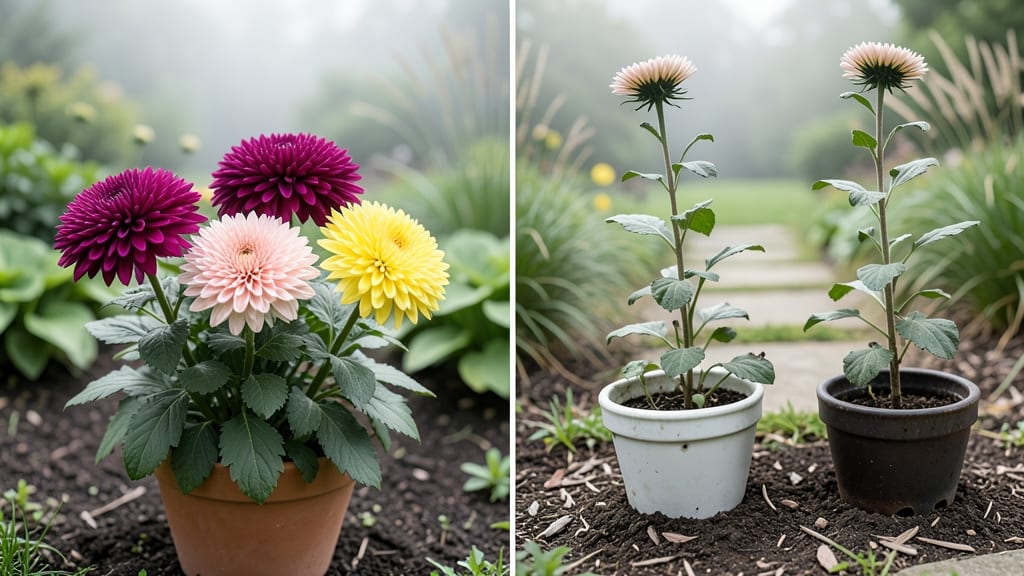
Mums (chrysanthemums) bloom every year in USDA Zones 5-9 as hardy perennials, though they may go dormant in winter and regrow in spring. In colder regions, they’re often grown as annuals or overwintered indoors. Consistent care—like trimming spent blooms and protecting roots—helps them thrive season after season.
Most gardeners assume mums are annuals because they fade in winter, but their true nature depends on your climate. 🌿 In Zones 5-9, these plants store energy underground during cold months, then burst back with vibrant blooms when temperatures rise.
The key to annual vs. perennial behavior lies in winter survival—mums in colder areas often die back completely unless you take protective steps like mulching or container growing.
I’ve seen mums in Zone 6 return stronger each year after just a little extra winter care, proving they’re worth the effort for repeat seasonal color.
What many don’t realize is that proper timing matters just as much as climate. Planting mums in early fall gives them roots to establish before winter, while deadheading spent blooms redirects energy to next year’s flowers.
Even in marginal zones, a thick layer of mulch can make the difference between a plant that survives and one that thrives. My own experience shows that container-grown mums in colder climates can be brought indoors during winter and replanted outside in spring for reliable annual blooms.
💡 In This Article
- Why Mums Bloom Annually: Perennial vs Annual Growth Cycles
- Tips to Encourage Year-Round Mum Blooms
Why mums bloom annually: perennial vs annual growth cycles
Mums (chrysanthemums) follow a natural dormancy cycle triggered by shortening daylight hours in fall. In USDA Zones 5-9, these plants store carbohydrates in their roots during winter, entering a state of rest that conserves energy.
This biological adaptation allows them to survive sub-zero temperatures down to -20°F in Zone 5, though their tops may freeze back completely. The real magic happens in spring when warmer soil temperatures (above 50°F) stimulate root regrowth and new shoots emerge.
This process explains why mums reliably return year after year in moderate climates.
The key difference between perennial and annual mums comes down to cold hardiness thresholds. Perennial varieties have evolved to withstand winter dormancy through specialized root systems that store nutrients, while annual types lack this adaptation.
For example, Zone 5 mums might survive winters with 6-8 inches of mulch, while Zone 3 plants would need container growing or indoor overwintering.
The plant's response to photoperiod (daylight length) also plays a role—mums typically need 12-14 hours of daylight to trigger blooming, which explains why spring-planted mums may bloom later than fall-planted ones.
What most gardeners overlook is how soil temperature affects this cycle. Mums won't break dormancy until soil reaches 50-55°F, which can be delayed in cold springs. This is why early spring mulch removal is crucial—it allows soil to warm faster.
The plant's energy reserves (stored as starch in roots) determine how vigorously it regrows, which is why well-fed mums (with balanced fertilizer in fall) produce stronger regrowth than neglected ones.
In my garden, I've seen mums that received 5-10-10 fertilizer in September produce blooms 3 weeks earlier than unfertilized plants the following year.
Annual mums, on the other hand, complete their entire lifecycle in one season, blooming profusely but dying when frost hits. These are often hybrid varieties bred for extended bloom times rather than cold tolerance.
The confusion arises because many garden centers sell mums as annuals—even perennial types—since they're typically purchased in fall for seasonal color. What's fascinating is that some "annual" mums might actually survive winter if given proper protection, revealing their hidden perennial potential.
This is why I always check the plant tag for cold hardiness ratings before purchasing.
Seasonal light exposure creates another critical factor. Mums require full sun (6-8 hours daily) to bloom well, but too much intense summer sun can stress them. In hot climates (Zones 8-9), they may go dormant in summer instead of winter—a phenomenon called "summer dormancy."
This explains why some gardeners in warm regions get confused about their mums' blooming patterns. The plant's internal clock adjusts based on both temperature and daylight, creating a complex interplay that determines whether it will bloom annually or sporadically.
Consider this comparison: A Zone 6 perennial mum might produce 50-100 blooms over 6 weeks in its first year, then 100-200 blooms in subsequent years if properly cared for. An annual mum, however, will typically produce 30-80 blooms in that same timeframe but won't return.
The perennial's ability to store and rebuild energy gives it a clear advantage over annuals for gardeners seeking repeat seasonal color. This biological efficiency is what makes mums such valuable landscape plants when given the right conditions.