
Blooming
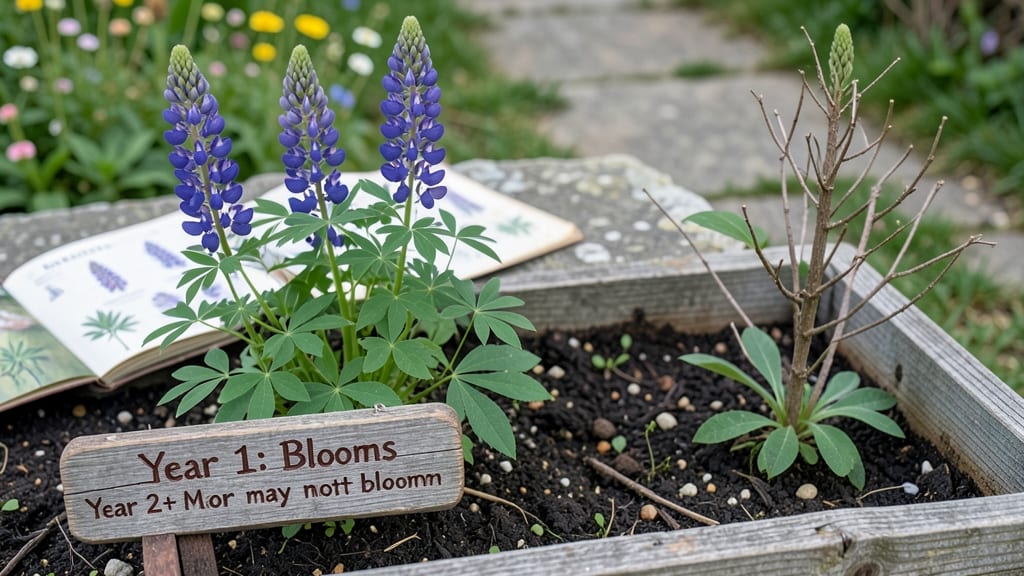
Lupines don't bloom every year as perennials, since most varieties need a cold period to trigger flowering before entering dormancy. While some may rebloom with proper care, annual lupines require replanting yearly for consistent flowers.
Lupines follow a unique growth cycle that explains their inconsistent blooming patterns. 🌱 Most varieties are biennials or short-lived perennials, meaning they focus their first year on building strong root systems rather than producing flowers.
The cold stratification period—typically winter—triggers their flowering response, which is why you might see blooms one year but not the next. Even "perennial" lupines often need 2-3 years to establish before they reliably rebloom, and some species simply decline after a few flowering cycles.
What makes this even more interesting is how climate plays a role. In warmer regions, lupines may struggle to get the necessary cold exposure, leading to fewer blooms. Meanwhile, in cooler climates, they might produce flowers more reliably but still enter dormancy afterward.
This is why many gardeners treat lupines as annuals for consistent color—planting fresh seeds each year guarantees blooms when perennials might disappoint.
💡 In This Article
- Why Lupines Skip Flowering: Perennial vs Annual Growth Cycles
- Encouraging Lupine Reblooms: Pruning and Soil Strategies
Why lupines skip flowering: perennial vs annual growth cycles
The heart of the lupine blooming mystery lies in their growth stages and cold stratification requirements.
Most garden lupines (Lupinus spp.) are biennials or short-lived perennials, meaning they spend their first year building a robust taproot system that can reach 3-5 feet deep—critical for accessing nutrients in poor soils.
This deep root system is why lupines thrive in nutrient-deficient areas, but it also means their energy is diverted from flowering during establishment.
Cold stratification is the key trigger for flowering. Lupine seeds contain hard seed coats that require 6-8 weeks of temperatures below 40°F to break dormancy and stimulate growth. Without this cold period—common in warmer climates—the seeds may germinate but fail to flower.
Even established plants need this winter chill to reset their biological clock. 🌡️ What's fascinating is that some alpine lupines have adapted to bloom annually in their native high-elevation habitats where cold periods are constant, but these varieties often struggle in milder climates.
True perennials like Lupinus polyphyllus (Russian lupine) may rebloom after their first year if given proper care, but most lupines behave more like biennials.
Annual lupines (Lupinus albus, white lupine) complete their entire life cycle in one season, which explains why they must be replanted yearly for continuous blooms.
The confusion arises because gardeners often treat all lupines as perennials, when in reality, their blooming patterns are more closely tied to biennial or annual cycles.
Here's where root development becomes crucial: lupines store energy in their extensive root systems rather than bulbs or tubers. When you see a lupine plant with 6-8 inch stems and lush foliage but no flowers, it's likely in its vegetative growth phase, preparing for next year's blooms.
The trade-off is that this energy storage means they're more vulnerable to drought or poor soil conditions, which can further delay or prevent flowering.
Climate plays a surprising role in this cycle. In USDA zones 3-5, lupines often bloom reliably because they get adequate cold stratification. But in zones 7-9, gardeners frequently report lupines failing to rebloom because the winter chill isn't sufficient.
This geographic variation explains why some gardeners in California treat lupines as annuals while those in the Pacific Northwest might see them return year after year.
The real insight is that lupines follow a survival strategy similar to many wildflowers—prioritizing root establishment over immediate reproduction. This makes them excellent for erosion control and soil improvement, but challenging for gardeners seeking consistent annual blooms.
Understanding this cycle helps explain why your lupines might look healthy one year but produce no flowers the next—it's not neglect, it's biology!