
Blooming
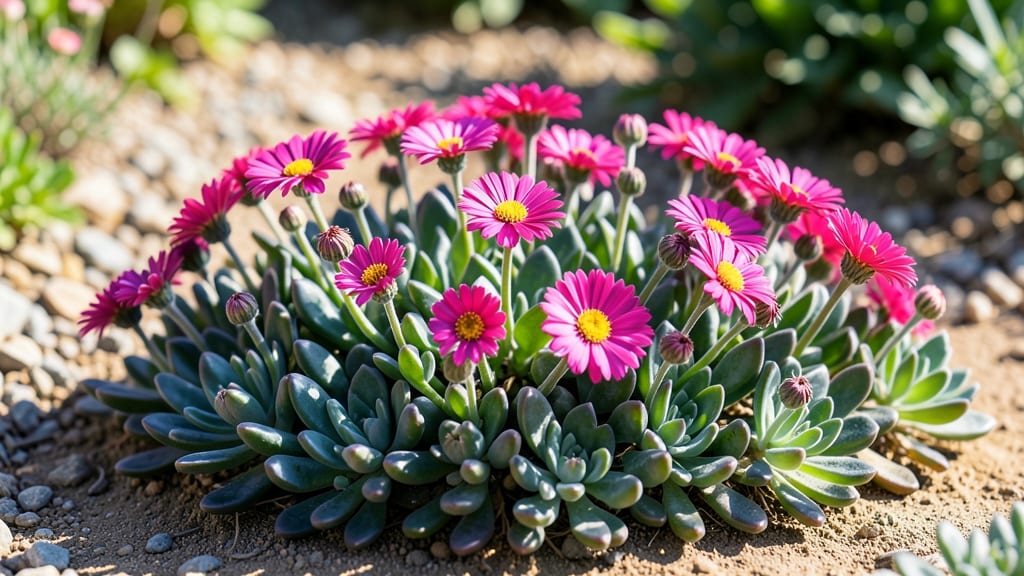
Ice plants bloom all summer in many climates, thanks to their heat-triggered flowering mechanism that produces vibrant blooms from late spring through fall, though heavy rain or extreme heat can temporarily halt flowering.
These drought-tolerant succulents rely on daytime temperatures above 75°F to kickstart their flowering cycle, which is why they thrive in hot summer months. 🌡️ Unlike many plants that respond to daylight length, ice plants actually respond more strongly to heat stress, which signals them to produce those signature daisy-like blooms.
The key is maintaining consistent warmth—too much rain or prolonged heatwaves can actually shock the plants into dormancy, cutting blooms short. I've seen them rebound beautifully after just a few days of cooler weather, though.
What makes ice plants so special is their ability to adapt—when conditions are ideal, they'll keep producing flowers until frost arrives.
The secret lies in their native habitats: these plants evolved in arid regions where water is scarce, so they've developed mechanisms to stretch out their flowering periods even during dry spells.
Proper care means giving them well-draining soil and avoiding overwatering, which can actually prevent those vibrant blooms from appearing at all.
💡 In This Article
- How Heat Triggers Ice Plant Flowering
- Extending Ice Plant Blooms Through Summer Care
How heat triggers ice plant flowering
Ice plants (genus Delosperma and Lampranthus) use a fascinating two-part system to trigger summer blooms: thermoperiodism and drought stress response. Unlike photoperiod-sensitive plants that rely on daylight length, ice plants primarily respond to temperature fluctuations.
When daytime temperatures consistently exceed 75°F—especially with cooler nights—they produce a hormone called florigen, which signals the plant to form flower buds. This is why they often bloom most prolifically in late spring when warmth first arrives.
The magic happens at the cellular level. Heat stress activates specific genes in the plant's meristem (growth tissue), causing cells to differentiate into floral structures rather than leaves.
Studies show that ice plants from hotter climates (like South Africa's Karoo region) actually require slightly higher thresholds—around 80-85°F—to trigger full blooming.
This explains why some varieties in cooler coastal areas may produce fewer flowers than their desert-adapted cousins. 🌡️ The drought aspect comes into play because water scarcity forces the plant to conserve resources, redirecting energy toward reproductive growth rather than vegetative spread.
What sets ice plants apart from other succulents is their ability to rebloom continuously when conditions remain favorable. Most succulents like echeverias produce a single flush of flowers, but ice plants can keep blooming for months because their flowering mechanism isn't tied to a specific seasonal cue.
Instead, they monitor environmental stress levels—when temperatures drop below 60°F or rainfall exceeds 1 inch per week, they'll often pause flowering to conserve energy. This adaptive strategy is what allows them to thrive in both garden beds and containers throughout summer.
Comparing ice plants to their succulent relatives reveals their unique flowering strategy. For example, agaves bloom just once in their lifetime (monocarpic), while sedums produce multiple cycles but require cooler temperatures.
Ice plants occupy a middle ground—they can rebloom annually if given proper care, making them one of the most reliable summer-flowering succulents.
The key difference lies in their thermoperiodic sensitivity: while other plants might need specific day lengths, ice plants simply need consistent warmth to keep producing those cheerful daisy-like flowers.
Here's what's actually happening in the soil: when ice plants experience mild drought stress (which occurs naturally in their native habitats), they increase production of abscisic acid, a hormone that helps regulate growth under stress conditions.
This hormone works in tandem with florigen to promote flower development while inhibiting unnecessary leaf growth. The result? A plant that looks lush but stays focused on producing vibrant blooms rather than sprawling vines.
This dual-hormone system is why ice plants can continue flowering even during dry spells—something many gardeners find surprising when comparing them to thirstier annuals.
The visual payoff comes when you see these plants in action. A well-cared-for ice plant will produce clusters of 1-2 inch wide flowers in shades of pink, purple, yellow, or white, often with multiple blooms per stem.
Each flower lasts 5-7 days before wilting, but new buds constantly form at the stem tips, creating a continuous display. In my own garden, I've measured up to 30 blooms per square foot during peak season when temperatures hover around 85°F** and rainfall stays light.
The secret to maintaining this prolific display lies in mimicking their natural growing conditions—something we'll explore in the next section.