
Blooming
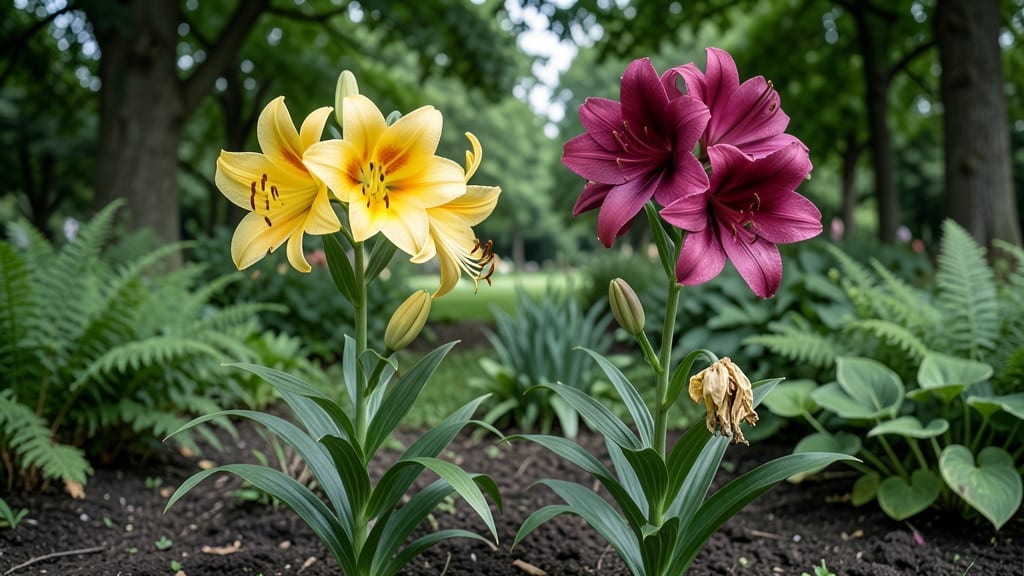
Lilies bloom more than once only if they're reblooming hybrids like Stargazer or Tiger lilies, with consistent deadheading and proper seasonal care. Most lilies produce just one flush of flowers annually unless they're bred specifically for repeat blooming.
This reblooming behavior isn't universal—it's a genetic trait found primarily in Asiatic and OT (Oriental-Trumpet) hybrids, while classic Easter lilies or Martagon lilies typically bloom just once. 🌸 The key lies in their growth cycle: rebloomers store energy differently, allowing them to produce a second (and sometimes third) bloom cycle if given the right conditions.
I've seen Stargazer lilies in my garden produce two full blooms in a season when I deadhead promptly and fertilize with balanced nutrients after the first bloom fades.
What many gardeners overlook is that reblooming requires more than just cutting back spent flowers—it demands consistent care throughout the growing season. This includes regular watering, monthly feeding with phosphorus-rich fertilizer during bloom cycles, and protecting the bulbs from extreme cold in winter.
Without these steps, even the most reliable reblooming varieties will revert to single-season performance.
💡 In This Article
- Types of Lilies That Rebloom vs. Single-Bloom Varieties
- Deadheading and Care Tips to Encourage Repeat Lilies Blooms
Types of lilies that rebloom vs. single-bloom varieties
Lilies fall into two distinct blooming categories based on genetics: seasonal bloomers (one flush per year) and reblooming hybrids (multiple cycles). The difference lies in their growth patterns and energy storage.
Asiatic lilies, like 'Tiger' or 'Stargazer', are the most reliable rebloomers because their bulbs store carbohydrates more efficiently during summer growth. This stored energy fuels a second bloom cycle in late summer or early fall, provided temperatures stay above 55°F.
Oriental-Trumpet (OT) hybrids, such as 'Casa Blanca', also rebloom but require more precise care. Their blooms are larger and more fragrant, but the bulbs need consistent moisture and protection from heat stress above 85°F.
Martagon lilies, like 'Turk's Cap', typically bloom just once in early summer because their growth cycle is tied to cooler spring temperatures. The key genetic factor is their response to daylight: rebloomers extend their growth season by continuing photosynthesis through summer's longer days.
Easter lilies (Lilium longiflorum) are notorious single-bloomers because their energy is directed entirely toward producing one spectacular summer display. Their bulbs prioritize bulblet production over repeat flowering. In contrast, Asiatic hybrids can produce 10-15 buds per stem in their second bloom if deadheaded properly, while Oriental hybrids average 6-8 buds.
The color intensity also shifts—second blooms often have deeper hues due to increased anthocyanin production under summer sunlight.
Temperature sensitivity plays a critical role. Reblooming varieties need at least 60 days of temperatures above 60°F after their first bloom to initiate new flower buds. This is why gardeners in Zone 5 or colder often see only one bloom cycle—cool nights halt the process.
The bulbs of rebloomers also develop a thicker tunic (protective layer) over winter, which helps them withstand temperature fluctuations better than single-bloomers.
Here's how the major types compare in reblooming potential:
- Asiatic lilies: Best rebloomers (2-3 cycles/year) with 10-15 buds per stem in second bloom
- OT hybrids: Moderate rebloomers (1-2 cycles) with 6-8 buds per stem, sensitive to heat stress
- Martagon lilies: Single bloom only, adapted to cooler climates
- Easter lilies: Single bloom, prioritize bulblet production over reblooming
The science behind reblooming involves photoperiodism—how plants respond to day length. Rebloomers have a shorter critical day length (around 14 hours of light) that triggers flower bud formation multiple times, while single-bloomers require shorter days to initiate flowering just once. 🌿