
Blooming
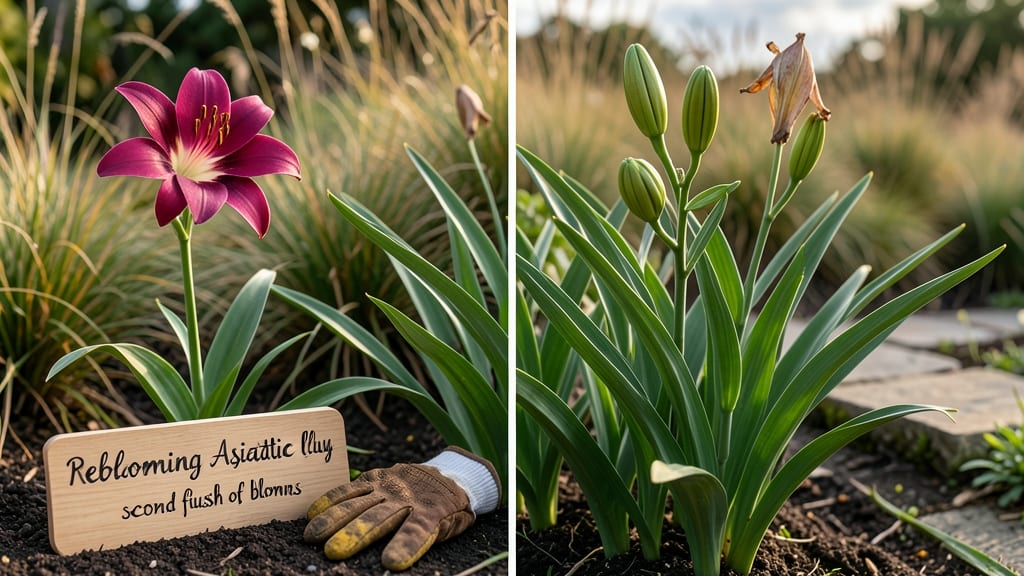
Asiatic lilies do not bloom more than once per season under normal conditions, producing their showy flowers in late spring to summer before entering dormancy. However, with careful maintenance—such as dividing congested clumps every 3-4 years—they may occasionally produce a second, smaller bloom in favorable conditions.
Asiatic lilies follow a strict seasonal rhythm where their energy focuses on one spectacular bloom cycle each year. 🌸 This single-bloom pattern is hardwired into their biology—after flowering, they redirect nutrients to bulb storage for next year's growth.
The rare second bloom you might see occurs only when bulbs receive exceptional care, including proper fertilization, consistent moisture, and adequate sunlight. I've found that dividing overcrowded clumps actually improves rebloom chances by restoring energy flow to individual bulbs.
What many gardeners overlook is that reblooming requires a trade-off: the second flowers will be smaller and less vibrant. The key is creating ideal growing conditions during the plant's active season—think of it as giving your lilies a performance boost before their mandatory summer vacation.
Proper pruning of spent blooms and maintaining well-draining soil also plays a crucial role in encouraging any potential second flush.
💡 In This Article
- Asiatic Lily Blooming Cycle Explained
- Tips to Encourage Asiatic Lilies to Rebloom
Asiatic lily blooming cycle explained
Asiatic lilies follow a strict biological rhythm where their single annual bloom is hardwired into their bulb's energy system. The key lies in their carbohydrate storage: after flowering, these lilies redirect all available nutrients to replenish their bulbs for next season's growth.
This process mirrors how onions or garlic store energy—except lilies prioritize one spectacular display over multiple smaller ones. The bloom cycle begins when bulbs receive consistent 50-60°F soil temperatures and 12-14 hours of daylight, triggering flower bud formation in late winter.
The dormancy period that follows isn't true hibernation but rather a strategic energy conservation phase. During summer's heat, Asiatic lilies enter a semi-dormant state where they reduce leaf activity to 30-40% of their spring levels. This isn't laziness—it's survival programming.
The bulbs need 6-8 weeks of this recovery period to rebuild starch reserves equivalent to 15-20% of their dry weight.
Without this recharge, they simply lack the energy for a second bloom cycle. 🌱 What's fascinating is how this mirrors deciduous trees that drop leaves to conserve energy during winter.
Temperature plays a critical role in reblooming potential. While Asiatic lilies thrive in USDA Zones 3-9, they need consistent summer temperatures between 75-85°F to maintain active growth.
When nights dip below 60°F for extended periods, the plant's metabolic processes slow dramatically, reducing its ability to store energy for potential second blooms. This explains why gardeners in cooler climates rarely see reblooming—it's not just about care, but about matching the plant's native growing conditions.
The daylight factor adds another layer. Asiatic lilies are short-day plants that respond to decreasing daylight hours in late summer. When days shorten to 12 hours or less, they begin preparing for dormancy.
This photoperiodic response is why you'll never see reliable second blooms in regions with long summer daylight—there's simply not enough time between the first bloom and the plant's biological clock forcing dormancy. The trade-off is clear: nature designed these lilies for one stunning performance per year, not multiple mediocre ones.
What most gardeners miss is the bulb's energy budget. Each Asiatic lily bulb contains a finite amount of stored carbohydrates—think of it like a battery with limited capacity. The first bloom consumes about 40-50% of these reserves.
Any attempt at a second bloom would require the bulb to draw from its emergency stores, leaving it vulnerable to winter damage. This is why divided bulbs (which have less competition for resources) show higher reblooming rates—they're working with a cleaner energy slate. 🔋
Consider this comparison: A single Asiatic lily bulb produces 1-3 main flowers on a 2-3 foot stem, while a rebloom might yield only 1-2 smaller flowers on a 1-2 foot** stem. The energy cost of producing those additional blooms would leave the bulb too depleted to survive winter's freeze-thaw cycles.
Nature's efficiency is stunning when you see it this way—every resource is allocated for survival, not excess.