
Blooming
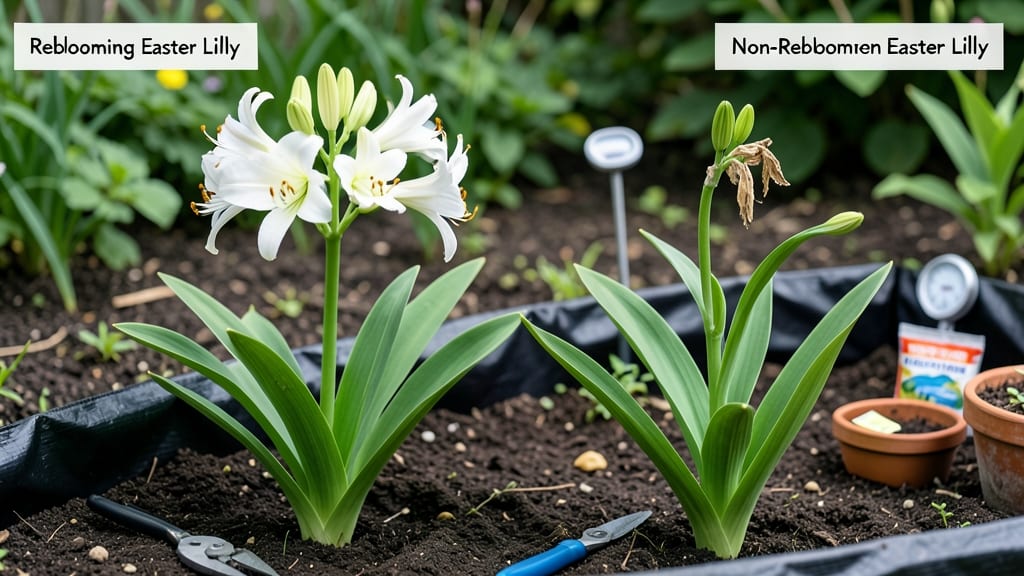
Some Easter lilies do bloom more than once, particularly reblooming varieties like 'Stargazer' or 'Casa Blanca,' which can produce secondary flowers with proper care—pruning spent blooms, regular fertilizing, and full sun exposure.
Easter lilies are known for their dramatic spring blooms, but their flowering habits depend entirely on the variety.
Standard Easter lilies focus all their energy on a single spectacular show before entering dormancy, while reblooming types store energy differently. 🌸 The key difference lies in their genetic makeup—rebloomers allocate resources more efficiently, allowing them to produce a second flush of flowers later in the season.
This makes them ideal for gardeners who want year-round color.
To encourage reblooming, start by deadheading spent blooms immediately after they fade. This redirects energy back to the bulb rather than seed production.
I also recommend fertilizing every 4-6 weeks during the growing season with a balanced, water-soluble fertilizer—this gives the plant the nutrients it needs to recover and prepare for a second bloom cycle.
Most rebloomers need at least 6-8 hours of direct sunlight daily, though they can tolerate partial shade in hotter climates.
💡 In This Article
- Why Most Easter Lilies Bloom Only Once
- How to Care for Reblooming Easter Lily Varieties
Why most Easter lilies bloom only once
Standard Easter lilies (Lilium longiflorum) follow a strict biological cycle where they allocate nearly all their energy into producing a single, abundant bloom in spring.
This is because their bulbs prioritize reproductive success—once the flowers fade, the plant shifts focus to seed production or bulb storage, entering a dormant phase. 🌱 The bulb's energy reserves are depleted by this process, leaving little left for additional flowering.
Unlike perennials that bloom repeatedly, these lilies treat each bloom cycle as an all-or-nothing event, similar to how peonies or dahlias produce one flush of flowers before resting.
The key difference lies in their carbohydrate storage. Standard Easter lilies store energy primarily as starch in their bulbs, which gets converted into sugars during flowering. After blooming, the plant lacks the reserves to restart this process without significant external support.
Reblooming varieties, however, have evolved to store energy more efficiently—often as soluble sugars rather than starch—allowing them to recover faster and produce a second bloom.
For example, the 'Casa Blanca' variety can store up to 30% more sugars in its leaves and stems compared to standard types, giving it the flexibility to rebloom.
Light exposure also plays a critical role. Most Easter lilies are short-day plants, meaning they bloom in response to shorter daylight hours in spring.
After their initial bloom, they enter a refractory period where they require a specific number of long days (typically 14+ hours of light) to reset their biological clock and prepare for a second bloom.
Standard varieties rarely receive this trigger naturally, while rebloomers are often bred to be less sensitive to these light cues. This explains why rebloomers can produce secondary flowers even in summer, when daylight remains long.
Temperature and humidity further influence blooming patterns. Standard Easter lilies thrive in cooler climates (ideal temperatures between 60-75°F during growth) and struggle to rebloom in hotter regions because high heat accelerates energy depletion.
Rebloomers, however, often have thicker leaves and deeper root systems that help them regulate moisture and temperature better, enabling them to persist through heatwaves. For instance, the 'Stargazer' variety can tolerate up to 85°F without significant stress, making it more adaptable for secondary blooming.
One fascinating aspect is how reblooming varieties manage their flower buds. While standard lilies produce all their buds at once, rebloomers develop buds gradually throughout the growing season. This staggered approach means they can produce a smaller but consistent number of flowers over time, rather than one massive display.
For example, a reblooming lily might produce 5-10 smaller blooms in late summer instead of one large flower in spring, but the cumulative effect is often just as striking.
Understanding these differences helps explain why some gardeners see multiple blooms while others don't. The variety you choose—and how you care for it—determines whether your Easter lily puts all its energy into one spectacular moment or spreads it out over several. 🌸