
Blooming
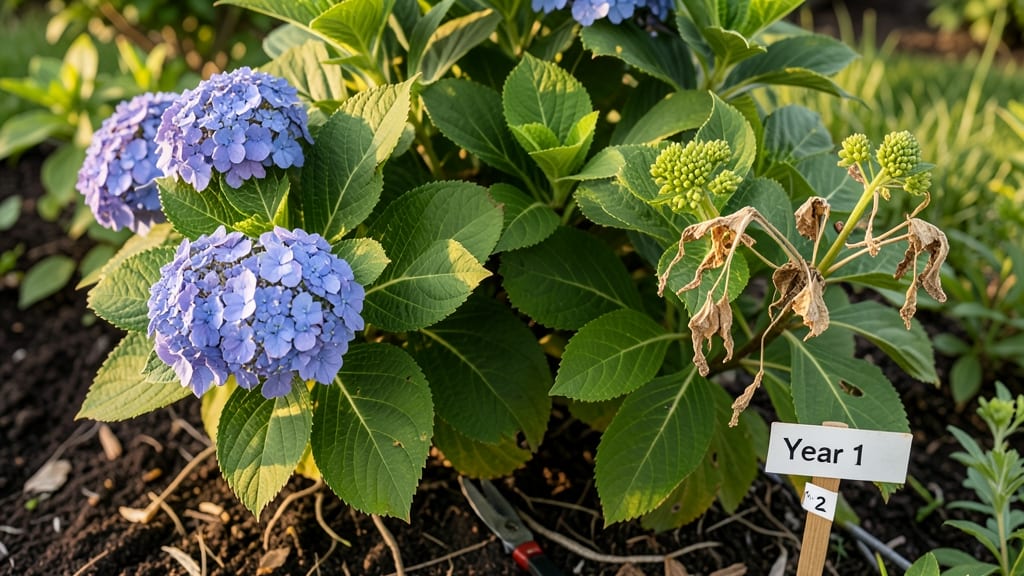
Hydrangeas do bloom every year, but their flowering habits depend on the variety and climate—some like mophead types bloom on old wood, while others like panicle types bloom on new growth, requiring pruning strategies tailored to cold hardiness zones.
Hydrangeas are annual bloomers, but the timing and success of their flowers hinge on two key factors: their growth type and your local climate zone. 🌸 Mophead varieties, for example, set buds in late summer on last year's stems (old wood), so a harsh winter can mean fewer blooms next spring.
Meanwhile, panicle types produce flowers on current season's growth (new wood), giving them more flexibility in colder regions. Understanding these differences lets you adjust pruning schedules—like cutting back mopheads right after blooming or waiting until late winter for panicles—to maximize next year's display.
What many gardeners overlook is how cold hardiness zones (USDA 3-11) interact with these growth patterns. In Zone 5, for instance, oakleaf hydrangeas might need winter mulching to protect their old wood buds, while in Zone 9, panicle types can bloom twice a year if pruned correctly.
The secret to reliable annual blooms lies in matching your care routine to your specific variety and microclimate.
💡 In This Article
- Hydrangea Blooming Types: Old Wood vs New Growth Explained
- Pruning and Care Tips for Year-Round Hydrangea Blooms
Hydrangea blooming types: old wood vs new growth explained
The key to understanding why hydrangeas bloom annually lies in their growth habits, specifically whether they flower on old wood (last year's stems) or new wood (current season's growth).
Mophead varieties like 'Endless Summer' set flower buds in late summer on stems that formed the previous year, making them vulnerable to winter dieback.
These buds require 60-90 days of chill hours (temperatures between 32-45°F) to develop properly—if winter temperatures fluctuate too much, buds can abort, leaving you with sparse blooms. 🌸
Panicle hydrangeas, including 'Limelight' and 'Little Lime,' take a different approach by producing flowers on current season's growth. This gives them a natural advantage in colder climates because they don't rely on protected old wood buds.
Oakleaf hydrangeas ('Snow Queen') bridge both worlds—they bloom on both old and new wood, but their primary flowers form on old stems in early summer, with secondary blooms appearing later on new growth.
The science behind this involves auxin hormones that regulate bud formation, with old wood requiring more precise environmental cues.
Cold hardiness zones play a critical role in determining which blooming type thrives where. In USDA Zone 3-5, where winters can drop below -25°F, panicle types often outperform mopheads because their buds form after the worst freeze periods.
Meanwhile, in Zone 7-9, mopheads can struggle with inconsistent chill hours, sometimes producing fewer blooms unless you provide winter protection like thick mulch or burlap wraps. The 10-15°F temperature threshold is particularly critical—buds often begin forming when nighttime temps stabilize above this range.
What most gardeners don't realize is how bud formation timing affects next year's blooms. For old wood varieties, the critical window is late August to early September—this is when flower buds begin developing.
If you prune at the wrong time (like cutting back mopheads in early spring), you're removing next year's potential blooms. New wood varieties are more forgiving, but even they need proper pruning timing to encourage strong new growth that will bear flowers.
The difference comes down to when the plant allocates its energy resources.
Consider the 'Nikko Blue' mophead variety as an example—it requires at least 1,000 chill hours annually to set reliable buds.
In Zone 6, this typically happens naturally, but in Zone 8, you might need to provide artificial chill with shade cloth or move potted plants to cooler locations during winter.
Panicle types like 'Gold Rush' adapt better to Zone 4-8 because their flowering mechanism isn't as dependent on protected old wood. This adaptability makes them popular in northern gardens where winters are harsh.
The physical structure of these buds also differs significantly. Old wood buds appear as small, rounded swellings along the stems, while new wood buds form at the tips of current season's growth.
When you see those 1-2 inch green tips emerging in spring, you're looking at potential blooms for panicle types. For mopheads, you need to look for those protected buds along last year's stems—often hidden under winter mulch. This structural difference explains why pruning approaches vary so dramatically between types. ✨