
Blooming
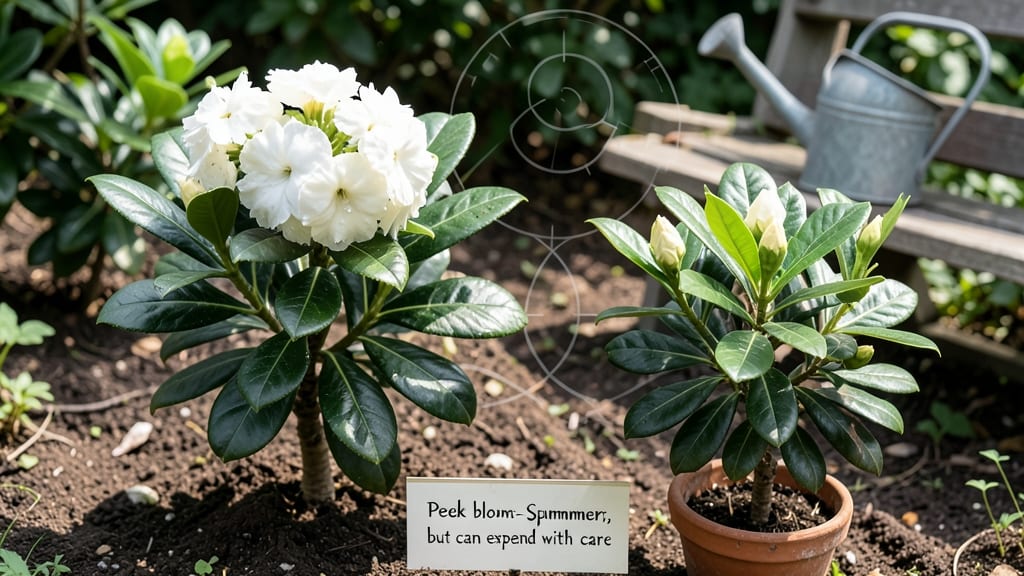
Gardenias do not bloom all year—they flower seasonally, primarily from spring through summer, with some varieties lasting into early fall. While attentive care like proper pruning and light exposure can prolong blooming, they won’t flower continuously year-round.
Gardenias are sensitive to daylight changes, which trigger their blooming cycles. 🌸 In warmer climates like Florida or California, you might see flowers appearing as early as late winter, while northern gardeners typically wait until late spring.
I’ve found that gardenias in USDA Zones 8-10 often produce their most abundant blooms during the longest daylight hours of summer, while those in cooler zones may only flower for 2-3 months.
The key is understanding your local climate—gardenias need at least 6-8 hours of sunlight daily to set buds, but too much intense afternoon sun can actually stress the plant and reduce flowering.
What many gardeners don’t realize is that the plant’s natural dormancy period—usually in late fall and winter—is crucial for reblooming.
During this time, gardenias focus energy on root and foliage growth rather than producing flowers. Pruning in late winter or early spring (just before new growth begins) helps stimulate fresh blooms, while fertilizing with acidic, phosphorus-rich formulas in early spring gives them the nutrients they need for their flowering season.
The misconception about year-round blooming often comes from seeing gardenias in greenhouses or tropical climates where conditions are artificially controlled.
💡 In This Article
- Seasonal Blooming Patterns of Gardenia Plants
- Tips to Extend Gardenia Blooming Seasons
Seasonal blooming patterns of gardenia plants
Gardenias follow a strict seasonal rhythm tied to daylight and temperature. Their natural blooming window typically spans from late spring through summer, when days are longest and temperatures hover between 65-85°F.
This is when gardenias receive the perfect balance of light and warmth to trigger flower production through a process called photoperiodism—where increasing daylight hours signal the plant to bloom.
In tropical climates like Hawaii or southern Florida, gardenias may start flowering as early as February, while northern gardeners in USDA Zones 5-7 often see their first buds appear in May or June.
The plant's internal clock is also influenced by temperature fluctuations. Gardenias need warm nights (70°F) to develop buds, but sudden cold snaps below 50°F can shock the plant and cause buds to drop.
This is why gardenias in cooler regions often have shorter blooming windows—sometimes just 2-3 months—compared to their tropical counterparts.
The fragrance you associate with gardenias is actually a chemical response to these environmental cues, with higher temperatures increasing the production of volatile organic compounds that create that signature sweet, creamy aroma.
Regional variations play a huge role in blooming patterns. For example, gardenias in California's Mediterranean climate may experience a second, smaller flush of flowers in early fall when temperatures remain mild. Meanwhile, those in humid southeastern states like Georgia might bloom continuously from April through October if conditions are ideal.
The key difference lies in humidity—gardenias thrive in 50-70% humidity, and lower levels in arid climates can stunt flower production. This is why many gardeners in dry areas use humidifiers or misting systems to extend their blooming season.
What most people overlook is how gardenias prepare for their next blooming cycle. After their peak season, the plant enters a rest period where it focuses energy on root and foliage growth rather than producing flowers.
This dormancy is essential—without it, the plant becomes stressed and produces fewer blooms the following year. The transition is often marked by a noticeable slowdown in growth and a reduction in new leaves, signaling that the plant is conserving energy for next season's flower production.
Understanding these natural patterns helps explain why you won't see gardenias blooming in winter, even with perfect care. The plant's biology is hardwired to respond to seasonal changes, and this cycle has been maintained through generations.
For example, gardenias in greenhouses can sometimes be coaxed into blooming outside their natural window through artificial lighting, but this requires precise control of 12-14 hours of light daily—a level of intervention that's impractical for most home gardeners.
The result is often smaller, less fragrant flowers that lack the vigor of seasonally produced blooms.
One fascinating aspect is how gardenias from different regions have adapted slightly to their local climates. For instance, gardenias native to Japan (like Gardenia jasminoides) tend to bloom later in the season compared to those from tropical Asia.
This regional adaptation explains why some gardeners in Zone 7 might see their plants flower in July while others in Zone 9 see blooms as early as April.
The plant's ability to adjust its timing demonstrates how deeply its flowering cycle is connected to environmental factors beyond just temperature and light.