
Blooming
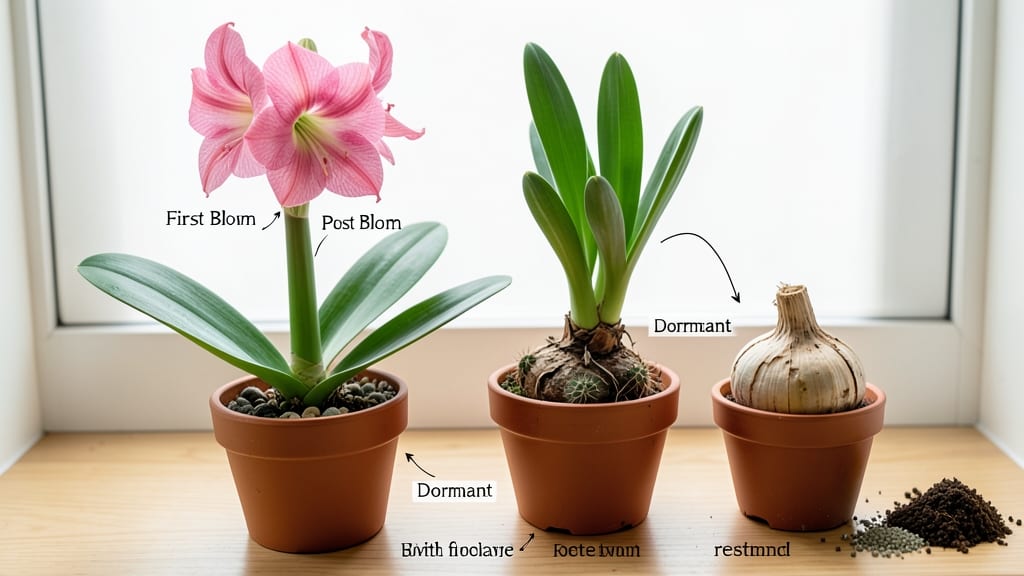
Amaryllis plants do bloom more than once when given the right conditions, but they need a strict 6-8 week dormancy period after their first bloom to recharge and prepare for the next flowering cycle. Without this rest phase, the bulb won't have enough stored energy to produce another showy display.
Amaryllis bulbs store energy in their thick roots during active growth, and that energy powers their dramatic spring blooms. 🌸 When you skip dormancy, the plant diverts all its resources to maintaining leaves instead of building up new flower buds.
Think of it like a battery that needs time to recharge—without it, your amaryllis will keep producing foliage but won't reward you with those stunning, trumpet-shaped flowers again.
The key to success lies in mimicking their natural seasonal cycle. Most amaryllis varieties originate from South America where they experience distinct wet and dry seasons. By replicating this pattern—stopping water when leaves yellow after blooming and providing cool, dry conditions—you're essentially tricking the plant into thinking winter has arrived.
This dormancy period is when the bulb matures and stores nutrients for next year's bloom.
What many growers overlook is that dormancy isn't just about withholding water. The right light conditions (bright but indirect) and temperatures between 50-60°F are equally important. I've found that using a grow light during dormancy can actually help prevent the bulb from using up its reserves too quickly.
The goal is to create just enough stress to trigger flowering while keeping the bulb alive.
💡 In This Article
- The Science Behind Amaryllis Reblooming Cycles
- Step-by-Step Guide to Encouraging Multiple Amaryllis Blooms
The science behind amaryllis reblooming cycles
Amaryllis bulbs operate on a strict biological timeline where energy storage and flower production are tightly linked. During active growth, the bulb converts sunlight into carbohydrates through photosynthesis in its leaves, storing these reserves in its thick, fleshy roots.
This stored energy—primarily in the form of starches—fuels the dramatic flowering process. When your amaryllis produces its first bloom stalk, it's using up roughly 20-30% of its stored reserves in just a few weeks.
Without a dormancy period, the bulb has no opportunity to replenish these reserves, leaving it unable to produce another flower stalk.
The dormancy trigger comes from a combination of temperature and daylight changes. Amaryllis bulbs need 50-60°F temperatures and reduced light levels to enter their resting phase. At these cooler temperatures, the bulb's metabolic rate slows dramatically—similar to how a bear conserves energy during hibernation.
This reduction in activity allows the bulb to redirect its remaining resources toward bulb maturation rather than leaf growth. The bulb's cells begin producing new flower buds during this time, a process that takes about 6-8 weeks to complete.
Without this cool-down period, the bulb remains in a constant "growth mode," producing more leaves but never initiating flower bud formation.
Light exposure plays a crucial role in this cycle too. While amaryllis bulbs need bright light during active growth, they actually require reduced but not complete darkness during dormancy.
Complete darkness can cause the bulb to use up its remaining reserves too quickly, while too much light might prevent proper dormancy. I've found that placing bulbs in a north-facing window or under a low-intensity grow light (200-400 lumens) during dormancy provides just the right balance.
This light level is enough to maintain basic cellular functions but not enough to trigger new leaf growth.
What's fascinating is how the bulb's internal clock works. Amaryllis bulbs have what botanists call a "vernalization requirement"—they need to experience a period of cool temperatures before they'll produce flowers. This is similar to how many spring-flowering plants need a cold winter to trigger blooming.
The cool temperatures during dormancy cause chemical changes in the bulb that activate flowering genes. Without this temperature cue, even with plenty of stored energy, the bulb won't produce flower stalks. This is why you might see amaryllis plants growing vigorously but never reblooming—they're missing this critical temperature signal.
Another important factor is the bulb's size. Larger bulbs (typically 3-4 inches in diameter) have more stored energy and are more likely to rebloom successfully. Smaller bulbs may need 2-3 years of proper care before they have enough reserves to produce multiple blooms.
The size of the bulb directly correlates with its energy storage capacity—think of it like a battery where larger bulbs have more "charge" to draw upon for successive flowering cycles. This is why young amaryllis plants often bloom once but struggle with subsequent blooms until they mature.
One common misconception is that amaryllis bulbs need to be completely dry during dormancy. While reduced watering is essential, the bulb actually needs about 50% moisture retention in its storage medium to prevent cellular damage.
Complete desiccation can cause the bulb's outer layers to dry out and crack, which would be catastrophic for reblooming efforts. The goal is to keep the bulb just barely hydrated—enough to maintain cellular integrity but not enough to encourage new growth.
This delicate balance is why many growers use a mix of 50% peat moss and 50% perlite during dormancy—it provides just enough moisture while allowing excess water to drain away.