
Blooming
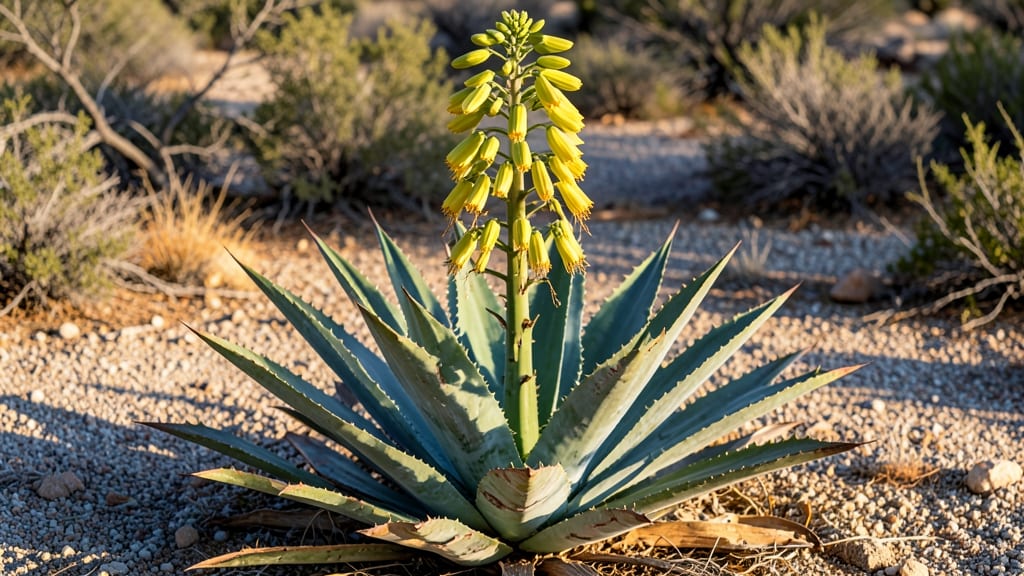
That dramatic agave bloom stalk is nature's way of saying "watch this." 🌱 Most agave plants only flower once in their lifetime, and when they do, it's a stunning spectacle—tall, spiky, and covered in tiny blooms that attract hummingbirds.
But here's the catch: forcing an indoor agave to bloom without sunlight is tricky, and the stalk itself can drain the plant's energy. The stalk emerges from the center of the rosette, growing rapidly over weeks (sometimes months) before flowering.
Once it appears, your care routine changes completely—watering increases, support may be needed, and you'll need to decide whether to let the plant flower or remove the stalk to preserve its energy for future growth.
What you end up with is either a breathtaking floral display or a plant that rebounds stronger after recovery. The key is balancing support with the plant's natural lifecycle—because once that stalk appears, the clock is ticking on your agave's future.
First, you'll need patience and the right conditions: bright indirect light (even indoors), well-draining soil, and a warm environment. The bloom stalk itself is heavy, so staking or tying it to a support helps prevent snapping.
Water lightly during this phase—overwatering when the stalk is forming stresses the plant more than it already is.
After flowering, the mother plant typically dies, but pups (baby agaves) form at the base. These are your insurance policy for continuing the cycle. If you choose to remove the bloom stalk early, the plant often recovers better and may even produce another stalk later—though it's rare.
Indoor agaves bloom less frequently than outdoor ones, so when it happens, it's a big deal. The real magic is in the trade-off: a once-in-a-lifetime show versus long-term plant health. Either way, you're witnessing one of nature's most dramatic plant life cycles up close.
📚 In This Guide
- What you need
- Instructions
- Tips and common mistakes
- Wrapping up and next steps
What you need
- ● Mature agave plant (century plant or similar) – Choose a healthy specimen with a thick, sturdy base (at least 3–5 years old).
- ● Grow lights (LED or fluorescent, full-spectrum) – 2–4 bulbs, each with 10,000–15,000 lumens (adjustable height for optimal light coverage).
- ● Thermometer & hygrometer – To monitor temperature (70–85°F) and humidity (40–60%).
- ● Watering can with a fine rose nozzle – For gentle, controlled hydration.
- ● Well-draining potting mix – A blend of cactus/succulent soil (50%) + perlite/pumice (30%) + coarse sand (20%).
- ● Fertilizer (balanced or bloom-boosting) – Low-nitrogen (5-10-10 or 7-9-5), diluted to half-strength.
- ● Pruning shears or sharp knife – For trimming dead leaves or the bloom stalk post-flowering.
- ● Timer for grow lights – 12–16 hours/day for consistency.
- ○ Heat mat (optional for root warmth) – 70–80°F to encourage growth.
- ● Plant support (bamboo stakes or wire) – If the stalk sways heavily.
- ● Spray bottle – For misting leaves to maintain humidity.
- ● Camera or journal – To document the ephemeral bloom process!
Step-by-step instructions for forcing an agave bloom stalk indoors
Here’s how I’ve coaxed agave blooms indoors—no greenhouse or desert sun required.
🌱 Step 1: Select the Right Agave Plant
Choose a mature agave at least 5-7 years old—younger plants won’t bloom. Look for a healthy, sturdy rosette with no signs of rot or pest damage. The bigger the plant, the better its chances of producing a bloom stalk. I always pick varieties like Agave americana or Agave parryi, which are more responsive to forcing.
Check the plant’s age by counting growth rings at the base—each ring represents a year. If your agave is too small (under 12 inches wide), it’s not ready. Patience here saves heartache later. Once you’ve picked your plant, place it in a bright, indirect light spot for 2-3 weeks to acclimate before forcing.
☀️ Step 2: Simulate Desert Conditions
Agaves need dry, hot conditions to trigger blooming. Move your plant to a sunny window (south-facing is best) or under grow lights set to 12-14 hours of light daily. If using grow lights, position them 6-12 inches above the plant. The goal is to mimic the intense sun agaves experience in their native habitat.
Reduce watering drastically—only water every 3-4 weeks during this phase. Let the soil dry out completely between waterings. Overwatering stresses the plant and prevents blooming. I use a moisture meter to check soil dryness; if it reads 2-3 (dry), it’s time to water again.
💧 Step 3: Apply Ethrel or Ethylene Gas
Ethrel (a synthetic ethylene gas) is the secret weapon for forcing blooms. Mix 1,000-2,000 ppm Ethrel with water in a spray bottle. Spray the entire plant until runoff occurs, focusing on the leaves and stem. Do this once every 7 days for 3 weeks. Ethrel mimics the stress signals agaves receive in nature, triggering the bloom response.
If you can’t find Ethrel, you can try the apple core method: Place 3-4 apple cores in a sealed plastic bag with the agave for 24 hours. Apples release ethylene gas, which may stimulate blooming. Repeat this weekly for 3 weeks. Watch for yellowing at the base—this is a sign the treatment is working.
⏰ Step 4: Monitor for Bloom Stalk Growth
After 4-8 weeks of treatment, check the plant’s center for a tight, waxy bud—this is the bloom stalk forming. It may start as a small bump or a slight swelling. Keep the plant in bright light and continue minimal watering. If the stalk appears but stalls, repeat the Ethrel spray or ethylene treatment for another 2 weeks.
Once the stalk reaches 6-12 inches tall, it’s growing fast. Support taller stalks with a small bamboo stake tied loosely to the plant. Avoid overwatering now—water only when the soil is bone-dry. A blooming agave is sensitive to excess moisture, which can rot the stalk before it opens.
🌿 Step 5: Care for the Blooming Plant
When the bloom stalk opens, enjoy the spectacular 6-12 foot tall flower spike—but don’t expect it to last long. Agave blooms typically open fully in 2-3 days before wilting. After blooming, the mother plant dies, but offsets (pups) at the base will grow into new agaves.
Remove the dead flower stalk once it browns completely. Increase watering slightly for the offsets, keeping soil moist but not soggy. In 6-12 months, you’ll have 3-5 new agave plants ready to repeat the process. Save the offsets and start forcing again—it’s a rewarding cycle!
Tips & tricks for forcing agave blooms indoors
Here's what I wish I knew before forcing my first agave—these tricks will help you avoid common pitfalls and boost your success rate.
Plant Selection Matters: Look beyond just age—check the plant's overall health. Healthy agaves have firm leaves with no brown tips or mushy spots at the base. I've seen plants that looked mature but had hidden rot that prevented blooming. Also, avoid plants that are already flowering naturally; forcing won't work on them. The best candidates are those that have been growing steadily for years but haven't bloomed yet.
Lighting is Non-Negotiable: South-facing windows provide the most consistent light, but if that's not an option, grow lights are your best bet. I use LED grow lights on a timer set to 12-14 hours daily—this mimics the long desert days agaves need. Place lights 6-12 inches above the plant and adjust as the stalk grows. Too much distance means weak growth; too little can scorch the leaves.
Ethrel Application Technique: When spraying Ethrel, focus on the undersides of leaves where stomata (pores) are most concentrated. I use a spray bottle with a fine mist setting to ensure even coverage without dripping. For the apple core method, place cores near the plant's base rather than on top of the soil—this directs ethylene gas where it's most effective. Remember, consistency is key: stick to the weekly schedule for all 3 weeks, even if you don't see immediate results.
Watering Watchdog: The most common mistake I see is overwatering during the critical 4-8 week monitoring phase. Use a moisture meter to check soil dryness—if it reads 2-3 (dry), it's time to water. I've had stalks rot before they could open because the soil stayed too moist. Once the stalk reaches 6 inches, water only when the soil is completely bone-dry, and use a pot with drainage holes to prevent waterlogging.
Pro Tips for Agave Bloom Stalk
- Here's what I wish I knew before forcing my first agave—these tricks will help you avoid common pitfalls and boost your success rate.
- Plant Selection Matters: Look beyond just age—check the plant's overall health.
- Lighting is Non-Negotiable: South-facing windows provide the most consistent light, but if that's not an option, grow lights are your best bet.
Frequently asked questions
Got questions about forcing an agave bloom stalk indoors without sunlight? You’re not alone!
Here are some of the most common queries—and straightforward answers—to help you navigate this rewarding (but tricky) process.
Why won’t my agave bloom indoors even with forcing?
Agaves are notoriously stubborn! Even with proper forcing, some varieties refuse to bloom indoors due to genetic quirks or stress from being rootbound. If your plant stays dormant after 6–12 months, it may need more time, patience, or a different forcing method. Check for signs of rot or pests—sometimes the issue isn’t the stalk at all!
How long does it take for an agave stalk to emerge after forcing?
Timing varies wildly! Most agaves show signs (like a swollen base or tiny sprout) within 3–6 months, but some take up to a year. If nothing happens after 12 months, your plant may need a harder push—like a root prune or a warmer, brighter spot. Patience is key!
Can I force any agave to bloom, or are some varieties better suited?
Not all agaves are created equal! Agave americana, parryi, and victoria-reginae are the most responsive to forcing, while others (like Agave tequilana) rarely bloom indoors. If you’re unsure, research your specific variety—some are one-time bloomers and may die after flowering (a natural but sad part of the process!).
What do I do if my agave stalk rots or turns mushy?
Ugh, the worst. Overwatering or poor drainage is usually the culprit. If you spot soft, blackened tissue, act fast:
- Trim away the rotted section with sterile shears.
- Repot in fresh, well-draining cactus mix.
- Let the soil dry completely between waterings.
Is there a way to force a bloom without damaging the plant?
The gentlest method is gradual stress:
- Start with mild root disturbance (like loosening roots in spring).
- Avoid extreme heat or cold—stick to 70–85°F.
- Use a grow light (not direct sun) to mimic daylight.
Wrapping up and next steps
Watching your agave bloom indoors—even without abundant sunlight—can be a rewarding experience!
By understanding its unique needs and following the right steps, you’ve unlocked the secret to coaxing that stunning agave bloom stalk to life. 🌱 Whether you’re a plant enthusiast or just curious, this journey proves that patience and care can turn a simple houseplant into a showstopper.
Now that you’re equipped with the know-how, why not share your success? Try experimenting with different agave varieties, document your progress, or even gift a blooming stalk to a fellow plant lover. Happy growing! 🌟