
Blooming
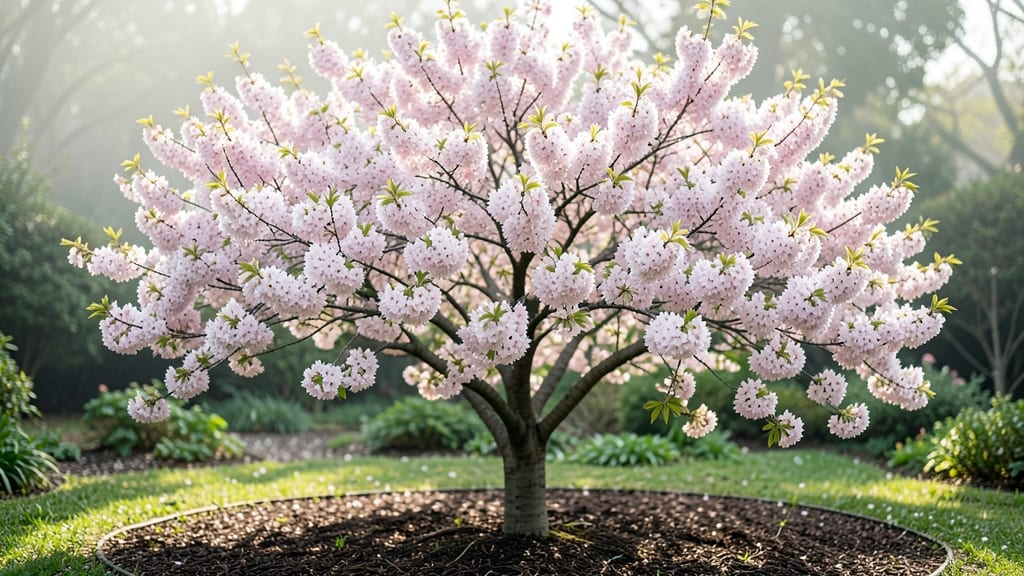
The cherry blossom tree bloom time varies by variety and climate zone, but most burst into color between late March and mid-April 🌸—a fleeting window that turns your yard into a dreamy pink-and-white canvas.
Picture this: You’ve been waiting all winter, and then—one morning—your Yoshino tree wakes up in a blaze of petals. But here’s the catch: bloom dates can shift by two to four weeks depending on where you live.
A DC Yoshino might peak in early April, while a Los Angeles Autumnalis could hold off until May.
Whether you’re planning a spring picnic under the branches or just want to avoid pruning during bloom season, knowing your tree’s exact schedule is the key.
Below, I break down the precise bloom windows for 12+ popular varieties, plus how to adjust for your local climate—so you never miss the show.
You’ll also discover how to predict your tree’s bloom time like a pro, from tracking bud swell to using degree-day calculators, and when to feed or prune for the longest, most spectacular display.
Cherry blossom bloom time by popular variety: exact weeks to plan your viewing
Planning your cherry blossom viewing experience starts with understanding each variety's unique bloom window. While most blossoms appear in spring, the exact timing varies dramatically—some varieties bloom as early as late February, while others wait until mid-April.
Knowing these differences helps you select trees that align with your ideal viewing dates or extend your bloom season.
Bloom periods also depend on your USDA hardiness zone. In colder zones (5-6), trees may bloom 2-3 weeks later than in warmer zones (7-9).
For example, a Yoshino cherry in Washington, DC (Zone 7b) typically blooms in mid-April, while the same variety in Minneapolis (Zone 4b) might not peak until early May.
| Variety | Avg. Bloom Window (USDA Zone 7b) | Peak Bloom Duration | Visual Cues |
|---|---|---|---|
| Yoshino | Late March - Early April | 7-10 days | Bud swell in Feb, pink buds by March 15 |
| Kwanzan | Mid-April | 10-14 days | Deep pink buds appear March 20, full bloom April 10 |
| Autumnalis | Late April - Early May | 14-21 days | Bud swell March 1, intermittent blooms through May |
| Mount Fuji | Early April | 7-10 days | Bud swell Feb 28, white blooms by April 5 |
| Akebono | Late March | 5-7 days | Early bloomer, buds swell Feb 15, peak March 22 |
| Shirotae | Mid-April | 10 days | Pure white buds appear March 25, full bloom April 12 |
| Somei-Yoshino | Late March - Early April | 8-12 days | Bud swell Feb 20, pink buds March 10 |
| Okame | Early April | 7-10 days | Bud swell Feb 25, bright pink blooms April 3 |
| Fugenzo | Mid-April | 10-14 days | Bud swell March 1, double blooms peak April 15 |
| Taihaku | Late March | 7-10 days | Bud swell Feb 22, white blooms March 28 |
For early bloomers like Akebono or
How climate Zone and microclimates shift cherry blossom bloom timing by 2-4 weeks
If you’ve ever planned a cherry blossom festival or simply wanted to enjoy your tree’s peak bloom, you know timing is everything. USDA hardiness zones alone can shift bloom windows by 2-4 weeks—but microclimates add even more complexity.
In Zone 5, Yoshino trees often bloom in late April, while the same variety in Zone 9 may flower as early as mid-February. Understanding these shifts helps you predict—and even influence—your tree’s schedule.
Beyond zones, elevation and urban heat islands play starring roles. A 1,000-foot elevation gain can delay blooms by 10-14 days, while city centers with concrete and asphalt may trigger earlier blooms by 1-2 weeks compared to rural areas.
For example, Los Angeles’ Autumnalis variety often blooms in December-January, while a similar tree in nearby mountainous regions might wait until February.
Here’s how to estimate your local bloom window using science-backed tools and real-world examples from iconic cherry blossom hotspots:
To refine your estimate, start with your USDA zone as a baseline, then adjust for local topography. For instance, if you’re in Zone 7 but live near a mountain slope, subtract 10 days from the standard bloom date.
Urban gardeners can use NASA’s Worldview tool to check heat island effects—areas with asphalt-heavy streets often see blooms 1-2 weeks earlier.
For precise predictions, track degree days (a measure of heat accumulation) using tools like the National Oceanic and Atmospheric Administration’s (NOAA) climate calculators. Most cherry blossoms need 500-700 degree days from dormancy to bloom.