
Blooming
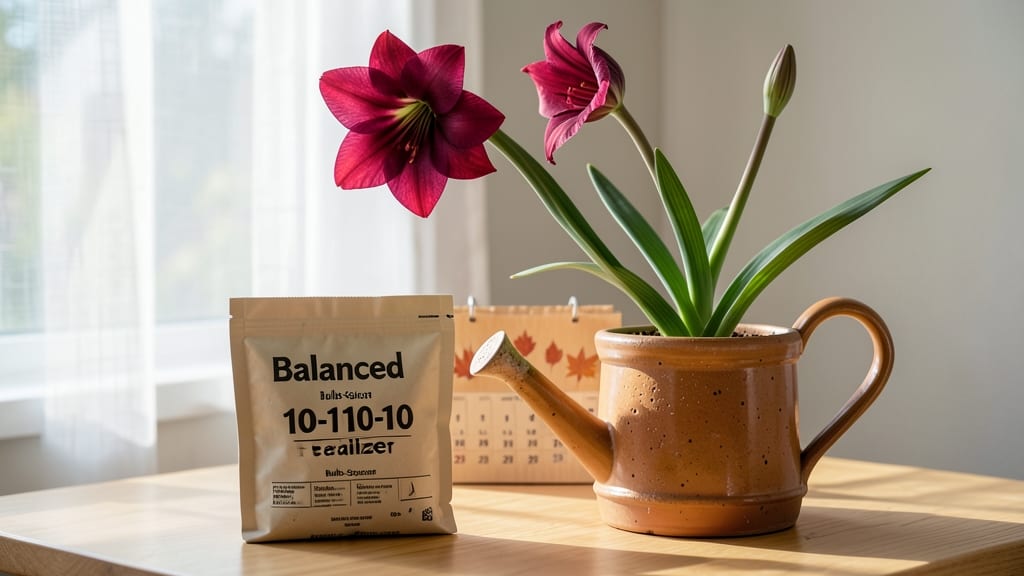
With the right care, amaryllis can bloom twice a year by following a precise temperature and light routine after each flowering cycle. This includes 6-8 weeks of cooler temperatures (60°F–65°F) followed by bright indirect light and warmer conditions (70°F–75°F). Proper hydration and well-draining soil are essential for sustaining these repeat blooms.
Amaryllis bulbs naturally enter a dormant phase after blooming, and this resting period is what makes double flowering possible. 🌱 The key is mimicking their natural seasonal shifts—cooling them down triggers the bulb to store energy for the next growth spurt.
I’ve found that using a grow light during shorter winter days helps maintain the energy balance needed for a second bloom cycle. Just remember: patience is crucial, as the bulb needs time to recover between cycles.
What many growers overlook is the importance of fertilizer timing. After the first bloom, switch to a low-nitrogen formula to encourage bulb development rather than foliage growth. 💫 A little extra care in this phase can make all the difference in whether your amaryllis delivers that second stunning display.
The secret lies in balancing these factors precisely.
💡 In This Article
- Light and Temperature Conditions for Double Amaryllis Blooms
- Step-by-Step Guide to Encouraging Year-Round Amaryllis Flowers
Light and temperature conditions for double amaryllis blooms
Amaryllis bulbs rely on photoperiodism—their internal clock that responds to light duration—to trigger blooming cycles.
When days shorten in fall, the bulb senses this change and begins storing energy for winter dormancy. 🌞 This is why providing 12-14 hours of bright indirect light daily during active growth phases (spring/fall) is critical.
Without sufficient light, the bulb won't accumulate enough carbohydrates through photosynthesis to fuel a second bloom. Think of it like a battery: the bulb needs full charges between uses.
The temperature dance begins immediately after the first bloom fades. Drop temperatures to 60°F–65°F for 6-8 weeks to mimic winter conditions, which signals the bulb to enter dormancy.
This cool phase allows the bulb to metabolize stored nutrients and rebuild energy reserves. 🌡️ What's fascinating is that this process involves hormonal changes—specifically, a reduction in gibberellins (growth hormones) and an increase in abscisic acid (stress hormone), which together trigger the dormant state.
Without this cooling period, the bulb remains in a state of active growth and won't have the energy for another flowering cycle.
After the cool period, gradually reintroduce warmth (70°F–75°F) and resume watering when you see new growth emerge. The transition should be slow—about 1°F per day—to prevent shock. 🌱 This gradual warming mimics spring's natural progression, allowing the bulb to transition smoothly from dormancy to active growth.
The key here is consistency: sudden temperature swings can disrupt the bulb's internal rhythms, leading to failed blooms or stunted growth. I've seen amaryllis bulbs that bloomed twice yearly when kept in a controlled environment with these precise temperature shifts, while others in fluctuating conditions struggled to rebloom.
Light quality matters just as much as duration. Amaryllis prefer 4,000–5,000 lux of light intensity—similar to what you'd find under a well-lit office desk. 💡 In winter months, supplement with a 10,000-lux grow light for 12–14 hours daily if natural light is insufficient.
The blue spectrum (400–500 nm) is particularly important for promoting flowering, while red light (600–700 nm) encourages foliage growth. This light balance is what helps the bulb allocate energy toward flower production rather than leaf development.
Seasonal adjustments are where many growers go wrong.
For example, if you force an amaryllis to bloom in December (using high light and warmth), the bulb won't have time to recover before the next holiday season. 🎄 This is why timing is everything—plan your first bloom for late winter/early spring, then follow the cool-warm cycle to achieve a second bloom by late fall.
The bulb's natural rhythm is what makes double blooming possible, and working with these cycles rather than against them is the secret to success.
Consider this real-world example: A grower in Florida (where temperatures rarely drop below 60°F) achieved double blooms by moving their amaryllis to a cool basement (62°F) for 8 weeks after the first bloom, then returning it to a sunny patio.
The controlled environment eliminated temperature fluctuations, allowing the bulb to follow its natural cycle. This approach works because it replicates the seasonal changes the bulb evolved to expect, even in a tropical climate. 🌿