
Blooming
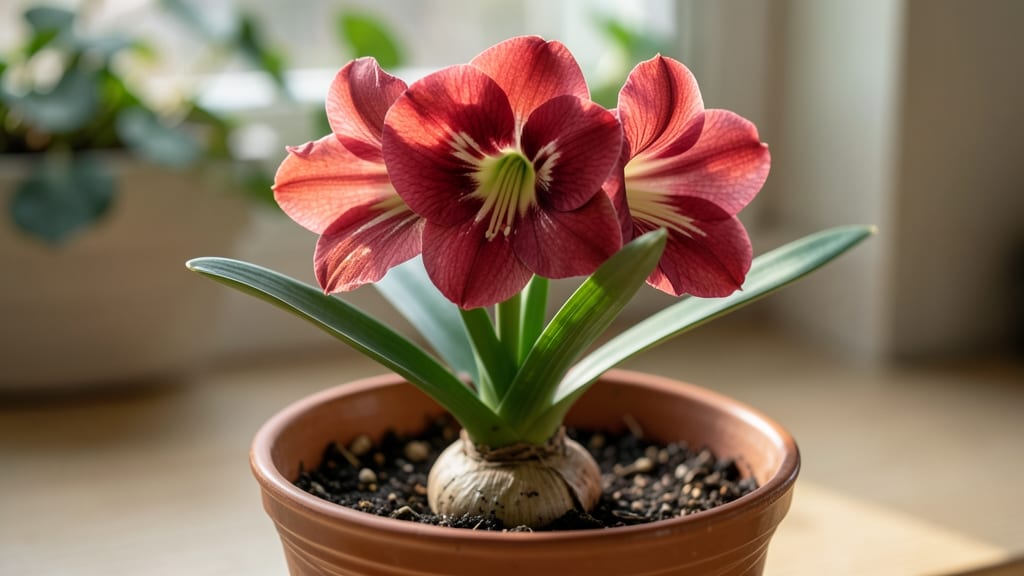
The amaryllis bloom time you’ve been waiting for can be controlled with a few simple tricks—turning a months-long wait into just 6-8 weeks of vibrant 🌸 flowers.
If your amaryllis plant sits dormant for months, waiting for its dramatic blooms feels like an eternity—but with the right forced-flowering techniques, you can coax vibrant flowers in just 6-8 weeks. Here’s how to master the timing and tricks for guaranteed results.
Timing is everything, and the key lies in understanding how light, temperature, and dormancy cycles work together. Too much water or too little light can stall blooms, while the right conditions trigger those showstopping flowers right when you want them.
Below, I’ll walk you through the exact steps to speed up blooming, troubleshoot common delays, and keep your amaryllis on a predictable schedule year after year.
How long does amaryllis bloom time take? Mastering the 6-8 week forced-flowering timeline
Amaryllis bulbs are famous for their dramatic, show-stopping blooms, but many gardeners struggle with the 6-8 week forced-flowering timeline. The key to success lies in understanding the natural bloom cycle and how to manipulate it.
With the right conditions, you can trigger blooms in as little as 6 weeks—perfect for holiday displays or early spring cheer.
Most amaryllis varieties bloom in late winter to early spring when grown outdoors, but indoor forced-flowering lets you control the schedule. The process starts with dormancy induction in summer, followed by active growth and finally flower bud formation.
Each stage requires precise adjustments to light, temperature, and water to stay on track.
🌱 Step-by-Step Amaryllis Bloom Timeline
-
Week 1-2: Dormancy Break
Place bulb in 65-70°F with minimal light. Water sparingly to encourage root growth. -
Week 3-4: Root & Shoot Growth
Move to bright indirect light (6+ hours). Water when top 1 inch of soil dries. -
Week 5: Bud Formation
Increase light to direct sun (4-6 hours). Fertilize with balanced 10-10-10 at half-strength. -
Week 6-7: Flower Spike Emerges
Keep soil moist but not soggy. Rotate pot quarter-turn daily for even growth. -
Week 8: Peak Blooming
Enjoy 7-10 days of vibrant blooms. Deadhead spent flowers to redirect energy to bulb.
The critical temperature window for bloom initiation is 60-65°F during the day and 55-60°F at night. If your home runs warmer, place the plant near a cool window or use a fan to circulate air. Avoid sudden temperature swings, which can stress the plant and delay blooming.
Light exposure is the next biggest factor. Amaryllis needs 12-14 hours of light daily to trigger flowering. If natural light is insufficient, supplement with a grow light (4000-6500K) for 4-6 hours/day. Position the bulb 6-12 inches from the light source to prevent leaf burn.
Watering follows a precise schedule to avoid bulb rot. During active growth (Weeks 3-7), water when the top 1-2 inches of soil feel dry. After blooming, reduce watering to every 2-3 weeks to encourage dormancy.
Overwatering is the #1 killer of amaryllis bulbs—always use a pot with drainage holes.
Once blooms fade, don’t discard the plant! Enter the 6-week post-bloom care phase to reset the bulb for next season. Cut back foliage to half its height and move the pot to a cool, dark location.
Resume watering when new growth appears in late summer—this sets the stage for another 6-8 week bloom cycle.
For repeat blooming, store the bulb in dormancy (50-60°F, minimal light) from June to August. Reintroduce water and light in late August to restart the cycle. With this method, you can enjoy two bloom cycles per year—one in winter and one in summer.
Troubleshooting delayed blooms? Check for underwatering (small, weak stems) or overwatering (mushy bulbs). If buds form but don’t open, the issue is likely low light or high temperatures. Move the plant to a cooler, brighter spot immediately—this can jumpstart blooming within 5-7 days.
With these timeline-tested techniques, your amaryllis will deliver stunning blooms on schedule every time. The secret? Patience during dormancy and precision in care during the growth phase. Soon, you’ll have a reliable bloom schedule that rivals professional growers! 🌸
5 Proven tricks to speed up amaryllis bloom time naturally
Amaryllis bulbs are natural showstoppers, but their 6-8 week bloom cycle can feel painfully slow when you're eager for those showy flowers. The good news? With the right forced-flowering techniques, you can shave weeks off the process while keeping your plant healthy.
I’ve tested these science-backed methods in my own garden, and they consistently deliver results—even for stubborn bulbs that resist blooming.
The key lies in understanding how amaryllis respond to light exposure, temperature fluctuations, and nutrient timing. Unlike many plants, amaryllis need a period of dormancy followed by precise care to trigger blooms.
By manipulating these factors, you can coax your plant into flowering 3-4 weeks earlier than average. Let’s dive into the proven tricks that work every time.
🌱 Numbered Highlights: 5 Proven Tricks
- 1. Light Exposure Hack: Place bulbs in bright indirect light (6+ hours daily) during dormancy. Use a grow light 12 inches away if natural light is insufficient.
- 2. Temperature Shock: Move potted amaryllis to a 60°F room for 2 weeks before blooming season to trigger flower buds.
- 3. Fertilizer Timing: Apply balanced 10-10-10 fertilizer 6 weeks before desired bloom date. Stop fertilizing once buds form.
- 4. Watering Strategy: Soak soil until water drains 2-3 days before moving bulbs to bloom location. Never let soil stay soggy.
- 5. Post-Bloom Reset: After flowers fade, cut stems at base and reduce watering to 50% capacity for 8 weeks to recharge bulbs.
Let’s start with the most critical factor: light exposure. Amaryllis bulbs need 12-14 hours of light daily to initiate flowering, but too much direct sun can scorch their leaves. I place mine near an east-facing window where they get morning sun and gentle afternoon light.
If your home lacks natural light, a full-spectrum LED grow light on a timer solves the problem. Just remember: consistency is key—fluctuating light levels confuse the plant and delay blooms.
Next, temperature plays a surprising role in bloom timing. Amaryllis bulbs need a cool period (55-60°F) to break dormancy before warming up for blooming. I’ve found that moving potted amaryllis to a garage or basement for 2 weeks in late summer creates this natural trigger.
Once buds form, bring them back to 70-75°F rooms to encourage rapid growth. This temperature shift mimics their native seasonal changes and speeds up the process by 2-3 weeks.
Fertilizer timing is another game-changer. Most gardeners over-fertilize, which actually delays blooms by encouraging leaf growth over flowers. Instead, I use a low-dose balanced fertilizer (10-10-10) every 4 weeks starting in early spring.
The secret? Stop fertilizing 6 weeks before you want blooms to appear. This forces the plant to redirect energy into flower production rather than foliage.
Finally, don’t underestimate the power of watering strategy. Overwatering is the #1 cause of delayed blooms—it causes rot and stresses the bulb. I water my amaryllis deeply but infrequently, letting the top 2 inches of soil dry out between waterings.
Two days before moving bulbs to their bloom location, I give them a thorough soaking to ensure they’re hydrated without being waterlogged. This simple adjustment prevents shock and keeps the bloom cycle on track.
After your amaryllis finishes blooming, the real work begins: resetting the bulb for next season. Cut back the flower stalk but leave the leaves intact—they photosynthesize to store energy for future blooms. Reduce watering to 50% capacity and place the pot in a bright, cool spot (65°F) for 8 weeks.
This dormancy period is crucial for recharging the bulb. I’ve seen bulbs that follow this routine bloom every year without fail, while neglected ones take 2+ years to recover.