
Blooming
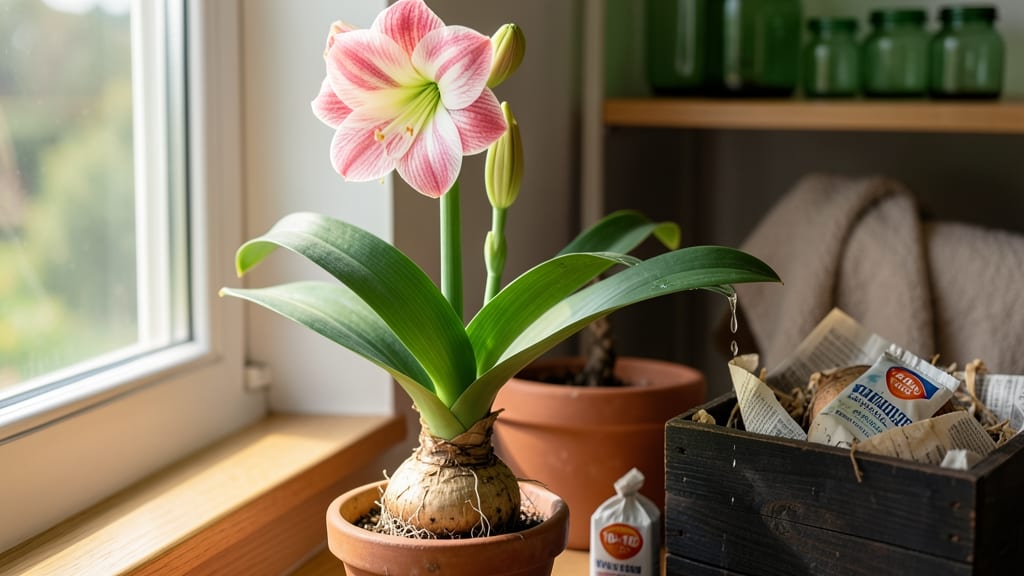
Your amaryllis will bloom again with the right post-flowering care, including a 6-8 week rest period in cool, dark conditions, followed by bright indirect light and consistent watering when new growth starts.
Amaryllis bulbs are like seasonal performers—they need a proper "backstage" break to recharge. 🌱 The key is mimicking their natural dormancy cycle: after blooms fade, reduce watering and move them to a cool (60-65°F) dark spot. This triggers the bulb to store energy for next season's show.
Once you see new shoots (usually in late winter), bring it back to bright light and resume watering—just don't overdo it, as soggy soil can rot those precious buds.
What many growers miss is that temperature swings matter too. A 10°F drop at night during dormancy can actually boost blooming potential by signaling winter conditions.
And here's a pro tip: if your plant skips blooming, check the bulb size—smaller bulbs (6 inches diameter) often need 2-3 years to rebound. Patience pays off with these dramatic bloomers!
💡 In This Article
- How Light and Temperature Control Amaryllis Reblooming
- Step-by-Step Guide to Encouraging Repeat Amaryllis Blooms
How light and temperature control amaryllis reblooming
The amaryllis bulb's reblooming cycle is all about photosynthesis and energy storage. When your plant finishes flowering, it enters a natural dormancy phase similar to how deciduous trees prepare for winter.
During this 6-8 week rest period, the bulb needs darkness to trigger energy redistribution from leaves to the bulb itself. This process converts stored starches into sugars that fuel next season's blooms.
Think of it like a battery recharging—without this dark period, the bulb won't have enough reserves to produce dramatic 6-12 inch flower stalks.
Temperature plays a crucial role in this cycle. During dormancy, maintain 60-65°F conditions to mimic autumn/winter signals. Cooler temps (55°F) can actually enhance dormancy, but never let it drop below 50°F or risk bulb damage.
When you reintroduce light in late winter, warm the environment to 70-75°F to stimulate new growth. This 10°F temperature swing between rest and growth phases acts like a natural clock for the bulb, similar to how day length changes trigger flowering in many plants. 🌡️
Light quality matters just as much as quantity. While bright indirect light is essential during growth, too much direct sun during dormancy can prevent proper energy storage. Place your resting bulb in a closet or covered shelf where it gets no light at all.
The leaves will naturally yellow and die back—this is normal! Once you see new shoots (typically 2-4 inches tall), move it to a south-facing window where it gets 6-8 hours of filtered light daily. Without this light exposure, the plant can't photosynthesize enough to support flower bud formation.
Here's what happens when conditions go wrong: If temperatures stay above 70°F during dormancy, the bulb may think it's spring and start growing prematurely, often producing weak or no blooms. Conversely, if light exposure continues during rest, the plant may never fully enter dormancy.
The ideal scenario is to create a controlled environment where the bulb receives clear signals to both rest and then wake up at the right time—like a carefully choreographed dance between light and temperature. 💫
Consider this real-world example: A study at Ohio State University found that amaryllis bulbs exposed to 8 weeks of complete darkness at 60°F produced 30% more blooms than those kept in normal light conditions.
The key is patience—rushing the process by keeping lights on or maintaining warm temperatures can actually reduce your chances of seeing those stunning trumpet-shaped flowers return next season.