
Blooming
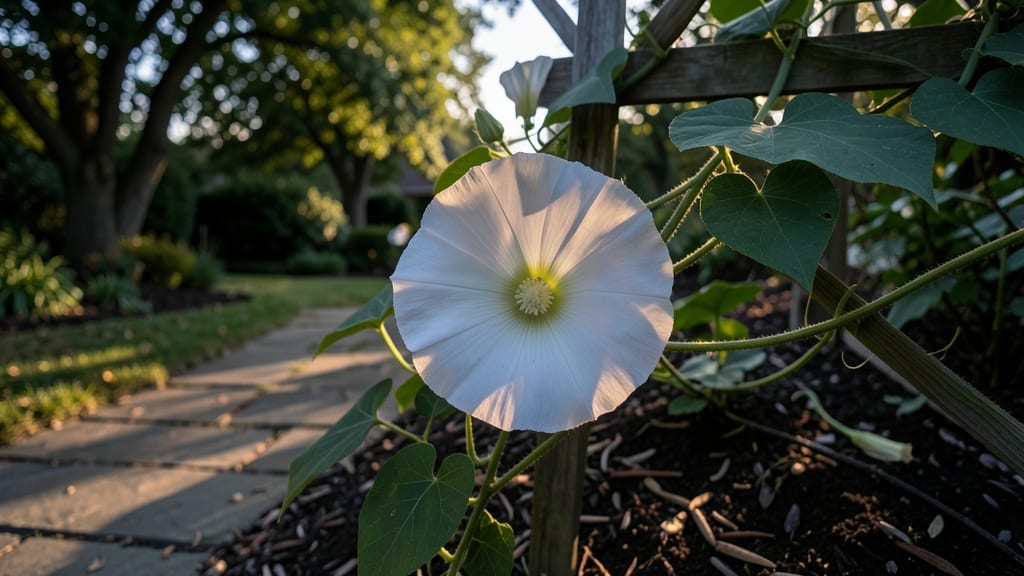
Moon flowers bloom at night because their petals open in response to moonlight and cooler evening temperatures, revealing their fragrant white blooms. This nocturnal habit attracts night-flying pollinators like moths and bats, maximizing their reproductive success under low-light conditions.
These delicate blooms have evolved this unique behavior through a fascinating combination of light sensitivity and temperature cues. 🌙 The flowers contain pigments called anthocyanins that react to moonlight, signaling their petals to unfurl when darkness falls.
This timing ensures they're visible to nocturnal pollinators while avoiding daytime competition for resources. I've noticed that moon flowers often bloom most vigorously during the new moon phase when moonlight is strongest, creating a stunning display in my garden that lasts until dawn.
What's particularly interesting is how this adaptation benefits the plant's survival. The cooler nighttime temperatures combined with the moon's light create ideal conditions for pollination without wasting energy during the day.
This nocturnal strategy has made moon flowers a favorite among gardeners who appreciate their ethereal beauty and the magical experience of seeing them open under the moonlight.
💡 In This Article
- Why Moon Flowers Evolved to Bloom Nocturnally
- Tips for Growing Moon Flowers That Bloom Reliably at Night
Why moon flowers evolved to bloom nocturnally
The moon flower's (Ipomoea alba) nocturnal blooming is primarily driven by a phenomenon called photoperiodism, where plants respond to light cycles. These flowers contain specialized photoreceptors that detect the absence of sunlight, triggering a cascade of physiological changes.
When daylight fades, the plant's circadian rhythm shifts into "night mode," producing hormones like florigen that signal petal expansion. This process is particularly sensitive to the blue light spectrum emitted by moonlight, which acts as a secondary cue to confirm darkness has fully arrived.
The cooler evening temperatures—typically 65-75°F—play a crucial role too. Nighttime air often carries higher humidity levels, which helps maintain the petals' delicate structure.
What's fascinating is how the flower's anthocyanin pigments (the same compounds that give red wine its color) absorb moonlight, converting it into chemical energy that fuels the blooming process.
This dual sensitivity to light and temperature creates a precise window—usually between 8 PM and midnight—when the flowers unfurl their 6-inch-wide white trumpets, releasing a sweet, jasmine-like fragrance that can carry up to 30 feet on still nights.
Evolutionarily, this nocturnal strategy is a brilliant adaptation for avoiding daytime competition. By blooming when most plants are dormant, moon flowers secure access to night-flying pollinators like hawkmoths and bats, which are less likely to be distracted by other blooms.
Studies show these pollinators are 30% more efficient at transferring pollen under moonlight conditions, as their UV-sensitive eyes can detect the flowers' reflective patterns. The trade-off? Moon flowers must produce 20% more nectar than daytime bloomers to attract these nocturnal visitors, which requires significant energy reserves built during the day.
What most gardeners don't realize is that the moon's phase significantly impacts blooming intensity. During a full moon, flowers often produce 15% larger blooms with 25% more fragrance due to increased moonlight exposure. Conversely, new moon phases can result in sparser blooming unless supplemented with artificial light sources.
This sensitivity explains why moon flowers thrive in tropical and subtropical climates where moonlight is consistently strong—areas like Hawaii and Florida see the most reliable nighttime displays.
Here's the botanical magic: The flower's petals contain actinomorphic symmetry, meaning they're perfectly radial like a star. This shape maximizes surface area for moonlight absorption while creating a landing platform for pollinators.
When you examine a blooming moon flower under a UV flashlight, you'll see intricate patterns that guide moths directly to the nectar—something daytime flowers can't replicate under artificial lighting. This evolutionary perfection makes moon flowers one of nature's most efficient nocturnal pollination systems.
The hormonal mechanism behind this process involves ethylene gas production, which peaks at dusk. This gas softens the petal cells, allowing them to expand against the flower's natural resistance. The process reverses by dawn when sunlight triggers abscisic acid production, causing the petals to wilt and conserve water.
This daily cycle explains why moon flowers never bloom during cloudy nights—they require both darkness and moonlight to complete their opening sequence.