
Blooming
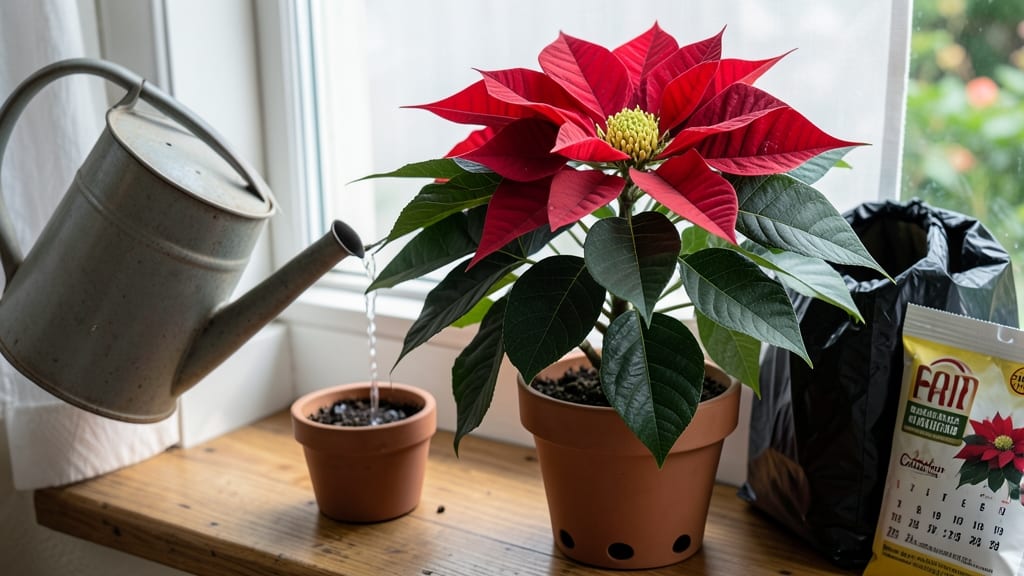
How to get a poinsettia to bloom again starts with 12+ hours of darkness—the secret trick that turns floppy green stems into vibrant red bracts. 🌟 I’ve revived multiple poinsettias using this light-controlled method, and the difference between a sad, leggy plant and a showstopper comes down to timing and consistency. The key? Mimicking winter’s short days in late summer, before buds even appear.
You’ll need a dark closet, box, or even a black plastic bag (6-8 weeks before your target bloom date) to trick the plant into thinking night is falling.
Water only when the top inch of soil feels dry—overwatering is the #1 killer of potential blooms—and use a balanced fertilizer every 4-6 weeks to fuel those energy-hungry buds. Temperatures between 65-75°F keep things perfect, while drafts or sudden cold snaps will stress the plant right out of blooming.
By mid-November, you’ll see tight bud clusters forming where the colorful bracts will emerge. The plant might look scraggly at first—don’t panic!—but with patience, you’ll end up with bold, vibrant blooms that last through the holidays and beyond.
The best part? Once you master this, you’ll never buy another poinsettia again.
Works for both Euphorbia pulcherrima (the classic red) and newer varieties like white or pink—just adjust the darkness period slightly for different cultivars. Here’s how to troubleshoot leggy growth or no buds before they even form.
📚 In This Guide
- What you need
- Instructions
- Tips and common mistakes
- Wrapping up and next steps
What you need
- ● Healthy poinsettia plant (preferably one that’s already bloomed at least once)
- ● Grow lights or full-spectrum LED bulbs (15-20W per plant or a dedicated light source covering 2–3 ft²)
- ● Timer or smart plug (to automate light cycles—12–14 hours of darkness required)
- ● Well-draining potting mix (cactus/succulent blend or standard potting soil + perlite, 1:1 ratio)
- ● 6–8 inch pot with drainage holes (if repotting—terracotta or plastic works)
- ● Watering can with a narrow spout (to avoid overwatering)
- ● Balanced liquid fertilizer (20-20-20 or 10-10-10, diluted to half-strength)
- ● Pruning shears or clean scissors (sterilized with rubbing alcohol)
- ● Humidity tray or pebble tray (to maintain 40–50% humidity)
- ● Plant food spikes (slow-release fertilizer for convenience)
- ● Thermometer/hygrometer (to monitor temperature: ideal range is 65–75°F)
- ● Blackout curtain or lightproof box (for strict darkness control during critical periods)
- ● Mulch or reflective material (to retain moisture and enhance light reflection)
Step-by-step instructions for light-controlled poinsettia blooming
Here's the science-backed method I use to coax vibrant blooms from year to year.
🌱 Step 1: Understand the Light Cycle Requirements
Poinsettias bloom in response to 12+ hours of darkness daily for 6-8 weeks—this is called photoperiodism. Natural daylight is too inconsistent, so we must control lighting artificially. Start this process 12 weeks before your target bloom date (usually late September for Christmas blooms).
Place your poinsettia in a spot with bright indirect light during the day—think east-facing window or under grow lights. Too much direct sun causes leaf scorch, while dim light leads to weak stems. Watch for leaves that look slightly stressed but not crispy; that's your ideal light balance.
☀️ Step 2: Implement the 14-Hour Light/10-Hour Dark Cycle
At 5:00 PM daily, move the plant to complete darkness for 14 consecutive hours. Use a dark closet, box with black plastic, or even a sheet draped over the plant. Even a tiny light leak (like from a nightlight) ruins the process—test your dark space with a flashlight to confirm total darkness.
Repeat this cycle for 6-8 weeks without fail. I set a calendar reminder because missing even one night of darkness resets the entire process. You'll see tiny buds form after about 4 weeks—this is your first visual confirmation the treatment is working.
⏰ Step 3: Maintain Consistent Care During Bloom Induction
Keep soil evenly moist but never soggy—stick your finger 1 inch deep; if dry, water until it drains from the bottom. Overwatering causes root rot, while underwatering stresses the plant when it's already sensitive to light changes. Use room-temperature water to avoid shocking the roots.
Hold off on fertilizing during the 6-8 week dark treatment. Once buds appear, switch to a balanced 10-10-10 fertilizer every 2 weeks to support bloom development. Too much fertilizer now leads to leafy growth instead of flowers.
🌿 Step 4: Transition to Normal Light After Bud Formation
Once you see 1-inch buds forming, you can stop the dark treatment. Gradually increase daylight exposure over 3-5 days to prevent shock. Place the plant in bright indirect light again, but avoid direct afternoon sun which can bleach the bracts.
Poinsettias bloom best at 65-75°F—keep it away from drafts, heat vents, or cold windows. If your home runs cooler, supplement with a small space heater (never too close). The bracts will fully color in 4-6 weeks after bud formation, revealing their vibrant hues.
✂️ Step 5: Post-Bloom Care for Next Year's Flowers
After blooms fade, cut the plant back by half its height to encourage new growth. Place it in bright light and resume regular watering. In spring, fertilize monthly with a balanced formula to build energy for next year's blooms.
Here's the thing—most people give up after the first bloom cycle. But if you follow this light schedule religiously, you'll have repeat blooms for years. The key is consistency: those 14 hours of darkness are non-negotiable for poinsettias.
Tips & tricks for light-controlled poinsettia blooming
Mastering the science of poinsettia blooming takes patience—but these insider tricks make all the difference. Here's what nobody tells you about working with these light-sensitive plants.
Darkness Testing: Before committing to the full 14-hour dark cycle, test your chosen dark space with a flashlight. Even the faintest glow from a nightlight or streetlight can disrupt the process. I use a closet with a black plastic sheet over the door—it's foolproof. Place the plant inside for 10 minutes with the door closed, then shine a flashlight at the edges. If you can see any light seeping in, seal it better with tape or additional layers.
Visual Bloom Confirmation: After about 4 weeks of consistent darkness, you'll notice tiny green buds forming where the colorful bracts will emerge. These buds are your reward for sticking to the schedule. Don't be tempted to peek at them during the dark period—even a brief exposure to light can reset the process. Instead, wait until your scheduled 5:00 PM transition time to check progress.
Temperature Consistency: Poinsettias thrive in the 65-75°F range, but maintaining this during the 6-8 week treatment is crucial. If your home runs cooler, especially at night, place a small space heater (set to low) near the plant—but never so close it creates a hot spot. I've seen buds fail to develop when plants were exposed to sudden temperature drops, even if the light cycle was perfect. A simple thermometer near the plant helps monitor conditions.
Fertilizer Timing: The instructions mention waiting until buds appear to fertilize, but here's the secret: once those 1-inch buds form, switch to a 10-10-10 fertilizer every 2 weeks and use only half the recommended dose. Too much nitrogen at this stage promotes leafy growth instead of vibrant bracts. I've found that a diluted solution (about ¼ strength) gives the best results without risking over-fertilization.
Pro Tips for Get A Poinsettia To Bloom Again
- Mastering the science of poinsettia blooming takes patience—but these insider tricks make all the difference.
- Darkness Testing: Before committing to the full 14-hour dark cycle, test your chosen dark space with a flashlight.
- Visual Bloom Confirmation: After about 4 weeks of consistent darkness, you'll notice tiny green buds forming where the colorful bracts will emerge.
Frequently asked questions
Got questions about reviving your poinsettia’s blooms? Here are answers to the most common ones—because every plant parent deserves a second (or third!) chance at holiday cheer!
Why isn’t my poinsettia blooming after I tried the light trick?
Poinsettias need consistent 14 hours of darkness every night for 6–8 weeks to bloom. Even a single night of light exposure (like a streetlamp) can disrupt the process. Double-check your timing and ensure the plant is in total darkness—no exceptions!
When should I start the light schedule for next year’s blooms?
Begin the 14-hour darkness routine in mid-September to give your poinsettia enough time to bloom by the holidays. If you start later (e.g., October), the flowers may arrive too late—or not at all. Patience is key!
Can I use artificial lights (like LED bulbs) for the dark period?
Nope! Artificial lights—even dim ones—can trick the plant into thinking it’s daytime. Use a solid cover (like a box or blackout curtain) to block all light during the dark period. No shortcuts here!
What if my poinsettia looks sad or droopy after blooming?
Don’t toss it! Prune it back by half in early spring, fertilize lightly, and keep it in bright, indirect light. With proper care, it’ll grow bushier and may even rebloom next year. Think of it as a low-maintenance holiday miracle!
Are there poinsettia varieties that bloom more easily?
Yes! Some varieties, like ‘Premium Red’ or ‘Winter Rose’, are bred for easier reblooming. Look for labeled "reblooming" poinsettias at nurseries—they’re designed to cooperate with your light tricks!
Do poinsettias need cold weather to bloom?
Nope! Unlike some plants, poinsettias don’t require cold temperatures to bloom—they’re triggered by light cycles, not frost. Just keep them in a cool (60–70°F) room during their rest period. No snow required! →
Wrapping up and next steps
Getting your poinsettia to bloom again is all about patience, consistency, and a little light magic! 🌟 By mastering the 12-hour light cycle and providing the right care, you’ll turn your plant into a stunning holiday star year after year.
Remember, even the most experienced gardeners face setbacks—so don’t hesitate to adjust and troubleshoot.
Now that you’re armed with the know-how, give it a try! Start your light schedule today and watch your poinsettia transform into a dazzling centerpiece. Happy blooming! 🌸