
Blooming
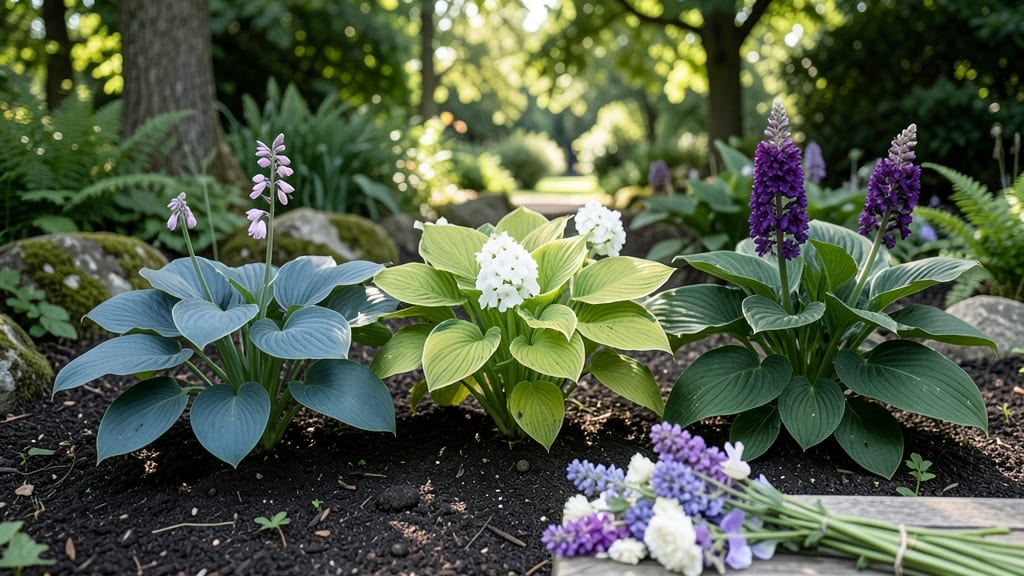
Hosta bloom colors create eye-catching displays in lavender, purple, white, and pale blue hues, typically emerging in late summer when the foliage reaches peak maturity. These elegant blossoms bring vertical drama to shaded garden spaces, with some varieties even offering fragrant blooms in striking spiky or bell shapes.
These vibrant hues come from complex anthocyanin pigments that react to light exposure and soil conditions. 🌸 The most sought-after shades—like deep violet 'June' or pale lavender 'Halcyon'—often appear on varieties bred for both foliage AND flower impact.
What's fascinating is how bloom colors can shift slightly based on sunlight intensity, with cooler tones developing in partial shade. I've found that hostas with lighter-colored flowers (like 'Blue Angel') tend to bloom more prolifically in consistently moist, well-draining soil.
For gardeners looking to maximize floral impact, consider pairing bold-blooming varieties with contrasting foliage. A deep purple hosta like 'Sum and Substance' creates stunning visual contrast when planted alongside chartreuse 'Francee' or blue-green 'Patriot'.
The key is to select varieties where both foliage and flowers complement each other—this creates year-round interest rather than just seasonal blooms.
💡 In This Article
- How Hosta Flower Colors Differ by Variety
- Best Hosta Varieties for Vibrant Bloom Displays
How hosta flower colors differ by variety
The stunning range of hosta bloom colors—from soft lavender to deep violet—comes from anthocyanin pigments that develop in response to light exposure and genetic traits.
These pigments are the same compounds that give blueberries and red cabbage their color, but in hostas, they react differently based on the variety's specific genetic makeup.
For example, 'June' hostas produce rich purple blooms thanks to higher concentrations of delphinidin-based anthocyanins, while 'Halcyon' varieties showcase lighter lavender hues from malvidin pigments. The intensity of these colors often deepens when plants receive 4-6 hours of morning sun, which triggers greater pigment production.
What makes hosta flowers particularly fascinating is their color stability compared to other garden blooms.
Unlike petunias that fade in full sun, hosta flowers maintain their vibrancy even in deep shade because their pigment systems are adapted to low-light conditions. White-blooming varieties like 'Snowflake' contain minimal anthocyanins but instead produce flavonoids that reflect all light wavelengths, creating their pure appearance.
Meanwhile, rare pink-tinged blooms (found in 'Pink Frost') result from a unique pigment blend that combines anthocyanins with carotenoids—similar to how peaches get their rosy hues. 🌸
The shape of hosta flowers also influences how we perceive their colors. Spiky 'June' blooms create dramatic vertical lines that make their purple tones appear more intense, while the bell-shaped flowers of 'Blue Angel' showcase pale lavender hues in a more delicate presentation.
What's surprising is that some hostas change color as they mature—starting pale and brightening to deeper shades as they age. This phenomenon occurs because the anthocyanin molecules become more concentrated in the flower's outer layers over time, much like how grapes darken as they ripen.
For gardeners, understanding these color mechanisms helps with variety selection. If you're planting in low-light areas, varieties like 'Halcyon' (lavender) or 'Patriot' (white) will thrive and maintain their color integrity.
In contrast, partial shade conditions (3-4 hours of sun) can enhance the vibrancy of purple blooms like 'June' or 'Sum and Substance'. The key is matching your growing conditions to the plant's natural pigment development patterns—this ensures the most stunning floral displays possible.
One often-overlooked factor is how bloom color affects pollinator attraction. Purple and lavender flowers (rich in delphinidin) tend to attract more bees than white varieties, which rely on visual contrast with surrounding foliage. This explains why 'June' hostas often become pollinator hotspots in late summer gardens.
The fragrance component—found in varieties like 'Fragrant Bouquet'—adds another layer of attraction, making these plants particularly valuable for wildlife-friendly landscapes. 🐝
Consider these color variations when planning your shade garden:
- Deep purple: 'June' and 'Sum and Substance' (attracts pollinators, thrives in partial shade)
- Lavender: 'Halcyon' and 'Blue Angel' (light-reflective, great for low-light areas)
- White: 'Snowflake' and 'Patriot' (high contrast with foliage, minimal pigment fade)
- Rare pink: 'Pink Frost' (unique pigment blend, needs consistent moisture)