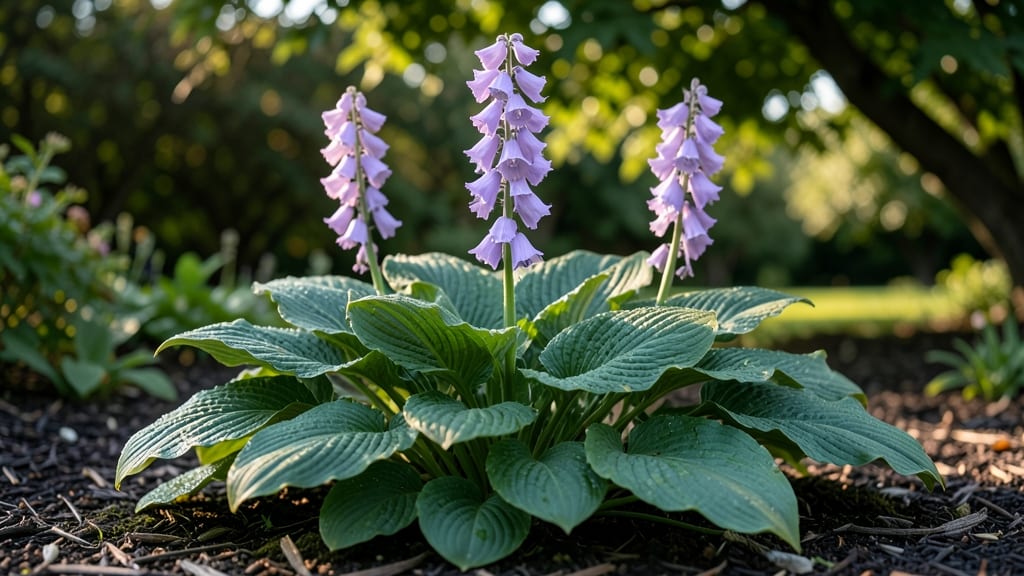
The hosta bloom time in late summer to early fall is a fleeting but magical display that turns shade gardens into starry nights.
If you’ve ever wondered why some hostas flower while others seem to skip the show, it’s not just about luck. Variety, sunlight, and even last year’s care play a role.
For example, 'Francee' bursts into bloom by August, while 'Halcyon' waits until September, and some never flower at all unless you tweak their conditions.
Understanding bloom time isn’t just about admiring the flowers—it’s about knowing when to expect them so you can pair them with complementary plants like astilbes or heucheras, which thrive in the same shade.
Plus, timing your garden tasks (like deadheading or fertilizing) around bloom season can keep your hostas happy for years.
In this guide, I’ll break down exactly when to expect those lily-like blooms by variety, what triggers them, and how to encourage more flowers—even if your hostas have been shy so far.
Hosta bloom time by variety: when to expect flowers
Hostas are famous for their stunning foliage, but their delicate lily-like flowers add a magical touch to shady gardens. Bloom time varies dramatically by variety, climate, and maturity, with most flowering between late spring and early summer.
Understanding these patterns helps you plan your garden layout, pair hostas with complementary plants, and even troubleshoot why your plants might not be blooming.
In USDA zones 3–9, hostas typically bloom from June to August, though early bloomers may appear as soon as May in warmer regions. Cooler climates (zones 3–5) often see delayed blooming, while warmer zones (7–9) may experience extended flowering seasons.
The key? Sunlight exposure and plant maturity play the biggest roles in timing.
Some hosta varieties are early bloomers, producing flowers in late May to early June, while others wait until July or August. Below, I’ve broken down the bloom periods for popular varieties, so you can anticipate when your garden will burst with color.
| Variety |
Bloom Time |
Flower Color |
USDA Zones |
Notes |
| Blue Angel |
Mid-June to July |
Pale lavender |
3–9 |
Reblooms in fall; fragrant |
| Halcyon |
Late May to June |
White |
4–8 |
Early bloomer; compact size |
| Francee |
July to August |
Pale lavender |
3–9 |
Late bloomer; large flowers |
| Guacamole |
June to July |
Pale lavender |
4–8 |
Variegated foliage; reliable bloomer |
| Patriot |
Late June to July |
White |
3–9 |
Dwarf variety; bold foliage |
Why do hostas flower? The science behind bloom triggers
Hostas are famous for their stunning foliage, but their delicate lavender or purple blooms add a magical touch to shady gardens. Many gardeners assume hostas only flower after years of growth, but the truth is more nuanced.
Understanding the science behind hosta blooms can help you encourage flowers even in younger plants.
The timing and frequency of hosta flowers depend on a mix of maturity levels, environmental factors, and care practices. Unlike their foliage, which thrives in shade, blooms often need a balance of light exposure and stress signals to trigger.
Let’s explore what really makes hostas flower—and how you can influence the process.
1
Maturity Matters
Most hostas won’t bloom until they’re at least 2–3 years old, as they prioritize root and foliage growth first. Dwarf varieties may take longer (3–4 years), while larger types can flower sooner if conditions are ideal.
2
Sunlight Triggers
Hostas need 4–6 hours of morning sun to bloom. Too little light delays flowers, while afternoon sun can scorch leaves. Partial shade (dappled light) is ideal for most varieties.
3
Stress Encourages Blooms
Mild drought stress or transplant shock can trigger flowering, as hostas perceive these as signals to reproduce. Overwatering or rich soil, however, may suppress blooms in favor of foliage.
4
Nutrient Balance
A balanced fertilizer (10-10-10) in early spring and mid-summer supports blooms without overfeeding. Too much nitrogen promotes leaves, while phosphorus-rich fertilizers encourage flowers.
Contrary to popular belief, hostas don’t need to be decades-old giants to flower. Many varieties—like 'Halcyon' or 'Francee'—can bloom within 2–3 years if given the right conditions. The key is mimicking their natural triggers: moderate stress, adequate sunlight, and nutrient timing.
To encourage blooms, avoid heavy pruning before spring and let flowers develop fully. Deadheading spent blooms can prompt reblooming in some varieties, while others (like 'Blue Angel') produce flowers once per season. Experiment with light adjustments—a few extra hours of morning sun can make a difference!
Remember, hostas are resilient. If your plants aren’t flowering yet, don’t worry—patience and the right care will reward you with those ethereal blooms in late spring or early summer. 🌿
★★★★★4.6(10 reviews)
|