
Blooming
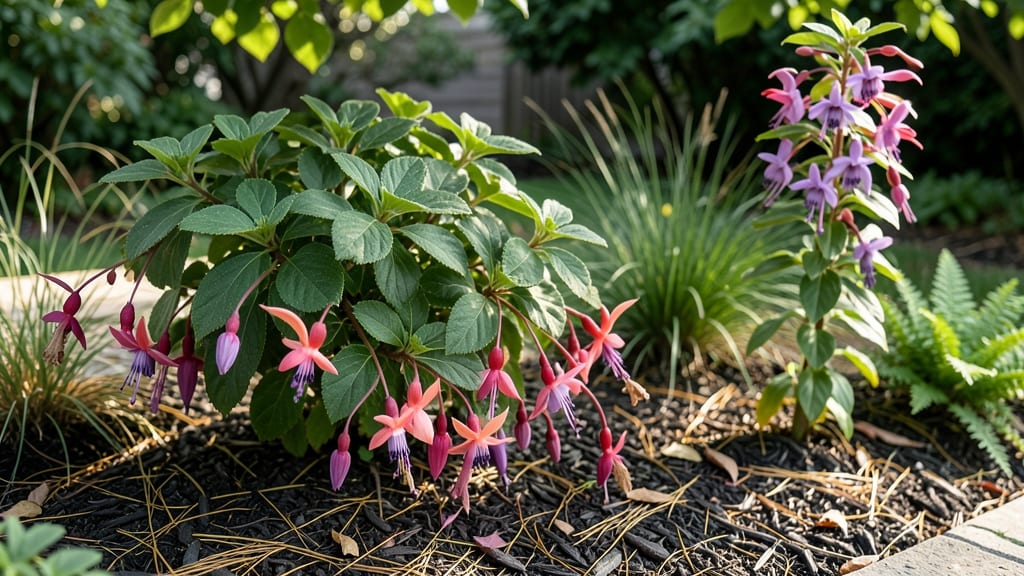
Fuchsia plants bloom all summer long when given the right growing conditions, but extreme heat or dry spells can cause them to pause flowering. Most varieties produce continuous blooms from late spring through fall, though tropical types may need extra care to maintain their vibrant display.
Fuchsias are famous for their long bloom cycles, but their performance depends heavily on environmental factors. 🌸 In cooler climates, hardy varieties like Fuchsia magellanica naturally handle summer heat better, while tropical species often need afternoon shade and consistent moisture to prevent stress-induced dormancy.
The key is balancing sunlight, water, and humidity—too much heat or drought triggers a survival response that halts flowering until conditions improve.
What many gardeners don't realize is that fuchsias actually bloom more prolifically when they're slightly stressed—not from drought, but from regular pruning. I've found that trimming back leggy stems after each flush of flowers encourages bushier growth and more abundant blooms later in the season.
The plant's natural rhythm is to produce flowers when it has energy to spare, so proper care keeps that cycle going strong.
💡 In This Article
- Factors That Influence Fuchsia Summer Blooming
- Extending Fuchsia Blooms: Pruning and Care Tips
Factors that influence Fuchsia summer blooming
Fuchsias rely on a delicate balance of environmental factors to maintain their continuous blooming cycle. The most critical element is temperature—most varieties thrive in 65-75°F ranges, where they produce flowers consistently.
When temperatures exceed 85°F for prolonged periods, fuchsias enter a survival mode called "heat stress," where they drop buds and conserve energy by slowing growth. This is why tropical fuchsias often need afternoon shade during peak summer months to prevent wilting and bud drop.
The plant's natural blooming rhythm also depends on daylight exposure. Fuchsias are short-day plants, meaning they respond to decreasing daylight hours by producing flowers. In summer, when days are longest, they'll continue blooming if given 4-6 hours of morning sun and protection from intense afternoon rays.
Too much direct sunlight causes leaf scorch and forces the plant to prioritize leaf production over flowers. I've noticed that fuchsias in containers dry out faster, so they need more frequent watering (every 2-3 days) to maintain moisture levels in the soil.
Humidity plays a surprising role too. Fuchsias originate from tropical and subtropical regions where air moisture stays above 50%. In dry climates, their leaves curl and flowers wilt as they struggle to retain moisture.
A simple fix is to place a tray of water near potted fuchsias or use a humidifier nearby. The plant's roots also need well-draining soil with 50% organic matter to prevent root rot while maintaining consistent moisture—this balance is crucial for continuous blooming.
Different varieties respond uniquely to summer conditions. Hardy fuchsias like Fuchsia magellanica can tolerate brief heat waves better than tropical types, which may drop buds when stressed. I've observed that Fuchsia 'Giantess' produces larger flowers in cooler summer evenings, while Fuchsia 'Lady Boothby' thrives in partial shade with consistent moisture.
The key difference lies in their native habitats—cooler-climate varieties have evolved to handle brief heat spells, while tropical species need more protection.
What most gardeners overlook is how fuchsias use stored energy. The plant's roots store nutrients during spring growth, which fuels summer blooming. When stressed by drought or heat, these reserves deplete faster, leading to fewer flowers.
That's why maintaining 1-2 inches of mulch around the base helps regulate soil temperature and moisture retention—this simple practice can extend the blooming season by 3-4 weeks in hot climates.
Another fascinating factor is wind exposure. While fuchsias need good air circulation to prevent fungal diseases, strong winds dry out flowers faster and can cause bud blast.
In my garden, I've found that placing fuchsias near a windbreak (like a fence or hedge) protects the delicate blooms while still allowing airflow to the leaves. This balance is crucial for maintaining that signature summer display of vibrant, dangling flowers.