
Blooming
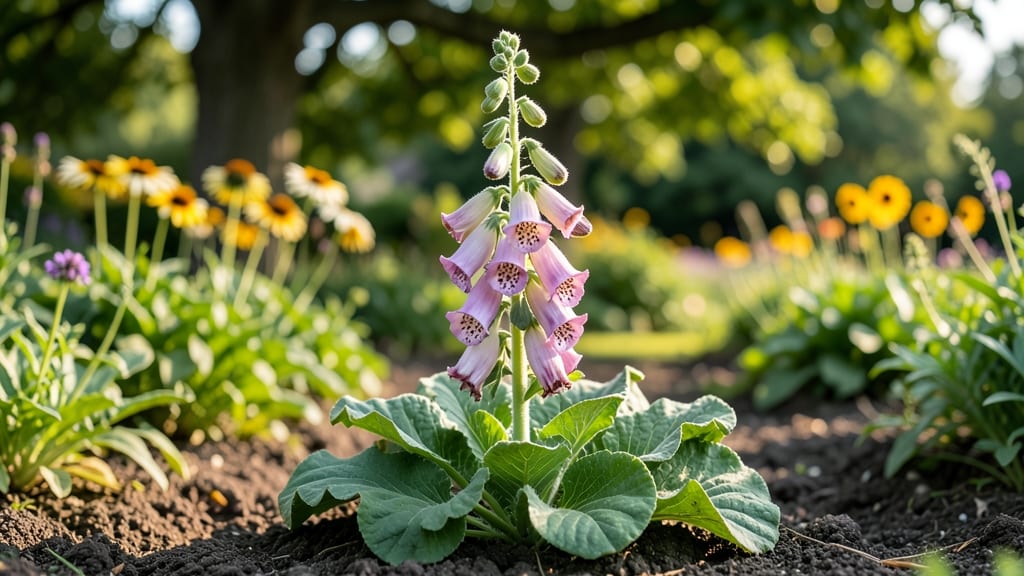
Foxglove does not bloom all summer—its flowers typically appear in late spring to early summer, lasting 6–8 weeks before fading. Biennial varieties may rebloom sporadically, while some perennials produce sporadic late-season spikes under ideal conditions. Deadheading spent blooms can encourage limited regrowth in select cultivars.
Foxglove's blooming cycle is tightly linked to its natural growth patterns. 🌸 Unlike some perennials that flower continuously, foxglove relies on specific environmental cues—longer daylight hours and cooler temperatures—that typically peak in early summer.
Biennial types often produce their best display in their second year, while perennials may reward patient gardeners with occasional late-season blooms if given proper care. The key to extending its display lies in understanding these triggers and adapting your garden practices accordingly.
For example, Digitalis purpurea 'Pam’s Choice' is known to produce secondary blooms under consistent moisture and partial shade, while Digitalis grandiflora varieties may rebloom if deadheaded promptly. These small adjustments can make a noticeable difference in your garden's seasonal interest.
💡 In This Article
- Foxglove’s Natural Blooming Seasons Explained
- Tips to Prolong Foxglove Blooms in Your Garden
Foxglove’s natural blooming seasons explained
Foxglove's flowering cycle is primarily governed by photoperiodism—the plant's response to daylight length. Most varieties begin blooming when daylight exceeds 14 hours (typically late May to early June in temperate zones), triggered by increasing light exposure.
The flowers themselves are sensitive to temperature fluctuations: optimal blooming occurs between 60-70°F during the day and 50-55°F at night. When temperatures rise above 80°F for extended periods, the plant conserves energy by halting flower production and entering a dormant state.
The distinction between biennial and perennial foxglove varieties explains their different blooming behaviors. Biennials like Digitalis purpurea complete their life cycle in two years, with the first year dedicated to leaf and root development.
Their dramatic 6-8 week bloom period in their second year is followed by seed production and death. Perennials such as Digitalis grandiflora may produce multiple bloom cycles over several years, but these are often 3-4 week spikes rather than continuous displays.
Regional adaptations also play a role—northern-grown foxglove often blooms earlier than southern varieties due to cooler spring temperatures.
What most gardeners don't realize is that foxglove's flowering is also influenced by soil moisture levels. The plant requires consistent moisture during its active growth phase but becomes drought-sensitive once buds form.
Inconsistent watering can cause buds to abort before opening, while excessive moisture in late summer may encourage fungal growth that weakens the plant. This explains why foxglove often declines by mid-summer—it's not just the heat, but the plant's natural energy conservation strategy to prepare for winter.
Here's what happens at the cellular level: Flower buds develop from apical meristems (growth points) in the previous year's growth. When day lengths shorten after the summer solstice, the plant's hormonal balance shifts from promoting flowering to focusing on seed production and root storage.
This physiological shift is why you'll rarely see foxglove blooming after mid-July in most climates. The plant's survival strategy prioritizes seed propagation over extended flowering periods, which is why it's classified as a short-term spectacle plant rather than a continuous bloomer.
Consider these key factors when evaluating foxglove's seasonal performance:
- Daylight sensitivity: Blooms peak when daylight exceeds 14 hours (May-June in most regions)
- Temperature thresholds: Optimal range is 60-70°F days/50-55°F nights
- Moisture requirements: Needs 1-1.5 inches of water weekly during bloom
- Life cycle differences: Biennials bloom once; perennials may rebloom with proper care
The visual contrast between foxglove's early summer display and its late-season foliage is striking. While the purple, pink, or yellow flower spikes create dramatic vertical accents in spring gardens, the plant's hairy, lance-shaped leaves provide subtle texture interest throughout the growing season.
This dual-season appeal is why many gardeners keep foxglove in their landscapes despite its limited bloom window.
For those hoping to extend foxglove's display, understanding these natural patterns is your first step.
The plant's biological clock is set to conserve energy for survival, not for prolonged flowering—so while you can't make it bloom all summer, you can work with its natural rhythms to create the most spectacular display possible in its optimal window. 🌿