
Blooming
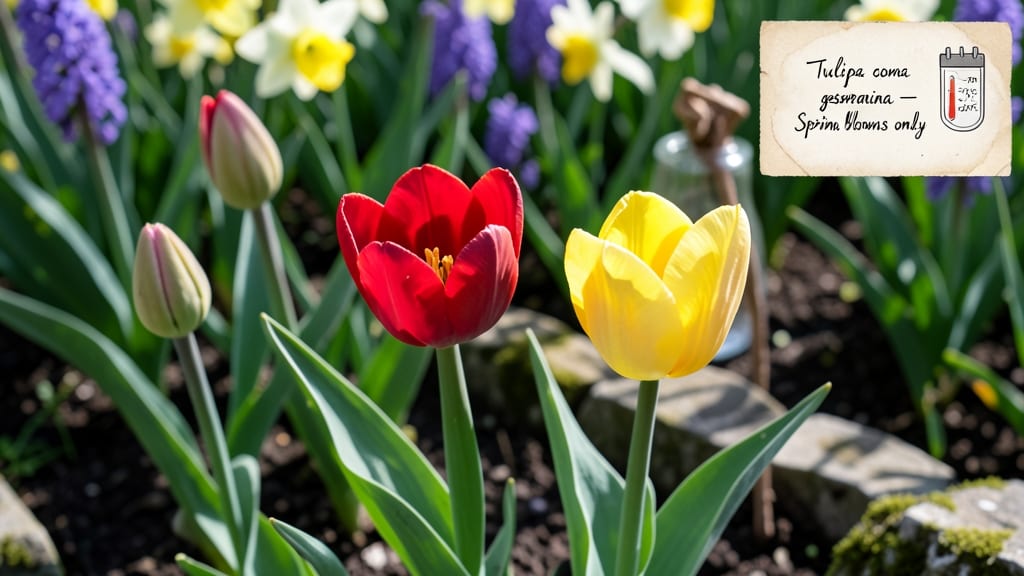
Tulips do not bloom all summer; most varieties flower for just 1–2 weeks in spring, with some late-season types lasting slightly longer. Perennial tulips may rebloom in mild climates, but annuals typically fade after their initial bloom cycle.
Tulips are famous for their dramatic spring displays, but their bloom periods are surprisingly short. 🌸 The reason lies in their natural life cycle—after flowering, tulip bulbs need time to rest and store energy for next year.
Many gardeners mistakenly expect continuous blooms, but even late-season varieties rarely extend beyond 3–4 weeks total. The key to enjoying tulips longer lies in choosing varieties with staggered bloom times or planting in layers, so you get a gradual succession of color rather than one intense burst.
What's interesting is how climate plays a role: in warmer regions, some perennial tulips like 'Angelique' may produce a second, smaller bloom later in the season. However, this isn't the same as continuous summer flowering—it's more like a bonus performance.
For true summer-long color, consider pairing tulips with other seasonal bloomers like daylilies or coneflowers, which pick up where tulips leave off.
💡 In This Article
- Tulip Bloom Seasons by Variety and Climate
- How to Extend Tulip Blooms in Your Garden
Tulip bloom seasons by variety and climate
Tulip flowering cycles are tightly regulated by photoperiodism—the plant's response to daylight length. Most varieties require 12-16 weeks of vernalization (cold exposure below 45°F) to break dormancy, followed by 6-8 weeks of warm temperatures to trigger blooming.
This biological clock explains why tulips typically bloom in a 3-4 week window during spring's transition from cold to warm weather.
Early bloomers like 'Early Harbinger' (one of the first to flower) may appear as early as mid-March in mild climates, while late-season Darwin Hybrid varieties like 'Apeldoorn' might not peak until late May.
The science gets even more precise when you consider how different tulip types respond to temperature fluctuations. Parrot tulips, known for their exotic, ruffled petals, often bloom 2-3 weeks later than standard varieties because their bulbs require slightly longer cold exposure.
Meanwhile, fosterian tulips (with their striking streaked petals) tend to have shorter bloom periods—sometimes just 7-10 days—because their energy reserves are focused on producing vibrant colors rather than prolonged flowering.
Climate also plays a role: In USDA Zone 5, tulips might bloom for 2 weeks, while in Zone 9, the cooler winter and extended spring can stretch this to 3-4 weeks.
What most gardeners don't realize is that tulip blooms are a one-time energy expenditure for the bulb. After flowering, the plant diverts all resources to bulb production for next year, which is why annual tulips (like those sold in grocery stores) rarely rebloom—they've already used up their stored energy.
Even perennial varieties need 6-8 weeks of rest after blooming before they'll consider producing flowers again.
This is why you'll never see tulips in full summer bloom unless you're growing reblooming cultivars like 'Angelique' or 'Paul Scherer', which have been selectively bred to produce a second, smaller bloom later in the season.
Daylight length is another critical factor. Tulips are long-day plants, meaning they need increasing daylight hours to trigger flowering. In northern latitudes, this happens naturally in spring, but in southern climates, tulips may bloom later or produce smaller flowers because the daylight increase is more gradual.
This is why gardeners in USDA Zone 10 often struggle with tulips—the bulbs may not get enough cold exposure to break dormancy properly, leading to weak or delayed blooms. The solution?
Choose varieties specifically bred for your climate zone, like 'Ice Cream' for cooler regions or 'Red Emperor' for warmer areas.
For those dreaming of summer tulips, the reality is more about strategic planting than variety selection. Most tulips simply can't sustain blooming through the heat of summer—their delicate petals would wilt, and the high temperatures would accelerate bulb dormancy.
Instead, focus on creating a layered bloom sequence by planting early, mid, and late-season varieties together. This way, as one group finishes, another takes over, giving you a 6-8 week display rather than a single 2-week burst.
It's not summer blooming, but it's the closest you'll get without resorting to greenhouse-grown cut flowers.
One fascinating exception is the 'Summer Beauty' tulip, a hybrid developed specifically to bloom in late spring to early summer. While it won't give you continuous color, it can extend your tulip season by 3-4 weeks compared to standard varieties. The secret?
These bulbs have been bred to have shorter dormancy periods, allowing them to flower when most tulips would still be resting.
Plant them in well-draining soil with full sun, and you might just get a taste of summer tulips—though don't expect the same vibrant displays as their spring counterparts.
The takeaway? Tulips are spring's fleeting stars, not summer's steady performers. Their bloom cycles are a marvel of botanical timing, perfectly adapted to capitalize on spring's brief but intense burst of warmth and light.
To enjoy them longer, work with their natural rhythms rather than against them—choose varieties that stagger their blooms, provide optimal growing conditions, and accept that their magic is meant to be savored in those precious few weeks when they transform your garden into a sea of color. 🌸