
Blooming
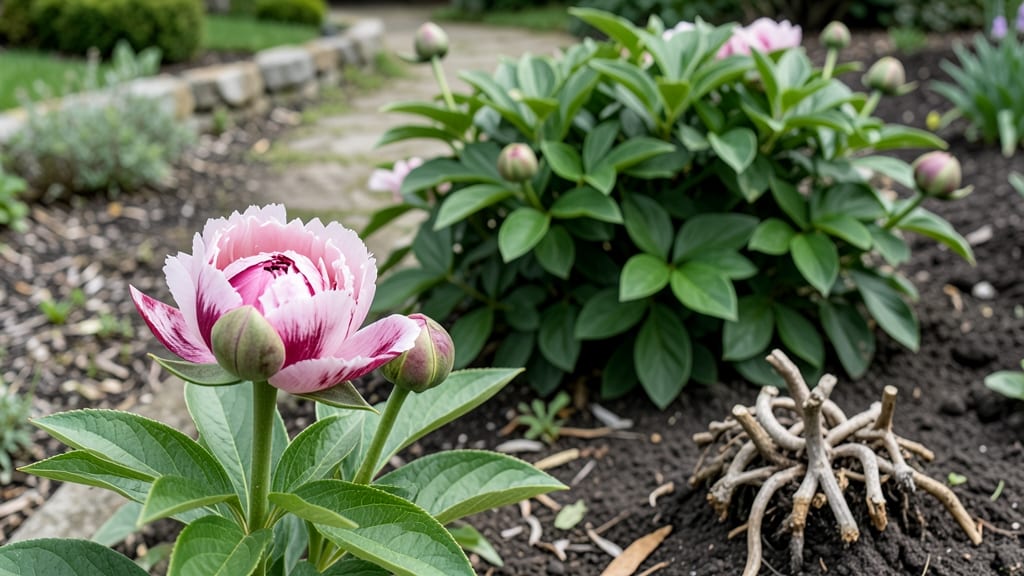
Peonies do bloom every year, but their most spectacular displays appear between ages 3 and 5, after which flowering gradually decreases unless you maintain careful care.
These hardy perennials store energy in their thick roots during dormancy, which fuels their spring blooms. 🌸 The first few years are all about building root strength—think of it like saving for retirement.
Once established, peonies can reward you with decades of blooms if you provide the right conditions: full sun, well-draining soil, and minimal disturbance to those precious tubers.
What many gardeners don't realize is that peonies actually prefer to be slightly root-bound—they bloom less when given too much space. The key is balancing their needs: prune back foliage in fall but never cut the stems below the soil line, and feed them with compost rather than synthetic fertilizers.
This approach mimics their natural woodland habitat where nutrients accumulate slowly over time.
💡 In This Article
- Peony Blooming Cycle: Why Some Years Are Better Than Others
- How to Encourage Consistent Peony Blooms Year After Year
Peony blooming cycle: why some years are better than others
The peony's annual blooming cycle is fundamentally tied to its underground energy reserves. These perennials store carbohydrates in their thick, fleshy roots (called tubers) during the growing season, which they then metabolize during winter dormancy.
This stored energy becomes the fuel for next year's flowers. 🌱 What's fascinating is that peonies only produce flower buds in their second year—they're essentially "saving up" for their first big bloom.
This is why young plants (under 3 years old) often produce just a few stems or no flowers at all.
Peonies reach their peak flowering between ages 3 and 5 because that's when their root systems have fully developed enough stored energy to support abundant blooms.
Think of it like a financial analogy: the first few years are all about building capital (root mass), while years 3-5 represent the prime earning period (maximum flowering).
After age 5, the natural decline begins as the plant's energy allocation shifts from reproduction to maintenance, similar to how human bodies gradually reduce growth hormone production after adolescence.
The climate plays a crucial role in this cycle, particularly through a process called vernalization. Peonies require cold stratification—typically 4-8 weeks below 40°F—to break dormancy and trigger flowering. In warmer climates, this can create inconsistent blooming patterns, while northern gardens often see more reliable annual displays.
Even within a single season, temperature fluctuations matter: a sudden late frost can damage emerging buds, while hot spells during bloom time can cause flowers to open too quickly and wilt prematurely.
Another biological factor is the plant's natural aging process. Peonies are considered "long-lived" perennials, but their flowering potential declines gradually after their prime years. This isn't necessarily because they're dying—many peonies live for 50+ years—but because their energy allocation becomes less efficient.
The tubers may still produce flowers, but with fewer stems and smaller blooms. What's interesting is that some peony varieties actually rebloom in late summer if given proper care, creating a second flush of flowers that extends the season.
Soil conditions also create yearly variations. Peonies thrive in well-draining soil with a pH between 6.0-7.0. Compacted or waterlogged soil stresses the roots, reducing their ability to store energy.
I've seen peonies in heavy clay soil produce half as many blooms as identical varieties in loamy soil—this demonstrates how root health directly impacts flowering capacity. The key is creating an environment where the tubers can expand and store maximum carbohydrates each season.
One often-overlooked factor is the plant's genetic memory. Peonies remember their optimal growing conditions and will often revert to their "preferred" state if disturbed.
For example, if you divide a mature peony and plant it in a different location with poor drainage, its flowering may decline for 2-3 years as it re-establishes its root system. This biological resilience explains why peonies can survive neglect but struggle to thrive in less-than-ideal conditions.