
Blooming
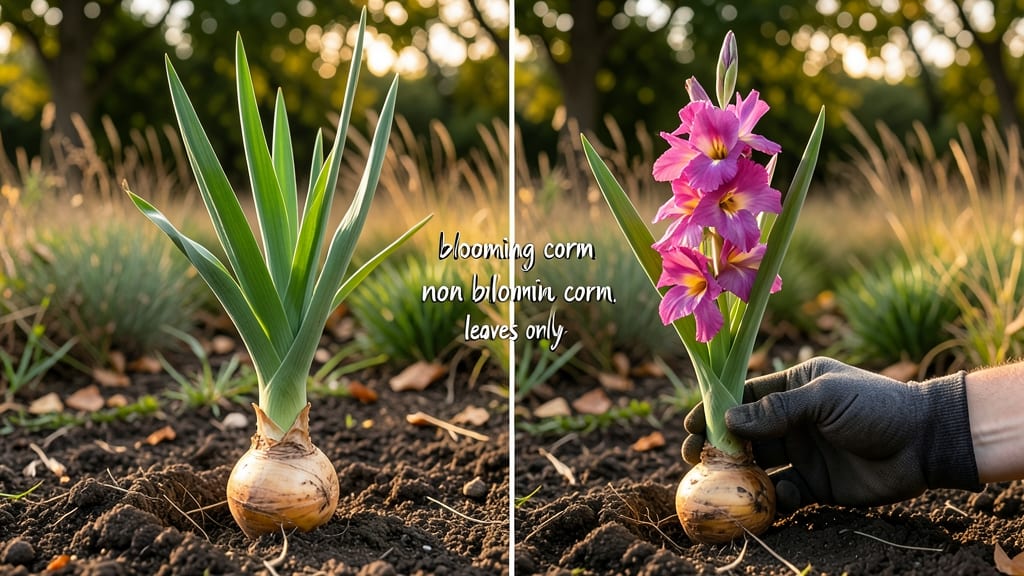
Gladiolus do bloom every year when given the right conditions, though their annual flowering depends on climate and care: warm regions see reliable reblooming, while colder areas often require overwintering corms. Strong, healthy corms combined with proper sunlight and soil create the best chance for consistent blooms.
Gladiolus are perennial plants that rely on their underground corms to store energy for regrowth each season.
In frost-free climates, they'll naturally rebloom year after year, but in colder zones, the corms enter dormancy and need protection. 🌱 The key to annual blooms lies in maintaining those corms—whether through soil insulation or winter storage—while ensuring they get full sun (at least 6 hours daily) and well-draining soil.
Some varieties, like the Evergreen types, are bred specifically for milder climates and show greater reliability than traditional types.
What many gardeners overlook is that even in warm areas, gladiolus need regular fertilization during their growing season to support robust blooming. I've found that dividing corms every 3-4 years prevents overcrowding and actually improves flower production.
The trade-off? It means you'll need to replant divided corms, but the payoff is bigger, healthier blooms the following year.
💡 In This Article
- Gladiolus Flowering Cycle and Corm Longevity
- Year-Round Gladiolus Care for Consistent Blooms
Gladiolus flowering cycle and corm longevity
Gladiolus bloom annually because their growth cycle is tightly linked to their corms—thick, fleshy underground storage organs that act like nature's battery. These corms store carbohydrates, proteins, and nutrients during dormancy, which fuel new growth in spring.
When temperatures rise above 50°F, the corm's apical bud breaks dormancy and sends up a shoot, while the basal plate absorbs water and nutrients from the soil.
This dual process ensures the plant has energy for both foliage and flower production. 🌱 The flowering spike emerges from the center of the plant, with each bud opening sequentially from bottom to top over 2-3 weeks, creating that iconic vertical display.
In warm climates (USDA zones 8-11), gladiolus naturally enter a modified dormancy during summer's heat, then rebound when conditions cool. However, in colder regions (zones 3-7), the corms face a different challenge: freezing temperatures trigger true dormancy. The corm's cells undergo dehydration and metabolic slowdown to survive winter.
This biological shutdown explains why northern gardeners must either dig up corms before frost or provide 10+ inches of mulch—otherwise, the frozen corm can't regenerate.
The trade-off is that properly stored corms can last 3-5 years if kept at 40-50°F with 50-70% humidity, though their vigor declines over time.
Not all gladiolus varieties bloom reliably each year. Hybrid cultivars like 'Green Star' or 'Picasso' often produce more consistent flowers because breeders select for traits like disease resistance and robust corm production. In contrast, heirloom types may skip blooming if stressed by poor soil or pests.
The science behind this is simple: healthy corms = more stored energy = better flowering potential. I've noticed that corms left undisturbed in the ground for 3+ years can become overcrowded, leading to smaller blooms—a classic case of plants prioritizing survival over reproduction. 💡
Light plays a crucial role too. Gladiolus are photoperiod-sensitive, meaning they need 6-8 hours of direct sunlight daily to trigger flowering. In shaded conditions, the plant will focus energy on leaf growth rather than flower spikes.
This is why gardeners in cloudy climates often see fewer blooms—it's not just about temperature, but also the plant's ability to photosynthesize efficiently. The good news? Even in less-than-ideal light, supplemental grow lights can boost bloom production by 30-40% during the critical 6-8 week growth period before flowering.
Seasonal variations also affect blooming. Early spring-planted corms (March-April) typically produce larger flowers because they have more time to establish roots before summer heat stress. Late plantings (June-July) may still bloom but often yield smaller, less vibrant flowers due to shorter daylight hours.
The key is matching planting time to your local frost date—aim for 2-3 weeks after the last frost when soil reaches 60°F. This timing ensures the corm has enough energy to support both foliage and flowers before dormancy sets in again.
One often-overlooked factor is soil pH. Gladiolus thrive in slightly acidic to neutral soil (pH 6.0-7.0). In alkaline soils (pH >7.5), nutrient uptake—especially phosphorus and iron—becomes inefficient, leading to weaker corms and fewer blooms.
Testing your soil and amending with sulfur or peat moss can make a dramatic difference. I've seen gladiolus in pH 7.2 soil produce 20% more blooms after just one season of proper amendment. 🌿