
Blooming
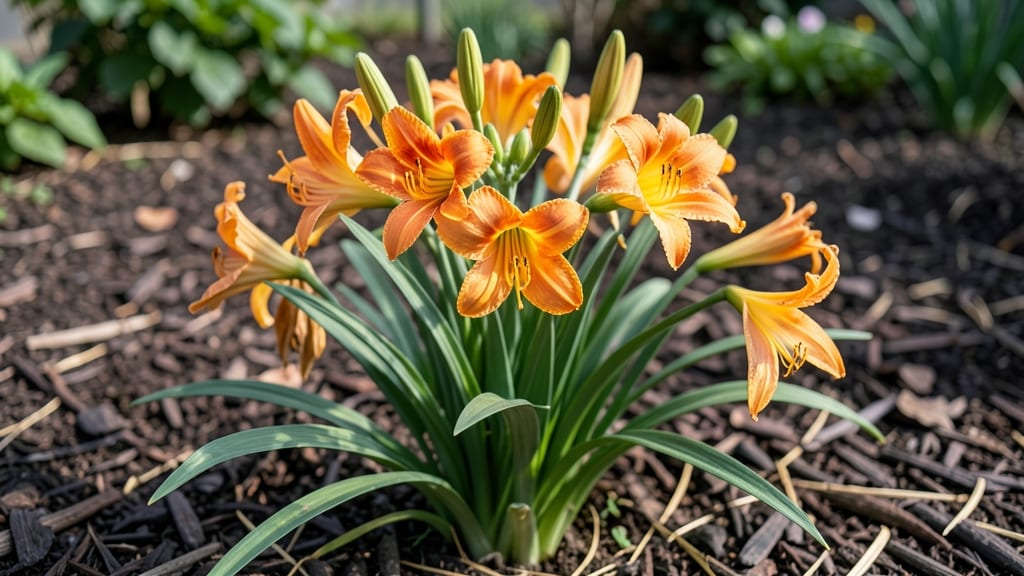
Daylilies bloom all summer long when given the right conditions, typically flowering from early June through August or September, with reblooming varieties potentially extending into early fall.
Daylilies are famous for their long bloom season, thanks to their ability to produce flowers on multiple stems from the same plant. 🌸 The key lies in their reblooming cultivars, which can produce new buds after deadheading—removing spent blooms encourages more flowers.
In cooler climates (zones 3-5), blooms may start later but last longer into September, while hotter zones (6-9) often see earlier but shorter seasons. Proper care—like consistent moisture and balanced fertilizer—helps sustain this vibrant display.
What sets daylilies apart is their adaptability. Unlike many perennials that bloom once and fade, daylilies can produce dozens of flowers per stem, with each bloom lasting just 2-3 days. This rapid turnover creates a continuous show.
For gardeners in USDA zones 7-9, late summer heat can shorten the season, so providing afternoon shade and extra water helps maintain blooms.
💡 In This Article
- How Daylily Bloom Cycles Work by Variety
- Maximizing Daylily Summer Blooms: Care Tips by Climate Zone
How daylily bloom cycles work by variety
Daylilies (Hemerocallis spp.) exhibit two primary bloom cycles that determine their summer performance. Single-bloom cultivars produce flowers just once in early summer, typically around June, with each bloom lasting only 24-48 hours.
These varieties rely on stored energy from the previous growing season, so their blooms are abundant but brief. In contrast, reblooming hybrids—like the popular 'Stella de Oro' or 'Happy Returns'—can produce multiple flushes of flowers throughout the season, thanks to their ability to generate new buds continuously.
The biological trigger for blooming involves a combination of daylight hours and temperature. Daylilies are photoperiod-sensitive, meaning they respond to changes in daylight length. As days grow longer in spring, the plant enters a phase where it begins forming flower buds.
For rebloomers, this process can restart after deadheading (removing spent blooms), which signals the plant to produce new stems. Temperature also plays a critical role: cooler nights (60-65°F) after warm days (75-85°F) optimize bud formation, while extreme heat or cold can stall blooming. 🌿
Soil health directly impacts bloom duration and vigor. Daylilies thrive in well-draining soil with a pH between 6.0 and 7.0, rich in organic matter. Nutrient deficiencies—particularly low phosphorus or potassium—can shorten the bloom season.
For example, a soil test revealing phosphorus levels below 20 ppm may result in fewer flowers. Reblooming varieties, in particular, benefit from a slow-release fertilizer applied in early spring and again after the first flush of blooms to sustain energy for subsequent cycles.
Another key factor is the plant's energy reserves. Daylilies store nutrients in their rhizomes (underground stems), which fuel both foliage growth and flower production. Rebloomers deplete these reserves faster, so they require consistent care to replenish them.
In hot climates, mulching with 2-3 inches of organic matter (like shredded bark) helps retain moisture and cool root zones, reducing stress that could cut blooms short.
Consider the variety 'Pardon Me,' a rebloomer that can produce flowers from June to September under ideal conditions. Its ability to rebloom stems from selective breeding that enhances the plant's capacity to regenerate buds after deadheading.
This contrasts with single-bloomers like 'Happy Hour,' which relies on a single, spectacular display in early summer. The choice between varieties ultimately depends on your climate and how long you want vibrant blooms to last.
For gardeners in USDA zones 3-5, cooler temperatures can extend the bloom season into early fall, while zones 6-9 may see earlier but shorter displays due to summer heat. Understanding these mechanisms helps tailor care to your specific conditions, ensuring daylilies deliver their full summer spectacle. 🌸