
Blooming
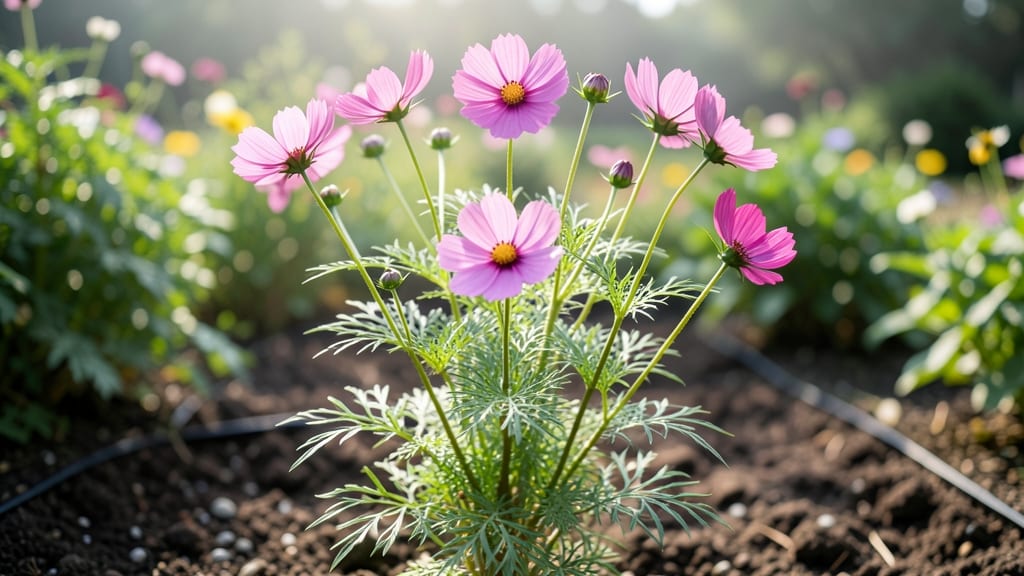
Cosmos don't bloom all summer continuously unless you grow perennial types or remove faded flowers regularly; most annual cosmos produce one main bloom cycle from late spring through early fall, with reblooming possibilities depending on the specific variety and your care routine.
Most annual cosmos follow a natural bloom-and-go pattern, producing their most vibrant flowers in late spring and early summer before tapering off. 🌸 The key difference lies in their growth habits—annuals focus energy on one big flowering phase, while perennials store energy underground for multiple seasons.
For example, 'Bright Lights' cosmos often reward gardeners with sporadic reblooms throughout summer if you consistently remove spent blooms, while other varieties like 'Dwarf Polar Bear' may only flower once before going dormant.
What makes this interesting is how light and temperature play roles. Cosmos thrive in full sun but respond to cooler summer evenings by producing fewer blooms.
Pruning back stems by one-third after the first flush can trick the plant into producing new growth and occasional flowers, though the results won't match their springtime abundance.
💡 In This Article
- Why Cosmos Flower Cycles Vary by Type
- How to Extend Cosmos Blooms Through Summer
Why cosmos flower cycles vary by type
The core difference between annual and perennial cosmos lies in their energy allocation strategies. Annual varieties like 'Sensation Mix' devote nearly all their resources to a single, spectacular bloom cycle during their first growing season.
This is because they complete their entire life cycle—from seed to flower to seed production—in just one year. Their growth pattern follows a monocarpic strategy, meaning they focus energy on reproduction rather than prolonged flowering.
Perennial cosmos, such as 'Cosmos bipinnatus' or 'Cosmos atrosanguineus', operate differently by storing energy in their root systems. These varieties can produce flowers for multiple seasons because they allocate resources to both above-ground growth and below-ground storage.
The key botanical mechanism here is tuberous roots that act like natural batteries, storing carbohydrates and nutrients to fuel new growth and flowering each spring. This explains why perennials often bloom more consistently throughout summer.
Light exposure plays a crucial role in triggering blooming cycles. Cosmos are photoperiod-sensitive, meaning their flowering is influenced by daylight length. Most varieties begin blooming when daylight hours reach about 14-15 hours in late spring.
After this initial flush, many annuals enter a resting phase where they focus on seed production rather than new flowers. The plant's internal clock—controlled by a hormone called florigen—shifts from promoting blooms to promoting seed development.
Temperature also affects reblooming potential. While cosmos thrive in warm conditions, extreme heat (above 90°F) can stress plants, causing them to conserve energy rather than produce new flowers. This is why you often see reduced blooming during summer heatwaves.
The plant's survival mechanism kicks in, prioritizing root development over flowering to ensure it can withstand environmental challenges. Understanding this helps explain why some varieties like 'Bright Lights' may produce sporadic blooms throughout summer—they're responding to both temperature fluctuations and your care practices.
Another fascinating factor is the plant's apical dominance. When cosmos produce their first flush of flowers, the main stem often develops a terminal bloom that inhibits side bud growth. This is why deadheading (removing spent blooms) can encourage new flowers to develop from lower buds.
The removal of the terminal flower reduces apical dominance, allowing lateral buds to grow and potentially produce new blooms. This is particularly effective in varieties known for reblooming tendencies.
Consider the example of 'Cosmos 'Seashells'—a variety that typically produces one main bloom cycle but may reward gardeners with occasional late-season flowers if given proper care. The difference between a one-time bloomer and a reblooming variety often comes down to these botanical factors combined with your gardening interventions. 🌿
For gardeners, this means choosing the right variety for your climate and care capacity. Annuals like 'Purity' will give you a stunning show but may fade after their initial bloom, while perennials like 'Cosmos atrosanguineus' (Dark Chocolate) offer more consistent seasonal interest with proper maintenance.
The choice ultimately depends on whether you prefer dramatic one-time displays or prolonged seasonal color.