
Blooming
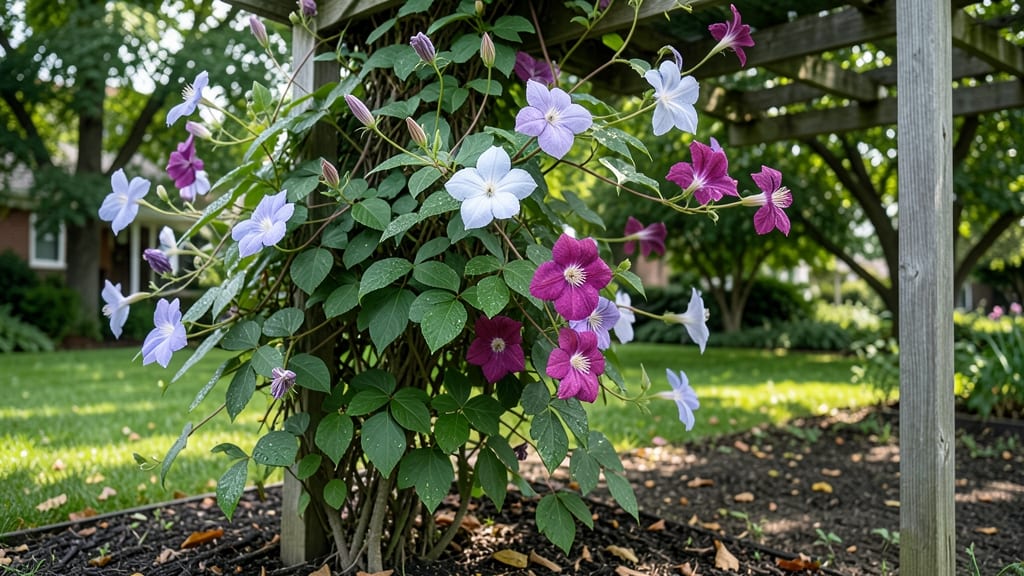
Clematis don't bloom all summer continuously—their flowering cycles vary by variety, with early, mid, and late-season types producing blooms for 2-8 weeks each, often staggered or reblooming with proper pruning.
Clematis plants actually follow seasonal rhythms based on their specific group classification.
Early bloomers like 'Jackmanii' may burst into color in late spring, while late varieties such as 'Henryi' shine in early fall. 🌸 The key to longer displays lies in understanding each group's natural growth pattern—some flower just once per year, while others can rebloom if you prune them correctly after their initial flush.
I've found that even the most prolific varieties need strategic care to extend their bloom time beyond their natural window.
What many gardeners miss is that clematis respond dramatically to pruning timing and technique.
For example, Group 3 varieties (like 'Nelly Moser') will reward you with multiple bloom cycles if you cut back just after their first flush, while Group 1 types need minimal pruning to avoid damaging next year's flowers.
The right approach can transform a single seasonal display into a staggered summer-long show.
💡 In This Article
- Clematis Flowering Seasons by Variety Type
- Extending Clematis Bloom Time with Pruning and Care
Clematis flowering seasons by variety type
Clematis plants are divided into three distinct pruning groups based on their natural blooming habits, each with its own seasonal rhythm. Group 1 varieties, like the classic 'Jackmanii', bloom on previous year's wood in late spring to early summer—typically a 4-6 week window—and then go dormant until next year.
Group 2 types (such as 'Montana') produce flowers on both old and new growth, often blooming for 6-8 weeks starting in early summer. Group 3 clematis (like 'Nelly Moser') are the rebloomers, flowering first on old wood in spring, then again on new growth later in summer if properly pruned.
The science behind these cycles lies in how clematis store energy. Group 1 varieties rely entirely on buds formed the previous year, which explains why aggressive pruning can eliminate next season's flowers.
Group 3 types, however, can form new flower buds throughout the growing season, giving them the potential for two bloom cycles—if you remove spent blooms promptly.
The key difference is in their bud formation timing: early bloomers set buds in late summer/fall, while late bloomers can keep producing new buds until early autumn.
What this means for your garden is that you can create a staggered summer display by combining different groups. For example, plant a Group 1 variety like 'Early Sensation' (blooms May-June) alongside a Group 3 like 'Perle d'Azur' (blooms June-August).
The transition between varieties creates the illusion of continuous blooming, even though each individual plant has its own 3-8 week window. This natural progression is why many gardeners report their clematis "bloom all summer"—they're actually seeing sequential displays from different varieties.
Color also plays a role in seasonal perception. Early bloomers often feature deep purples and blues, while late-season varieties tend toward pinks and whites. This color progression creates visual interest that makes the garden appear more vibrant throughout the season.
The contrast between early 'Vyvyan Pennell' (blue) and late 'Comtesse de Bouchard' (pink) can transform your vertical space from spring to fall without any single plant blooming continuously.
Temperature thresholds further influence blooming windows. Most clematis varieties need consistent temperatures above 50°F to initiate flowering, which explains why early bloomers often start in late spring when soil temperatures reach this threshold. Late bloomers may wait until summer heat has stabilized, creating that staggered effect.
Some varieties, like 'Hagley Hybrid', even respond to day length changes, with flowering triggered by shorter days in late summer.
Understanding these natural rhythms helps you make better plant selections. If you want summer-long color, combine early, mid, and late bloomers in your design. For example, 'Multiblue' (Group 2) blooms from June to August, while 'The President' (Group 3) can extend your display into September.
The secret is matching varieties to your local climate's temperature patterns and pruning them according to their group requirements.