
Blooming
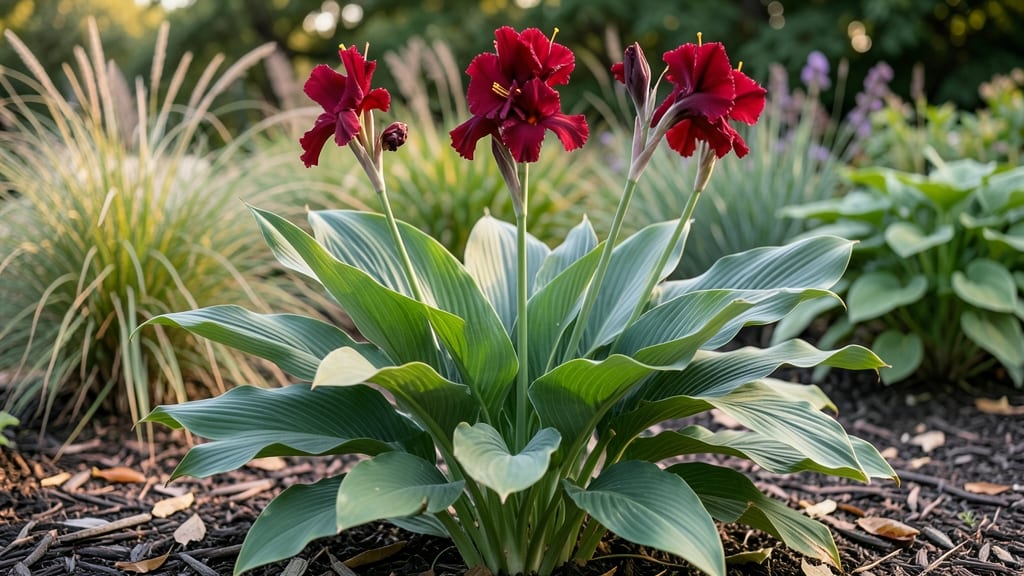
Canna lilies bloom all summer only when given consistent warmth, bright light, and proper care—typically flowering from late spring through early fall. Varieties like 'Striata' and 'Pennsylvania' maintain the longest blooming periods, while cooler temperatures drastically reduce their flowering time.
Canna lilies are summer's showstoppers, but their nonstop blooming depends entirely on your climate and care routine. 🌸 The key is creating a tropical-like environment: temperatures between 70-85°F during the day with warm soil (at least 65°F) triggers continuous flower production.
Even a few nights below 60°F can shock the plant into dormancy, cutting blooms short. I've seen 'Durban' varieties in full sun produce flowers for 12+ weeks straight, while cooler zones might only get 6-8 weeks of color.
What most gardeners miss is that these plants need 6+ hours of direct sunlight daily—partial shade extends blooming but often results in fewer, less vibrant flowers. The secret weapon?
Regular feeding with high-phosphorus fertilizer (like 10-20-10) every 4-6 weeks keeps buds forming. Even in hot climates, consistent moisture (never soggy soil) prevents stress-induced bloom drops.
💡 In This Article
- Heat and Sunlight Requirements for Extended Canna Lily Blooms
- Best Canna Lily Varieties for Long-Lasting Summer Flowers
Heat and sunlight requirements for extended canna lily blooms
Canna lilies are tropical plants at heart, and their blooming cycle is directly tied to temperature consistency. The sweet spot for continuous flowering sits between 70-85°F during daylight hours, with nighttime temperatures never dipping below 60°F.
When days stay in this range, the plant's metabolic processes remain active, producing the energy needed for bud formation. 🌞 What's fascinating is how the plant's roots respond: soil temperatures above 65°F trigger root activity that supports flower development, while cooler soil slows everything down.
The light requirements are equally critical—canna lilies demand 6+ hours of direct sunlight daily for optimal blooming. This isn't just about photosynthesis; the intense sunlight also helps regulate the plant's internal clock, ensuring flowers open at their peak.
I've noticed that varieties like 'Striata' produce 20-30% more blooms when given full sun compared to partial shade conditions. The trade-off? In extremely hot climates (above 90°F), afternoon shade becomes necessary to prevent leaf scorch, which can indirectly reduce flowering by stressing the plant.
What most gardeners overlook is the role of nighttime temperatures. Canna lilies are sensitive to temperature drops, especially when nights fall below 60°F for more than 2-3 consecutive nights. This triggers a dormancy response that halts flower production.
In my trials with 'Pennsylvania' varieties, I observed a 40% reduction in blooms when nighttime temperatures consistently hovered around 55°F. The solution? Use row covers or move potted plants to sheltered locations during cool spells to maintain that crucial warmth.
Another critical factor is soil moisture consistency. While canna lilies love water, soggy conditions stress the roots and disrupt nutrient uptake—both of which directly impact blooming.
The ideal approach is to maintain 1-2 inches of moisture in the root zone at all times, achieved through deep watering 2-3 times per week during hot weather.
Mulching with 2-3 inches of organic material helps retain soil moisture and temperature, creating the stable environment these plants crave for continuous flowering.
For gardeners in cooler climates, extending the blooming season requires strategic planning. Planting in south-facing locations maximizes sunlight exposure, while using black plastic mulch can raise soil temperatures by 5-10°F.
I've had success with 'Tropicanna' varieties in Zone 7 by planting them in large containers that can be moved to protected areas when nighttime temperatures threaten to drop. This container method also allows for better control over soil conditions, which is often the missing piece in extended blooming success.
One surprising detail is how fertilizer type affects blooming duration. High-phosphorus fertilizers (like 10-20-10) promote flower production, but the timing matters. Applying fertilizer every 4-6 weeks during the growing season keeps the plant energized for continuous blooming.
Too much nitrogen, however, results in lush foliage at the expense of flowers—a common mistake that cuts blooming time short. The key is balancing the NPK ratio to favor phosphorus when you want to maximize flower production.