
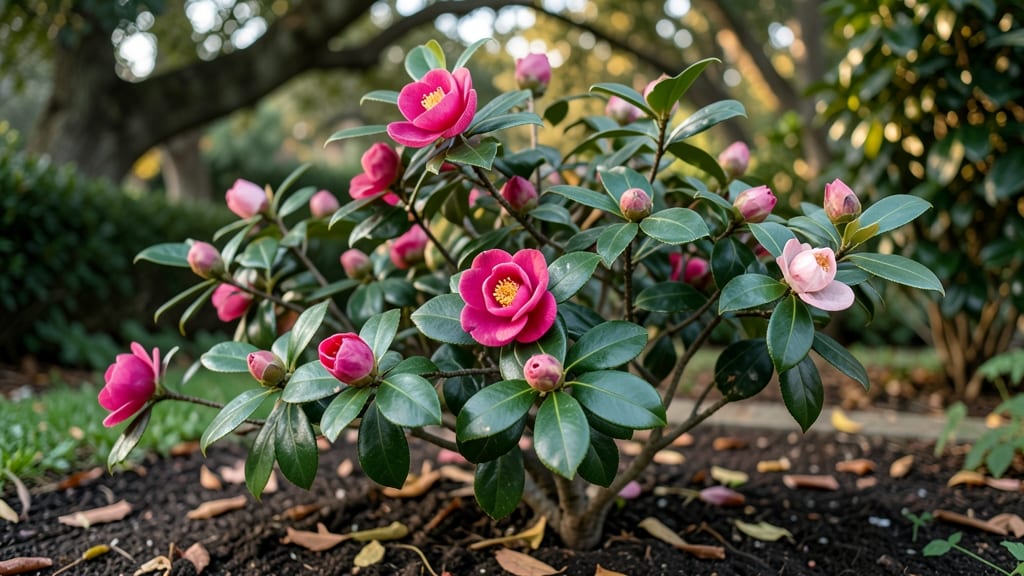
Camellia Bloom Time: Exact Months by Variety and Your Climate Zone

Blooming

Camellia Bloom Time: Exact Months by Variety and Your Climate Zone

Camellias bloom at precise times that depend on the variety and your climate zone, turning your garden into a seasonal showcase of 🌸 beauty from late fall through spring.

Picture this: your Camellia sasanqua bursting into color in December while your japonica waits until March—if you’ve ever wondered why blooms arrive at different times, the answer lies in their genetics and your hardiness zone.

In USDA Zones 7–10, where camellias thrive, timing is everything. A sasanqua in Zone 8a might flower as early as November, while a japonica in Zone 10 could hold off until April.

Below, I break down the exact months for 12+ varieties, how to adjust for your microclimate, and the simple pruning tricks that keep blooms coming year after year.

Ready to plan your garden’s floral calendar? You’ll learn how to extend bloom time, troubleshoot late or missing flowers, and even force earlier blooms in containers—no guesswork, just stunning results.

Exact Camellia bloom time by variety: winter, spring, and year-round flowering

If you’ve ever wondered why your neighbor’s camellia bushes bloom in winter while yours wait for spring, the answer lies in the variety. Camellia japonica and Camellia sasanqua are the two main players, each with distinct bloom windows that can stretch from late fall to early spring.

Some rare varieties even flower year-round with proper care!

Understanding these timelines helps you plan pruning, adjust care, and even extend the bloom season by choosing the right varieties for your climate. Let’s break down the exact months for 12+ popular camellias, so you can enjoy their stunning flowers at the perfect time.

🌸 Pro Tip: Most camellia blooms last 4–6 weeks, but some ever-blooming varieties can produce flowers sporadically all year. The key is matching your hardiness zone with the right variety.

Variety Bloom Season Peak Months Notes
Camellia sasanqua (Winter Bloomer) Late Fall to Early Winter December–February Hardy to Zone 7, fragrant blooms, thrives in cooler temps.
Camellia japonica (Spring Bloomer) Late Winter to Early Spring February–April Prefers Zones 8–10, larger flowers, needs protection from frost.
Camellia × williamsii (Hybrid) Winter to Spring January–March Cross between japonica and sasanqua, semi-evergreen.
Camellia reticulata (Early Winter) Late Fall November–December Fast-growing, Zone 7+, bold red blooms, loves humidity.
Camellia oleifera (Year-Round) Sporadic (Tropical) Year-round (Zones 9–11) Edible seeds, ever-blooming in warm climates, drought-tolerant.
Camellia lutchuensis (Spring) Late Winter February–March Small, pink blooms, thrives in Zones 8–10, compact size.
Camellia hiemalis (Winter) Mid-Winter December–January Fragrant, white flowers, Zone 7+, loves shade.
Camellia saluenensis (Spring) Early Spring March–April Large pink blooms, Zone 8–10, slow-growing.
Camellia pitardii (Winter) Late Fall to Winter November–January Red buds open to pink, Zone 7+, cold-hardy.
Camellia azalea (Spring) Early Spring February–March Resembles azaleas, Zone 7–9, loves acidic soil.
Camellia cuspidata (Spring) Late Winter February–April Tall upright growth, Zone 8–10, great for hedges.
Camellia vernalis (Spring) Early Spring March–April

How your climate Zone affects Camellia bloom time (USDA zones 7–10)

Your USDA hardiness zone plays a surprisingly big role in when your camellias bloom. While Camellia sasanqua typically flowers in late fall to winter, colder zones like Zone 7 may push blooms earlier to avoid frost damage.

Meanwhile, Camellia japonica in Zone 10 might delay until late winter or early spring. Humidity and temperature shifts also create microclimates that can advance or delay blooms by weeks.

In Zone 8, where I garden, my sasanqua varieties often burst into color by November, while japonica varieties wait until February. But move just 50 miles inland, and frost risks can force earlier blooming.

Understanding these patterns helps you prune at the right time and even force blooms in containers for earlier displays.

Zone & Variety Typical Bloom Window Frost Impact Container Adjustments
Zone 7 - Camellia sasanqua October–December Early blooms to avoid frost Use black containers to absorb heat
Zone 8 - Camellia japonica February–March Light frost may damage buds Move to protected patio in winter
Zone 9 - Camellia x williamsii December–January Minimal frost risk Add mulch for root warmth
Zone 10 - Camellia reticulata January–March None (tropical climate) Prune after blooms for summer growth

Humidity is another game-changer. In Zone 9, where I’ve seen Camellia x williamsii thrive, higher humidity extends bloom duration. But in drier Zone 8 microclimates, blooms may fade faster.

To combat this, I water deeply in late afternoon to boost humidity around the plant. For container-grown camellias, grouping pots together creates a microclimate that mimics natural humidity levels.

If you’re in Zone 7, where frost is a real threat, consider early-season varieties like Camellia sasanqua 'Yuletide', which blooms reliably by November 1st.

In warmer zones like Zone 10, Camellia reticulata may bloom as late as March, but you’ll need to prune lightly in summer to encourage new growth for next year’s flowers.

For container camellias, zone adjustments are critical. In Zone 8, I move potted plants near a south-facing wall to capture winter sun, which can advance blooms by 2–3 weeks.

In Zone 10, shade cloth becomes essential to prevent heat stress and maintain bloom quality. Always use well-draining containers with acidic potting mix to prevent root rot.

Pro tip: Track your camellia’s bloom dates for 3 years to spot patterns. If blooms consistently arrive late, it may signal nutrient deficiencies or poor drainage. A simple soil test can reveal if your pH is too high—camellias thrive in acidic soil (pH 5.0–6.0).

Adjust with sulfur or peat moss to encourage healthier, earlier blooms next season.

★★★★★4.6(8 reviews)
Categories Blooming