
Blooming
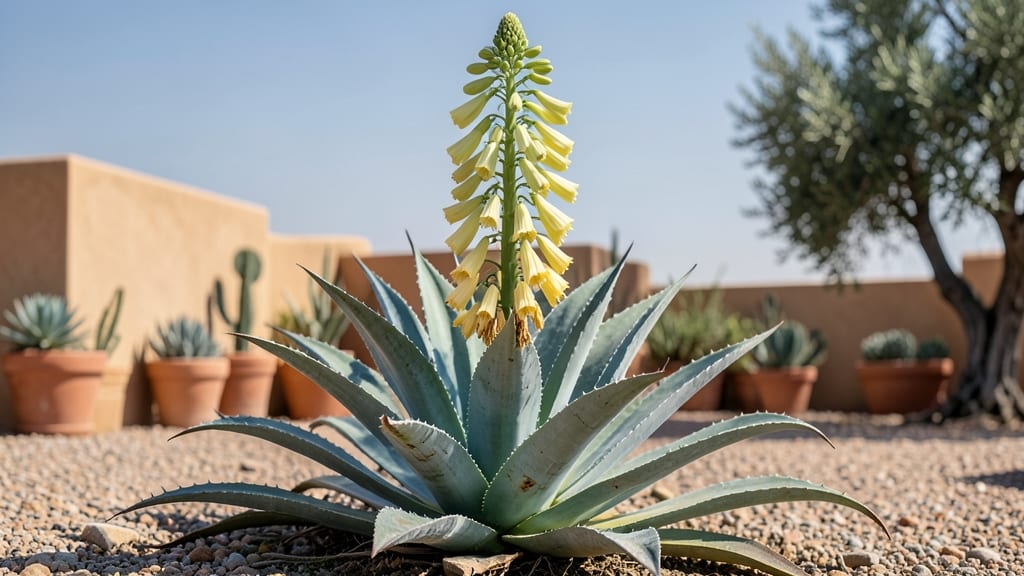
That agave bloom spike is nature’s dramatic finale—and its secret to rebirth. 🌵💜 After decades of patient growth, your agave sends up a towering purple flower stalk, signaling its last act before dying. But here’s the twist: from its base, pups (baby agaves) emerge, ready to take over.
This heat-triggered spectacle is your plant’s one-shot chance to reproduce, and it’s worth paying attention to. The spike itself is harmless—don’t yank it (that stresses the plant). Instead, let it do its thing: pollinators will visit, seeds may form, and those pups will grow.
Water lightly during this phase (overwatering now causes rot), and keep an eye out for pests drawn to the new growth. The whole process takes 6-12 weeks from spike to pups, depending on your climate. Once the mother plant dies (usually within a year), those pups become your new stars.
Dig them up once they’re 6-12 inches tall, replant them, and watch them thrive. It’s like getting free plants—just wait for the show first. The purple spike fades, but the legacy lives on in those sturdy new shoots.
Here’s the pro move: harvest pups when they’re 1/3 the size of the mother plant. Smaller pups transplant easier and establish faster. Give them a few weeks to recover before fertilizing—let them focus on roots first. And if you’re in a cold climate?
Pups need winter protection until they’re 2+ years old. This cycle makes agaves feel almost magical. One dramatic bloom, and suddenly you’ve got a whole new generation. Now you know why gardeners call agaves "century plants"—even though they bloom much sooner.
The real magic is in the pups waiting in the wings.
📚 In This Guide
- What you need
- Instructions
- Tips and common mistakes
- Wrapping up and next steps
What you need
- ● Agave plant – A mature, healthy Agave americana or similar species (e.g., Agave parryi), ideally 5+ years old.
- ● Frost protection – Lightweight frost cloth (1 oz/yd² density) or bubble wrap to shield the plant during cold snaps.
- ● Heat source – A sun lamp (100W+ incandescent or LED grow light) or a heat mat (set to 75–85°F) for post-frost warmth.
- ● Thermometer – Digital soil or air thermometer to monitor temperatures (critical for triggering the bloom spike!).
- ● Watering can – With a gentle spray nozzle for hydration without disturbing roots.
- ● Pruning shears – Sharp, sterilized shears (for trimming dead foliage post-frost).
- ● Slow-release fertilizer – Balanced 10-10-10 or agave-specific granules to boost recovery.
- ● Humidity tray – To maintain moisture levels during temperature shifts.
- ● Camera/timer – For capturing the ephemeral purple bloom spike in action!
- ● Gloves – Heavy-duty gardening gloves (agave spines are no joke!).
How to care for an agave bloom spike after frost
Here's how I handle the stunning purple rebloom—this is where agaves get dramatic.
☀️ Step 1: Wait for the Right Temperature Shift
Agaves bloom after frost only when daytime temperatures climb to 75°F+ consistently. I watch for the first three consecutive days above 70°F—that's your trigger. Until then, the plant conserves energy, and forcing heat too soon stresses it.
You'll notice new growth at the base of the spike as a sign it's ready. The old leaves may still look crispy, but don't trim them yet—they protect the new shoot. If your area has unpredictable spring temps, cover the plant at night with frost cloth until daytime heat stabilizes.
🌱 Step 2: Support the Heavy Bloom Spike
That 6-8 foot tall purple spike is top-heavy and can snap in wind or rain. I tie it to a 3-foot bamboo stake at a 45-degree angle using soft garden twine—never wire, which cuts into the stem. Secure it at the base and midway up, leaving room for the spike to grow.
Watch for the first side shoots forming at the base—that's your signal the mother plant is redirecting energy. If the spike starts leaning, adjust the tie immediately. A broken spike won't bloom again, but the pups will.
💧 Step 3: Water Strategically During Bloom
Blooming agaves need 1 inch of water per week, but I water only at the base of the plant, avoiding the spike itself. Wet spikes attract pests like agave snout weevils, which burrow into the stem. Water in the early morning so leaves dry completely by evening.
You'll see the bloom open in stages—first the yellow central flowers, then the purple bracts unfurling over 4-6 weeks. Don't fertilize during bloom; the plant uses stored energy. After flowering, you can resume light feeding with a balanced 10-10-10 fertilizer at half strength.
✂️ Step 4: Remove Dead Growth After Bloom Fades
Once the spike turns completely brown and crispy (usually 6-8 weeks after blooming), cut it at the base with clean, sharp pruners. I sterilize my blades with rubbing alcohol first to prevent disease. The mother plant will die after blooming, but the pups at the base will produce new agaves.
Trim any remaining dead leaves only if they're brown and brittle. Healthy green leaves at the base mean the pups are storing energy. I leave the old leaf sheaths until they crumble naturally—they protect the new growth from sun scorch.
🌿 Step 5: Protect Pups for Next Season's Growth
New pups need full sun but should be shaded from intense afternoon heat until they're 6 inches tall. I mulch around them with 2 inches of gravel to prevent rot—agaves hate soggy roots. Water pups every 10-14 days once established, letting the soil dry completely between waterings.
You'll see the first true blue-green leaves emerge within 3-4 months. That's when I start fertilizing lightly with a low-nitrogen 5-5-5 mix to encourage strong root development. Pups are ready to transplant when they reach 1/3 the size of the mother plant—usually by their second year.
Tips & tricks for agave bloom spike care
Took me years to perfect these agave care secrets—here's how to avoid the most common mistakes with your purple rebloom.
The Temperature Trigger: Those 75°F+ consistent days are non-negotiable for blooming. I use a weather app to track daily highs—if you see three days above 70°F, that's your cue to stop protecting the plant at night. The old leaves might still look crispy, but they're doing their job protecting the new growth underneath. Don't be tempted to trim them early!
Staking Strategy: That 6-8 foot spike is heavier than it looks. I've seen them snap in just a 20 mph wind. Use two tie points—one at the base and one midway up—with soft garden twine. If your spike starts leaning after a storm, adjust immediately. A broken spike means no rebloom, but you'll still get pups from the base.
Watering Wisdom: The 1 inch per week rule changes during bloom. Focus on the base only—never the spike—and always water in the morning. I've had to rescue plants where evening watering led to fungal issues. And for heaven's sake, don't fertilize during bloom—the plant is using its last energy reserves!
Pup Protection: Those 6-inch tall pups need special care. The gravel mulch is non-negotiable—agaves rot faster than you'd think. I shade mine from afternoon sun until they're established, then let them bake in full sun. The 3-4 month wait for true blue-green leaves is worth it for those dramatic spikes down the road.
Pro Tips for Agave Bloom Spike
- Took me years to perfect these agave care secrets—here's how to avoid the most common mistakes with your purple rebloom.
- The Temperature Trigger: Those 75°F+ consistent days are non-negotiable for blooming.
- Staking Strategy: That 6-8 foot spike is heavier than it looks.
Frequently asked questions
Got questions about that stunning agave bloom spike after frost? You’re not alone!
Here are answers to the most common queries—from timing to troubleshooting—so you can embrace (or avoid) this dramatic display.
Why does my agave bloom after frost?
Agaves produce a dramatic bloom spike as a survival strategy—often triggered by stress like frost, drought, or extreme heat. This final "rebound" signals the plant’s end-of-life cycle, but it’s a spectacular way to say goodbye! The purple hues deepen post-frost due to anthocyanin production, a natural sunscreen for the spike.
How long does the agave bloom spike last?
The spike itself typically lasts 2–6 weeks, depending on weather. Once it blooms, flowers open sequentially over days, and the entire structure may wither within a month. Pro tip: If you’re impatient, prune the spike early to redirect energy to pups (baby plants) at the base—though purists argue this "cheats" nature!
Can I save my agave after it blooms?
Unfortunately, the mother plant dies after blooming—it’s a one-time show! But don’t mourn: Remove the dead spike and focus on the pups (offsets) forming at the base. These are clones! Repot them in spring for future blooms (though they’ll take 5–10 years to mature).
Will frost damage my agave before it blooms?
Agaves are hardy to 20°F (-7°C), but severe frost (<15°F/-9°C) can blacken leaves without killing the plant. If your agave survives but looks sad, prune dead foliage and fertilize lightly in spring. The bloom spike is a sign of resilience—think of it as a purple firework announcing its legacy!
Are there agave varieties that bloom more reliably?
Some agaves are more dramatic than others! Agave parryi and Agave americana (century plant) are famous for their towering spikes, while Agave victoriae-reginae produces a compact, striped bloom. Choose based on your climate: Coastal areas (like California) see more blooms due to mild winters.
| Quick Troubleshooting | Solution |
|---|---|
| No spike after frost? | Patience! Agaves bloom when mature (10+ years). Check for pups—your next generation may surprise you. |
| Spike is leaning or falling? | Stake it with bamboo or a small rod to support the weight. Avoid tying too tightly—agaves hate being "hugged." |
| Pests on the spike? | Spray with neem oil or rinse off aphids/scale. The spike is sterile (no seeds), so pests are just crashing the party! |
Wrapping up and next steps
Witnessing your agave send up that stunning purple bloom spike after frost is a rare and magical moment—proof that even resilient plants can surprise you! 🌵✨ This heat-triggered spectacle isn’t just visually breathtaking; it’s a sign of your plant’s hardiness and the perfect reward for patient care.
Now that you’re armed with the why and how, why not share this knowledge with fellow plant enthusiasts or dive deeper into agave varieties that thrive in your climate?
Next step: Snap a photo of your agave’s bloom, tag us, and let the plant-loving community cheer you on! 📸💜