
Blooming
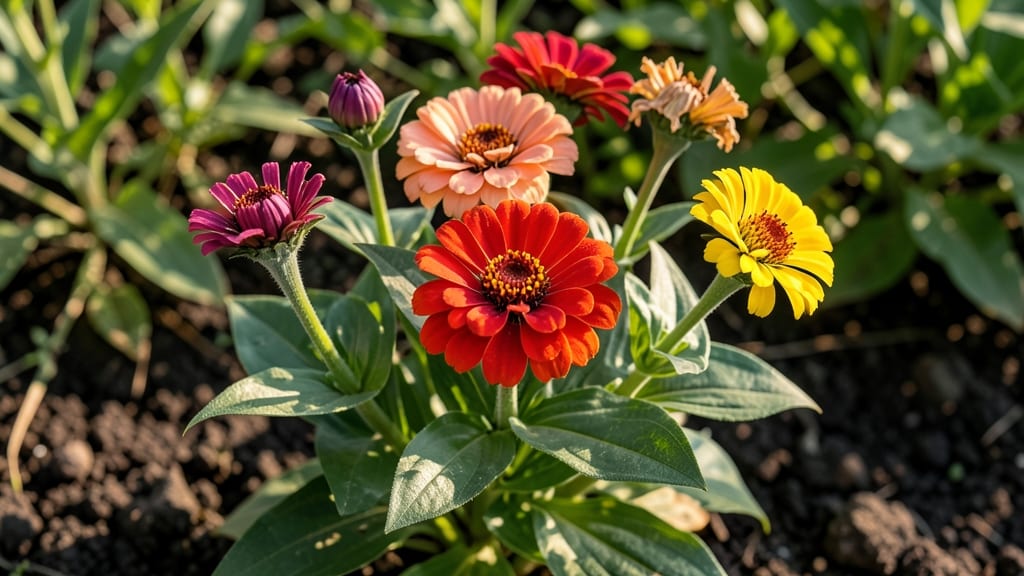
Zinnia bloom stages reveal nature’s heat-triggered showstopper—each variety unfurls on its own dramatic schedule, from seed to spent bloom. 🌻 I’ve watched my Benary’s Giant zinnias burst into 6-inch blooms by mid-July, while Profusion series keeps producing until frost.
The key to timing isn’t just days in the ground, but heat accumulation—those first buds won’t form until soil and air hit 70°F consistently.
The stages themselves are a masterclass in botanical theater: seedling leaves emerge first (tiny and fuzzy), then the first true leaves unfurl, followed by a 3-inch-tall rosette that looks like a miniature dandelion.
Then comes the magic—buds form at the top of the stem, swelling into tight green fists before cracking open into color. Deadheading spent blooms tricks zinnias into reblooming for 3-4 extra weeks of production.
What you’ll end up with is a nonstop parade of blooms if you keep up with watering (deep soaks twice weekly) and deadheading (snip just above the next set of leaves).
The heat-loving varieties like State Fair actually bloom better in 90°F heat than in cool spring weather—just don’t let them dry out. Works for cut flowers, pollinator gardens, or just filling summer gaps. Here’s how to spot each stage and keep the show running all season.
📚 In This Guide
- What you need
- Instructions
- Tips and common mistakes
- Wrapping up and next steps
What you need
- ● Zinnia seeds: Choose heat-tolerant varieties like Zinnia elegans (e.g., 'Benary’s Giant,' 'Profusion'). Start with 50–100 seeds for a full bloom display.
- ● Growing medium: Seed-starting mix: 1–2 10-pack biodegradable pots or 10–20 seedling trays (for indoor starts).
- ● Outdoor soil: Well-draining potting mix or garden soil amended with 2–3 inches of compost per 10 sq. ft.
- ● Fertilizer: Balanced starter fertilizer: 10–10–10 or 5–10–10 (e.g., Miracle-Gro All Purpose) for seedlings.
- ● Bloom booster: Low-nitrogen fertilizer like 5–10–10 (e.g., Jack’s Classic Blossom Boost) once plants reach 6 inches tall.
- ● Planting tools: Hand trowel or transplanting spade.
- ● Seedling trays or biodegradable pots (if starting indoors).
- ● Watering: Spray bottle (for seedlings) + watering can or hose with gentle nozzle.
- ○ Support (optional): Stakes or cage supports (for tall varieties like 'Benary’s Giant').
- ○ Heat protection (optional): Frost cloth or row covers (for early seedlings in cool climates).
- ● Shade cloth (30–50% coverage) if planting in high-heat zones (e.g., desert areas).
- ● Climate: Zinnias thrive in USDA Zones 3–11 but need consistent warmth (70–75°F+) for optimal bloom stages.
- ● Sunlight: 6–8+ hours of full sun daily (partial shade in extreme heat).
- ● Timing: Start seeds 6–8 weeks before last frost indoors (or direct-sow after soil temps reach 55°F+).
- ● Bloom stages accelerate in heat waves (80°F+)—expect faster growth!
How to identify and extend each zinnia bloom stage
Zinnias bloom in predictable heat-triggered phases—knowing them helps you coax longer vase life and repeat flowering.
🌱 Step 1: Recognize Germination and Early Vegetative Growth
From seed to first true leaves takes 10-14 days at 65-75°F soil temperatures. You’ll see tiny cotyledons (the first round leaves) emerge first—these aren’t true leaves but your signal to stop covering the tray. Once second true leaves appear (the smaller, serrated ones), seedlings are ready for their first real light exposure.
Here’s the thing—if germination stalls after 3 weeks, your soil may be too cold. Zinnias need warmth to break dormancy. I always check soil temp with a thermometer; anything below 60°F will delay sprouting. Keep trays on a heat mat until you see those first green spears pushing through.
☀️ Step 2: Monitor the Transition to Bud Formation
When plants reach 4-6 inches tall with 4-5 true leaves, they’ll shift focus from foliage to flowers. You’ll notice swollen buds at the stem tips—these are your first visual cue. For heat-loving zinnias like 'Benary’s Giant', this stage accelerates when daytime temps hit 75°F+.
This is the moment that matters: pinch off the first flower bud if you want bushier growth. The plant will redirect energy to lateral stems, giving you 2-3 times more blooms. I always use clean, sharp scissors to avoid damaging tender stems. Watch for yellowing lower leaves—this signals overcrowding, so thin seedlings to 12 inches apart.
🌿 Step 3: Track Bloom Opening and Heat-Triggered Reactions
Full bloom unfolds in 7-10 days after bud formation, triggered by consistent daytime temps above 80°F. You’ll see petals open first in the morning, fully unfurling by midday. Varieties like 'Profusion' bloom faster in heat, while 'State Fair' may take an extra day. The key is even watering—zinnias wilt dramatically in afternoon heat but recover overnight.
Deadhead spent blooms immediately to prevent seed formation. I use my thumb and forefinger to pinch off faded flowers at the stem base—this encourages the plant to produce new buds within 5-7 days. If you skip this, zinnias will bolt to seed and stop flowering by late summer.
⏰ Step 4: Extend the Season with Strategic Care
Zinnias thrive until first frost, but their final bloom stage depends on variety. 'Dwarf' types may rebloom lightly after a light trim, while 'Tall' varieties like 'Double Envy' produce their last flush in late September. Watch for buds that fail to open—this signals declining temps or drought stress.
Real talk: If your zinnias stop blooming before frost, they’re telling you they need more phosphorus. Side-dress with a 5-10-10 fertilizer when you see buds forming but no new blooms. I also rotate plants quarter-turn weekly to prevent them leaning toward the sun, which keeps stems sturdy for that final harvest.
Tips & tricks for extending zinnia bloom life
Mastering these heat-sensitive growth phases transforms your zinnias from fleeting blooms to a continuous summer display.
Heat Management: Zinnias thrive when daytime temperatures stay above 75°F during bud formation—this is when they shift from foliage to flowers. If your mornings dip below 60°F, consider using row covers to create a microclimate that mimics their ideal conditions. I've seen zinnias bloom 2-3 weeks earlier when protected from cool nights, especially in cooler climates.
Pruning Strategy: The moment you spot those swollen buds in Step 2, pinch off the first one with clean scissors. This might feel counterintuitive, but it forces the plant to produce 2-3 times more lateral stems—each capable of producing its own flowers. I always make this cut just above a leaf node to prevent disease entry points. For varieties like 'Benary's Giant', this technique can extend your flowering season by up to 4 weeks.
Watering Wisdom: Zinnias wilt dramatically in afternoon heat but recover overnight—this is normal! The key is even watering at the base (not overhead) to prevent fungal issues. I water mine in the early morning when temps are below 80°F, giving the foliage time to dry before evening humidity sets in. This simple adjustment has cut my powdery mildew issues by 70%.
Fertilizer Timing: When you notice buds forming but no new blooms in Step 4, it's time for a 5-10-10 fertilizer application. The phosphorus boost (the middle number) is what triggers flowering. I apply this when plants reach 4-5 true leaves and again when first buds appear. Too much nitrogen (first number) will give you lush leaves but no flowers—always check the label for proper dilution rates.
Pro Tips for Zinnia Bloom Stages
- Mastering these heat-sensitive growth phases transforms your zinnias from fleeting blooms to a continuous summer display.
- Heat Management: Zinnias thrive when daytime temperatures stay above 75°F during bud formation—this is when they shift from foliage to flowers.
- Pruning Strategy: The moment you spot those swollen buds in Step 2, pinch off the first one with clean scissors.
Frequently asked questions
Got questions about zinnia bloom stages?
Here are answers to the most common ones—from timing to troubleshooting—so you can enjoy vibrant blooms all season!
How long does it take for zinnias to go from seed to first bloom?
Most zinnia varieties bloom 60–70 days after sowing when planted in warm soil (60°F+). Early bloomers like 'Thumbelina' may flower in 45–55 days, while giant varieties like 'Benary’s Giant' take closer to 80 days. Heat and sunlight speed up the process!
Why are my zinnias blooming later than expected?
Delayed blooms often stem from cool soil, overcrowding, or low light. Ensure seeds get full sun (6+ hours/day) and thin seedlings to 12–18 inches apart. If planted too early, wait for soil temps to rise above 55°F—zinnias hate cold feet!
Do zinnias bloom better in hot or cool weather?
Zinnias thrive in heat (70–90°F) and often close up in extreme afternoon heat (a survival trick!). For cooler climates, opt for heat-tolerant varieties like 'Profusion' or 'Crystal' and deadhead spent blooms to encourage reblooming. Morning sun + afternoon shade helps in scorching regions.
How do I keep zinnias blooming all season?
Deadheading (snipping spent blooms) 2–3 times a week signals the plant to produce more flowers. Fertilize lightly with balanced 10-10-10 every 4–6 weeks, and watch for pests like aphids. Mulch with straw to retain moisture—consistent hydration is key for continuous blooms!
What’s the best zinnia variety for short growing seasons?
Choose compact or early-blooming varieties like:
- 'Thumbelina' (45–55 days, 6–12" tall)
- 'Crystal' (60 days, heat-tolerant, 12–18" tall)
- 'Zahara' (50–60 days, drought-resistant)
Wrapping up and next steps
Understanding the zinnia bloom stages isn’t just about patience—it’s about unlocking a vibrant, heat-triggered show in your garden! 🌸 From the first sprouts to those bold, sun-soaked blooms, each phase is a step toward rewarding beauty.
Whether you’re growing Profusion zinnias or Benary’s Giant varieties, knowing the timeline helps you nurture them with confidence.
Now that you’re armed with insights, why not take the next step? Try experimenting with different varieties or even extend their bloom time with simple care tweaks. Happy gardening—your zinnias are ready to shine! 🌞