
Blooming
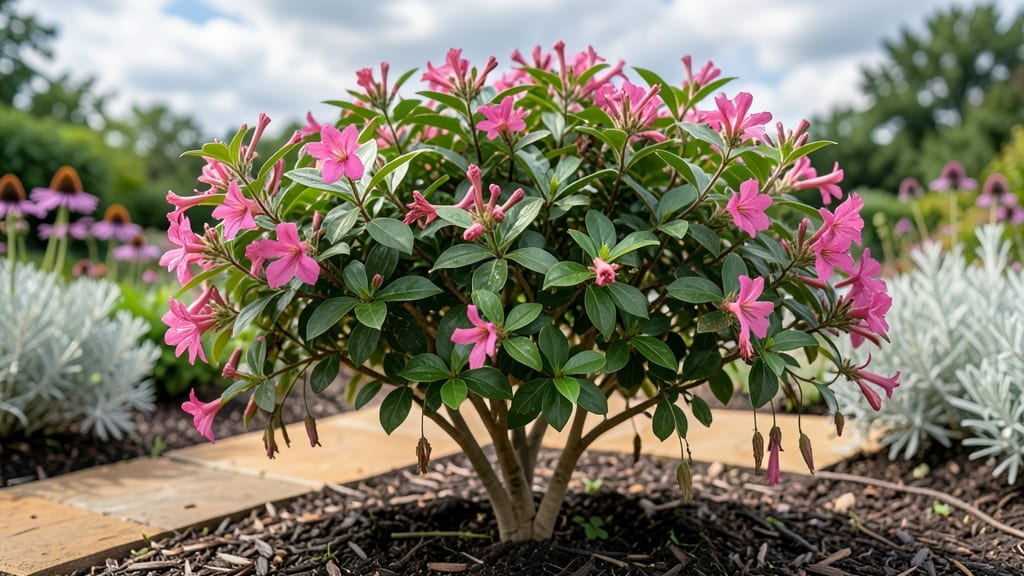
Sonic Bloom Pink Weigela in winter maintains its striking pink blooms and lush foliage in milder climates, though harsh freezes or persistent snow may force dormancy. Late-winter pruning stimulates fresh growth while preserving its iconic color.
This cold-tolerant shrub thrives in USDA zones 5-9, where winter temperatures rarely drop below -20°F without protection. 🌿 The key to its winter resilience lies in its ability to enter dormancy—when temperatures consistently fall below 40°F, growth slows, conserving energy until spring.
However, prolonged exposure to subzero conditions can cause leaf scorch or even dieback, especially in younger plants. The occasional winter blooms you might see in mild winters are a bonus, but don't expect the same vibrant display as spring.
To maintain its signature pink hues and vigorous growth, focus on late-winter pruning (just as buds begin to swell) and mulching with 2-3 inches of organic material like shredded bark. This protects roots from extreme cold while allowing airflow to prevent fungal issues.
If your area experiences heavy snow, gently brush it off branches to avoid breakage—weighing down the delicate stems can cause long-term damage.
💡 In This Article
- How Cold Temperatures Affect Sonic Bloom Pink Weigela
- Winter Care Tips for Vibrant Sonic Bloom Pink Weigela
How cold temperatures affect Sonic Bloom Pink Weigela
The Sonic Bloom Pink Weigela's cold resilience stems from its genetic adaptation to temperate climates. This variety thrives in USDA hardiness zones 5-9, where winter temperatures typically range from -20°F to 30°F.
The plant's ability to survive these conditions hinges on its dormancy mechanism, triggered when nighttime temperatures consistently drop below 40°F for several weeks. During dormancy, the plant conserves energy by slowing metabolic processes, reducing water loss, and protecting delicate tissues with natural antifreeze proteins in its cells.
Temperature fluctuations play a critical role in its winter behavior. While the Sonic Bloom Pink Weigela can handle brief dips into the teens (°F), prolonged exposure to subzero temperatures (-10°F or lower) may cause leaf scorch or dieback, particularly in younger plants.
The plant's vibrant pink blooms are especially frost-sensitive—the delicate flower buds often fail to open if frozen, which is why you might notice fewer winter blooms compared to spring.
Interestingly, the plant's foliage often retains its color even in cold snaps, thanks to anthocyanin pigments that protect leaves from photooxidative damage caused by intense winter sunlight.
What sets this variety apart is its ability to recover from winter stress. After a hard freeze, the Sonic Bloom Pink Weigela typically enters a recovery phase once temperatures rise above 50°F consistently for a week.
New growth emerges from dormant buds along the stems, often within 2-3 weeks of warming conditions. This resilience is why gardeners in transitional zones (like zone 6) can successfully grow this variety—it can withstand occasional cold snaps that might kill less hardy plants.
The key is avoiding prolonged exposure to extreme cold combined with dry conditions, which can be more damaging than cold alone.
Another fascinating aspect is how temperature affects blooming cycles. In milder winters (where temperatures rarely drop below 20°F), you might see sporadic winter blooms—these are often the result of warm spells that trick the plant into breaking dormancy prematurely.
However, these winter flowers are typically less abundant and shorter-lived than spring blooms. The plant's primary energy conservation strategy is to focus on root and stem development during winter, storing resources for the spring growth surge that produces its signature pink blooms.
This delayed flowering strategy ensures more robust displays when conditions are optimal.
For gardeners in colder regions (zone 5), understanding these temperature thresholds is crucial. While the Sonic Bloom Pink Weigela can survive -20°F with proper care, temperatures below -25°F may cause significant damage or death, especially to unprotected plants.
The plant's recovery ability varies by age—mature specimens with established root systems bounce back more easily than young plants. This is why winter mulching (adding 2-3 inches of organic material) is so effective: it insulates roots from extreme temperature swings that can stress the plant.
One common misconception is that all winter damage is irreversible. In reality, the Sonic Bloom Pink Weigela often shows remarkable recovery even after severe cold events. The plant's ability to regenerate from dormant buds means that even if above-ground growth is damaged, new shoots can emerge from the base.
This resilience is why many gardeners report that their Weigelas not only survive winter but return more vigorous than ever in spring. The key is providing the right conditions—adequate insulation, proper watering adjustments, and strategic pruning—to support this natural recovery process.