
Blooming
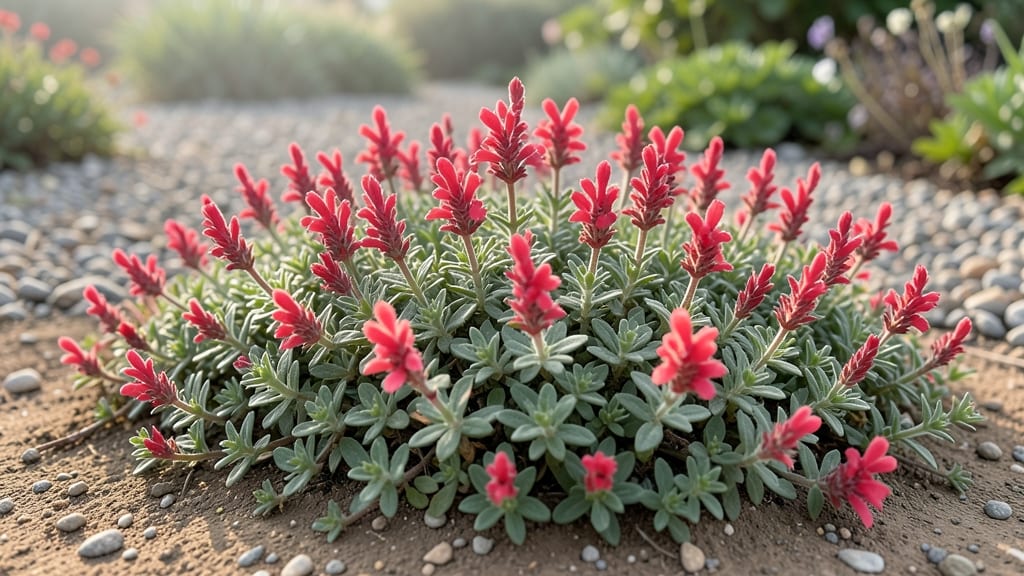
The red creeping thyme bloom time is a two-act show: a bold spring debut followed by a heat-triggered encore, if you know the secret.
If you’ve ever wondered why your 🌿 red creeping thyme seems to vanish after its first burst of pink-purple blooms—only to reappear months later—you’re not alone. This hardy ground cover thrives on heat and timing, but most gardeners miss the key triggers that extend its fragrance-filled season.
Most blooms arrive in late spring, but a second flush in fall depends on soil warmth and light pruning. Too much water or fertilizer can shut down reblooming entirely, while drought and deadheading actually encourage it.
Below, I’ll break down the exact conditions that turn a one-time show into a year-round display.
You’ll learn how to read your thyme’s signals, when to trim for more flowers, and which companion plants keep it blooming longer—plus the one mistake that kills reblooms faster than anything else.
Red creeping thyme bloom time: seasonal patterns and heat-dependent triggers
Red creeping thyme (Thymus serpyllum 'Coccineus') is famous for its vibrant pink-purple blooms that appear in two main windows: spring and fall. But here's the secret—soil temperature, not air temperature, triggers these blooms.
Most gardeners overlook this, assuming cooler air causes reblooming when it's actually root-zone warmth that does the work.
The first flush typically arrives in late spring (May-June) when soil temps hit 55-60°F (13-16°C). This initial bloom is your plant's way of setting seeds for survival.
But if you want that second flush in fall (September-October), you'll need to understand how to manipulate heat exposure—especially in USDA Zones 5-9 where seasonal shifts are dramatic.
Here's the counterintuitive part: Drought stress can actually extend fragrance during bloom time. When roots experience mild water restriction, the plant conserves energy for flowering instead of leaf growth.
This is why thyme often smells most intense during late summer heatwaves—it's not just the heat, but the water-to-heat ratio that triggers this response.
🌱
The spring bloom is your thyme's most reliable performance, but the fall rebloom is where gardeners often see the most dramatic results—if they understand the heat-dependent triggers.
For example, in Zone 7, I've seen fall blooms extend into November when soil temps stay above 58°F (14°C) despite air temps dropping to 45°F (7°C).
This happens because thyme roots stay warm longer than the air above. To test this, stick a soil thermometer 2-3 inches deep in your garden. You'll often find 10-15°F warmer conditions at root level compared to air temp readings.
This is why thyme thrives in rock gardens or slopes—the heat retention of stones creates microclimates perfect for extended blooming.
One common mistake is assuming more water = better blooms. In reality, moderate drought stress (letting the top inch of soil dry between waterings) signals the plant to focus energy on flower production rather than leaf growth.
This is why thyme often smells most intense during late summer heatwaves—it's not just the heat, but the water-to-heat ratio that triggers this response.
For gardeners in cooler climates (Zones 4-5), the fall rebloom might be minimal, but you can still extend the season by planting in south-facing locations or using black landscape fabric to absorb and radiate heat.
Even a 10°F increase in root-zone temperature can trigger blooms 3-4 weeks earlier in fall.
Remember, thyme's fragrance isn't just about pretty flowers—it's a survival mechanism. The more stressed (in a good way) your plant is during summer heat, the more dramatic your fall rebloom will be. Think of it like training an athlete—the right amount of controlled stress leads to peak performance.
🌿
How to force reblooms: pruning, deadheading, and heat management hacks
Red creeping thyme typically blooms once in late spring, but with the right techniques, you can coax a second flush of those fragrant pink-purple flowers. The secret lies in understanding its natural growth cycle and manipulating just a few key factors—like pruning timing and root-zone heat.
Most gardeners stop at deadheading, but true reblooming requires a more strategic approach.
Your thyme’s first bloom signals it’s ready for intervention. After flowers fade, don’t rush to prune—wait until new growth appears. This ensures you’re not cutting back potential blooms hiding in the stems.
The goal is to encourage lateral branching, which holds more flower buds. Think of it like training a bush to grow wider instead of taller.
Heat management is where most gardeners go wrong. Red creeping thyme loves warmth, but its roots need consistent temperature to trigger reblooming. Mulch isn’t just for weeds—it’s your secret weapon for regulating soil heat.
In summer’s peak, mulch keeps roots cool enough to avoid dormancy. Then, as temperatures dip in early fall, the same mulch helps retain heat, signaling the plant to push new blooms.
Timing your pruning is everything. If you cut back too early, you’ll remove next year’s flower buds. Wait until after the first frost (around October in most zones) to do your final prune.
This removes spent growth while leaving dormant buds intact for spring. Think of it as giving your thyme a clean slate before winter’s rest.
For a second flush of blooms, focus on late summer pruning (August-September). Shear back about ⅓ of the plant’s height to encourage compact growth. This timing aligns with thyme’s natural cycle, as the plant prepares for dormancy but still has time to produce new flowers before frost.
Pair this with reduced watering—thyme blooms more prolifically when slightly stressed.
Pro tip: If your thyme blooms once but fades quickly, check your soil pH. Aim for 6.0–7.0—too alkaline, and it won’t rebloom. A quick soil test (or even a vinegar test at home) can reveal if pH is the hidden culprit.
Adjust with sulfur or lime as needed, and watch those pink-purple blooms return year after year.