
Blooming
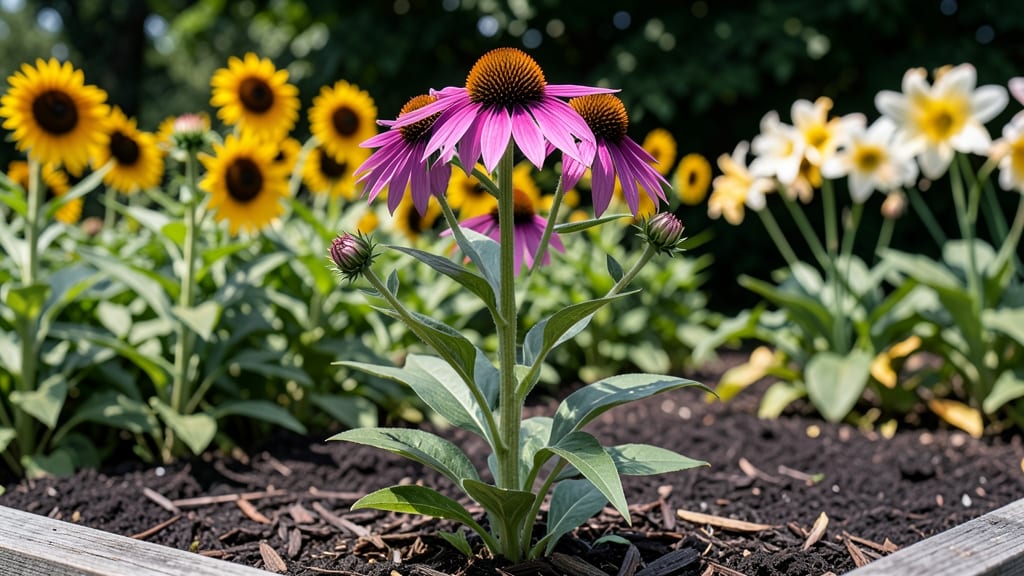
Summer-blooming perennials deliver bold colors and effortless beauty, with standout varieties like coneflowers, black-eyed Susans, and daylilies that flourish in full sun and return year after year with virtually no upkeep.
These hardy plants have evolved to thrive under summer's intense heat and sunlight, thanks to deep root systems that store moisture and waxy foliage that reduces water loss. 🌿 Unlike annuals that need yearly replanting, perennials establish strong root networks over time, making them far more drought-tolerant once established.
I've found that even in my hot, dry climate zone, these plants continue blooming through late summer when many annuals have already faded.
What makes them particularly appealing is their ability to attract pollinators while requiring minimal intervention. Most summer perennials prefer well-draining soil and at least six hours of direct sunlight daily, though some varieties like shasta daisies tolerate partial shade.
The key to their longevity is proper spacing during planting—giving each plant room to grow prevents competition for nutrients and water, which is especially important during summer's peak growing season.
💡 In This Article
- Why Summer-Blooming Perennials Thrive in Heat
- Best Summer Perennials for Different Garden Zones
Why summer-blooming perennials thrive in heat
Summer-blooming perennials have evolved remarkable botanical adaptations that let them flourish when annuals often wilt. Their deep root systems—often extending 3-5 feet below the surface—tap into moisture reserves that shallow-rooted plants can't access.
For example, coneflowers (Echinacea) develop taproots that store water like natural reservoirs, while black-eyed Susans (Rudbeckia) have fibrous root networks that spread horizontally to capture every drop of rain. This gives them a survival advantage in 90°F+ temperatures where annuals would need constant watering.
Their foliage also plays a crucial role in heat resistance.
Many summer perennials develop waxy, leathery leaves that reduce water loss through transpiration—a process where plants release moisture through leaf pores. Daylilies (Hemerocallis), for instance, have thick, fleshy leaves that act like built-in moisture barriers, while bee balm (Monarda) produces aromatic oils that create a protective film on the leaf surface.
These adaptations mean they can go 2-3 weeks without supplemental water once established, unlike annuals that may need weekly irrigation during heatwaves.
Light requirements are another key factor in their summer success. Most summer perennials thrive in full sun (6+ hours daily) because their chlorophyll production peaks under intense sunlight, creating more energy for flowering.
However, some varieties like shasta daisies (Leucanthemum) can tolerate partial shade in hotter climates (zones 5-9) because their leaves have higher heat tolerance thresholds. The trade-off? Too much shade reduces flowering intensity, as plants prioritize leaf growth over bloom production when light is limited.
What truly sets them apart from annuals is their ability to re-establish after summer's heat stress. While annuals complete their life cycle in one season, perennials enter a state of dormancy during extreme heat, then rebound with vigor when temperatures cool.
This resilience is thanks to specialized cells that protect their root systems from dehydration—a process called osmotic adjustment, where plants increase their internal sugar concentrations to maintain water uptake even when soil moisture is scarce.
Consider the Russian sage (Perovskia) as a prime example: its silvery foliage reflects up to 30% more sunlight than green leaves, reducing leaf temperatures by 5-10°F during peak afternoon heat. This adaptation allows it to continue blooming through September when many other perennials have finished their season.
The result? A garden that stays vibrant when annuals have long since faded, with flowers that attract pollinators even in the dog days of summer.
For gardeners, this means less work and more rewards. Once established (typically after 2-3 years of growth), these perennials require 30-50% less water than annuals and need only 2-3 prunings per year—a stark contrast to annuals that may require monthly deadheading.
Their ability to self-seed or spread through rhizomes also means they'll populate your garden over time, creating natural drifts of color that annuals can never match.