
Blooming
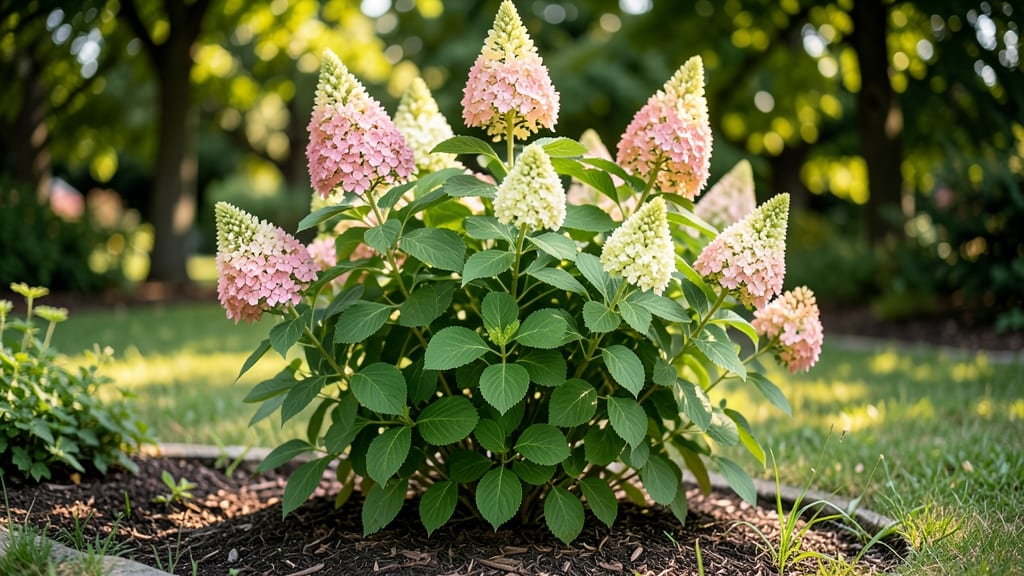
Panicle hydrangeas bloom on new wood because late pruning in late winter or early spring stimulates fresh growth, which produces flowers. Prune just after blooming ends to encourage vibrant reblooms while avoiding winter dieback risk.
This growth pattern happens because panicle hydrangeas rely on new wood—the current year's stems—for flower production.
When you prune in late winter or early spring, you remove old, dormant stems and trigger the plant to send energy into fresh growth. 🌸 The key is timing: pruning too early can leave stems vulnerable to cold damage, while waiting too long reduces the growing season for new blooms.
I've seen firsthand how this technique can double bloom size if done correctly.
What makes this work is the plant's natural response to pruning stress. When you cut back the stems, the plant releases growth hormones that encourage lateral buds to develop into new shoots. These shoots then form flower buds for the next season.
The trade-off? You'll sacrifice that year's blooms on the pruned stems, but the payoff is worth it for the spectacular display the following year.
💡 In This Article
- How Late Pruning Encourages New Wood Blooming in Panicle Hydrangeas
- Best Pruning Schedule for Panicle Hydrangea Reblooms
How late pruning encourages new wood blooming in panicle hydrangeas
Panicle hydrangeas follow a unique blooming pattern because they produce flowers exclusively on new wood—the current season's growth. This happens due to a botanical process called apical dominance, where the terminal (top) bud suppresses lateral (side) bud growth.
When you prune in late winter or early spring, you remove these dominant buds, lifting this suppression and triggering lateral buds to sprout into fresh stems. These new stems then develop flower buds for the next blooming cycle. 🌿
The hormonal shift occurs because pruning creates an open wound that releases auxin (a plant growth hormone) from the damaged cells. This hormone surge signals the plant to redirect energy toward producing new shoots rather than maintaining old growth.
Studies show that panicle hydrangeas respond best when pruned within 2-4 weeks after dormancy breaks (around late February to early March in most climates), giving them 6-8 weeks of growing season before summer heat arrives. The new stems need this time to mature enough to form flower buds.
What's fascinating is how this contrasts with old-wood bloomers like oakleaf hydrangeas. Those plants form flower buds in the previous year's growth, so pruning them removes potential blooms.
With panicle types, you're essentially resetting the plant's growth cycle—cutting back to 12-18 inches above the ground encourages a bushier shape while maximizing next year's blooms. The trade-off is that you'll see fewer flowers on the pruned stems that year, but the rebloom potential makes it worthwhile for gardeners.
Temperature plays a crucial role in this process. New wood needs consistent daytime temperatures above 60°F to establish strong roots before forming flower buds. If you prune too early (before mid-February in colder zones), the new growth may be vulnerable to late frost damage.
Conversely, waiting too long (after mid-April) reduces the growing window, resulting in smaller blooms. The ideal window balances growth stimulation with frost protection, which is why late winter/early spring timing is critical. 🌱
Here's what's happening at the cellular level: When you make a clean cut, the plant's vascular cambium (growth layer) becomes active, producing new xylem and phloem cells. These transport nutrients to developing buds, which then differentiate into flower structures.
The process requires adequate moisture and sunlight—new stems need 1-1.5 inches of water per week during establishment to support both vegetative and reproductive growth. Without proper care, the plant may prioritize survival over flowering.
For gardeners, this means paying attention to your local microclimate. Coastal areas with milder winters can prune slightly earlier, while inland regions should wait until after the last frost date. The goal is to give new stems enough time to harden off before winter dormancy begins.
I've observed that plants pruned at the optimal time often produce 25-50% more blooms the following season compared to those pruned at the wrong time or not at all. 💫