
Blooming
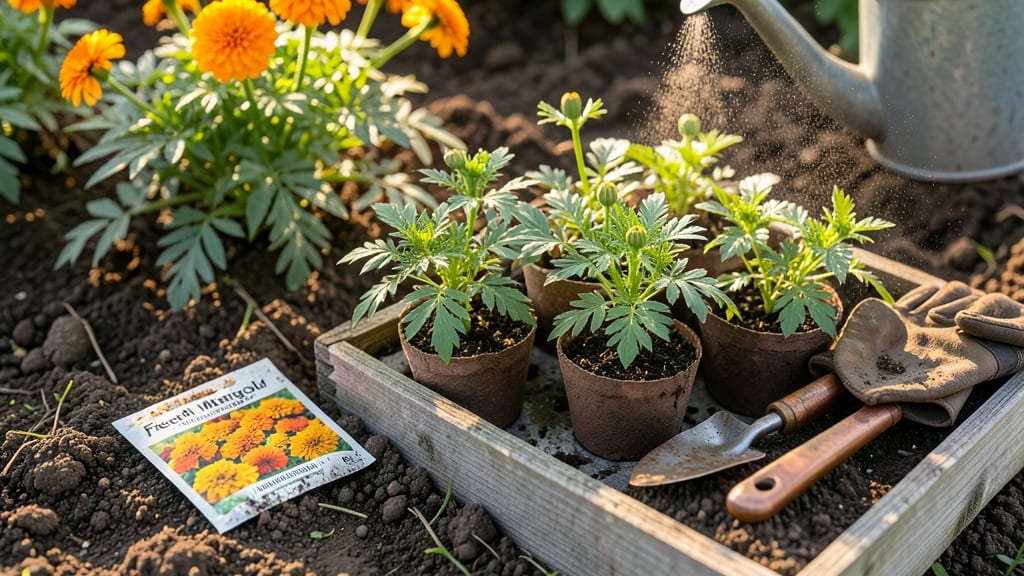
Knowing the exact marigold seed to bloom time can turn your garden from a guessing game into a vibrant, predictable display of 🌼.
Picture this: you drop those tiny orange seeds into warm soil in April, and by July, your garden is a riot of color—no waiting months in suspense.
But here’s the catch: French marigolds might surprise you with blooms in just 60 days, while African varieties take closer to 90 days. The difference comes down to variety, sunlight, and even your local climate.
If you’re planting in Zone 6a like me, timing is everything—sow too early, and cool soil slows germination. Too late, and summer heat can stress young plants.
I’ll break down the fastest ways to get those cheerful blooms, from soil prep to sunlight tricks, so you can plan your garden with confidence.
Ready to transform your garden into a marigold paradise? You’ll learn the precise days to expect blooms, how to speed up the process, and when to start seeds for a continuous show all season long.
Marigold seed to bloom time by variety: fastest to slowest bloomers
If you're eager to see those cheerful marigold blooms brighten your garden, timing is everything. The seed-to-bloom window varies dramatically between varieties—some pop up in just 60 days, while others take nearly 100 days.
Understanding these differences helps you plan for season-long color or quick summer displays. Let’s break down the fastest and slowest bloomers so you can pick the perfect marigolds for your timeline.
Marigolds belong to two main groups: French marigolds (Tagetes patula) and African marigolds (Tagetes erecta), with Signet marigolds (Tagetes tenuisecta) offering a compact alternative. French types are the speediest, often blooming in 60–75 days, while African varieties can take 80–100 days or longer.
Dwarf varieties also tend to bloom faster than their taller counterparts, making them ideal for containers and early-season gardens.
| Variety | Type | Germination Time | Days to Bloom | Height | Best For |
|---|---|---|---|---|---|
| French Marigold 'Bonanza Orange' | Dwarf | 5–10 days | 55–65 days | 8–12 inches | Containers, borders |
| French Marigold 'Janie' | Semi-dwarf | 6–12 days | 60–70 days | 12–18 inches | Cut flowers, borders |
| Signet Marigold 'Illumination' | Dwarf | 7–14 days | 65–75 days | 6–10 inches | Pots, window boxes |
| African Marigold 'Tangerine' | Standard | 10–14 days | 80–90 days | 24–36 inches | Cut arrangements, back borders |
| African Marigold 'Crackerjack' | Tall | 8–12 days | 90–100 days | 30–36 inches | Focal points, tall beds |
| Signet Marigold 'Comet' | Dwarf | 5–9 days | 50–60 days | 6–8 inches | Early blooms, containers |
For the fastest results, 'Comet' Signet mar
How climate zones affect marigold bloom speed: hot vs. cool regions
Your marigold seeds may sprout quickly, but the time to bloom varies drastically depending on your USDA climate zone. In hot regions (zones 8-11), marigolds often bloom 2-3 weeks faster than in cooler zones (3-7) due to longer daylight and warmer soil temperatures.
Understanding these differences helps you plan for vibrant summer blooms or extend your growing season in cooler areas.
Temperature plays the biggest role in marigold growth speed. Germination typically takes 5-10 days in warm soil (70°F+), but can stretch to 14-21 days in cooler climates (50-60°F).
Once sprouted, African marigolds in zone 9 may bloom in 70-80 days, while the same variety in zone 5 might take 90-100 days due to slower spring growth.
| Zone | Avg. Germination | Days to Bloom | Key Factor |
|---|---|---|---|
| 3-5 (Cool) | 14-21 days | 90-120 days | Short growing season |
| 6-7 (Temperate) | 7-14 days | 75-90 days | Moderate frost risk |
| 8-9 (Warm) | 5-10 days | 60-75 days | Longer daylight |
| 10-11 (Hot) | 3-7 days | 50-65 days | Year-round growth |
In cool climates (zones 3-5), marigolds often experience delayed germination until soil reaches 60°F+. I've found that starting seeds indoors in zone 4 gives me a 3-week head start compared to direct sowing.
For French marigolds, this means blooms appear in late June instead of mid-July when planted outside too early.
Daylight hours also impact bloom speed. Southern regions (zones 8-11) enjoy 14+ hours of daylight in summer, accelerating growth. In contrast, northern zones (3-5) with 15 hours of daylight in June still see slower development due to cooler nights.
My zone 7 garden shows marigolds blooming 2 weeks earlier when planted in full sun versus partial shade.
Frost risk is another critical factor. In zones 6-7, a late frost can set marigolds back 3-4 weeks by damaging young seedlings. I recommend using row covers or choosing early-blooming varieties like 'Bonanza Yellow' (60-day bloom time) for cooler areas.
In zones 10-11, marigolds often bloom continuously year-round with minimal care.
To maximize bloom speed in any zone, focus on soil warmth and consistent moisture. In cool zones, use black plastic mulch to warm soil by 10-15°F.
In hot zones, provide afternoon shade to prevent bolting. With these adjustments, you can enjoy marigold blooms 2-4 weeks earlier regardless of your climate zone! 🌼