
Propagation
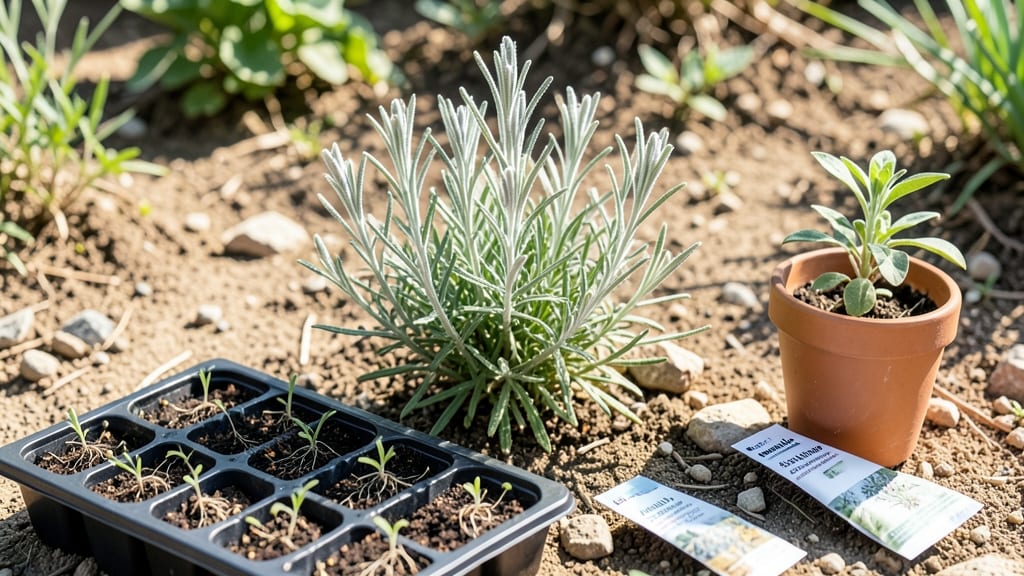
Lavender grown from seed usually takes 2 to 3 years to bloom, though hardy varieties like English lavender may flower in 18 to 24 months when given full sun, well-draining soil, and consistent moisture. Dwarf or hybrid types often take longer, while cold-hardy species may bloom faster in warmer climates.
Timing varies because lavender is a slow-growing perennial that prioritizes root development before flowering. 🌱 The first year focuses on establishing a strong root system, while the second year builds foliage—only then do the buds form.
I’ve seen French lavender bloom in as little as 12 months in Zone 8 with perfect conditions, but most gardeners should expect patience. Varieties like Spanish lavender often take the full 3 years, especially in cooler climates where growth slows.
What’s fascinating is how environmental factors accelerate or delay this process. For example, lavender planted in well-draining soil mixed with sand or perlite can bloom up to 6 months earlier than in heavy clay.
Overwatering or poor drainage, on the other hand, can push flowering back by a full year or more. The key is mimicking its natural Mediterranean habitat—dry, sunny, and well-aerated.
💡 In This Article
- Lavender Bloom Timelines by Variety and Growing Zones
- Speeding Up Lavender Flowering: Pro Tips for Faster Blooms
Lavender bloom timelines by variety and growing zones
English lavender, particularly the Munstead variety, is the fastest bloomer among common types, often producing its first flowers in 18 to 24 months from seed. This variety thrives in USDA zones 5-9 and has a natural tendency to prioritize flowering once its root system reaches about 12 inches deep.
The compact growth habit of Munstead also means it devotes more energy to blooms rather than spreading laterally like Spanish lavender. 🌿 In contrast, Hidcote lavender—another English variety—typically takes the full 2 to 3 years because its bushier form requires more foliage development before it can support heavy flower spikes.
French lavender varieties like Grosso show remarkable adaptability across zones 5-8, often blooming in 20 to 26 months when grown in well-draining soil with at least 6 hours of direct sunlight daily.
The key difference here is the plant's response to temperature fluctuations: French lavender enters dormancy more aggressively in cooler zones (like 5-6), which can delay flowering by 4 to 6 months compared to warmer zones (7-8).
Spanish lavender, however, is the slowest to bloom, usually requiring 3 years or more, especially in zones below 7 where its natural Mediterranean growth patterns struggle to adapt.
The USDA hardiness zone plays a critical role in bloom timing because it directly affects germination rates and root development. In zone 9, where winters are mild, lavender seeds often germinate within 2 to 4 weeks and establish roots quickly enough to flower in 18 months.
But in zone 5, where frosts can last until May, seeds may take 6 to 8 weeks to germinate, and the first blooms might not appear until year 3.
The soil temperature at planting is equally important—ideal germination occurs at 70-75°F, while cooler soils (<60°F) can delay sprouting by 3 to 4 weeks.
What most gardeners overlook is how soil composition interacts with zone-specific conditions. In zone 7, for example, adding 30% perlite or coarse sand to clay soil can cut bloom time by 6 months for English lavender by improving drainage.
Without this adjustment, poor aeration forces the plant to allocate energy to root repair rather than flower production. The same principle applies to French lavender in zone 6—planting in raised beds with gravelly soil ensures faster blooms by preventing waterlogging, which is a common issue in cooler climates. 💧
Cold-hardy varieties like 'Provins' French lavender demonstrate how genetic adaptation can override zone limitations. This cultivar often blooms in 22 to 26 months even in zone 5 because its natural resistance to early frosts allows it to focus on growth rather than survival. The trade-off?
Its flowers are slightly less fragrant than Munstead's, but the earlier bloom time makes it ideal for northern gardens. For comparison, Spanish lavender in the same zone might never reach full bloom potential due to its sensitivity to prolonged cold snaps below 20°F.
One surprising factor is how seed source affects timing. Seeds collected from lavender grown in zone 8 or warmer will typically bloom 4 to 6 months earlier than those from zone 5 sources when planted in identical conditions.
This is because the parent plant's genetic memory of warmer climates translates to faster root and shoot development in the offspring.
For example, Hidcote lavender seeds from a California nursery may bloom in 24 months in zone 7, while seeds from a Midwest grower could take 30 months in the same location. 🌍