
Blooming
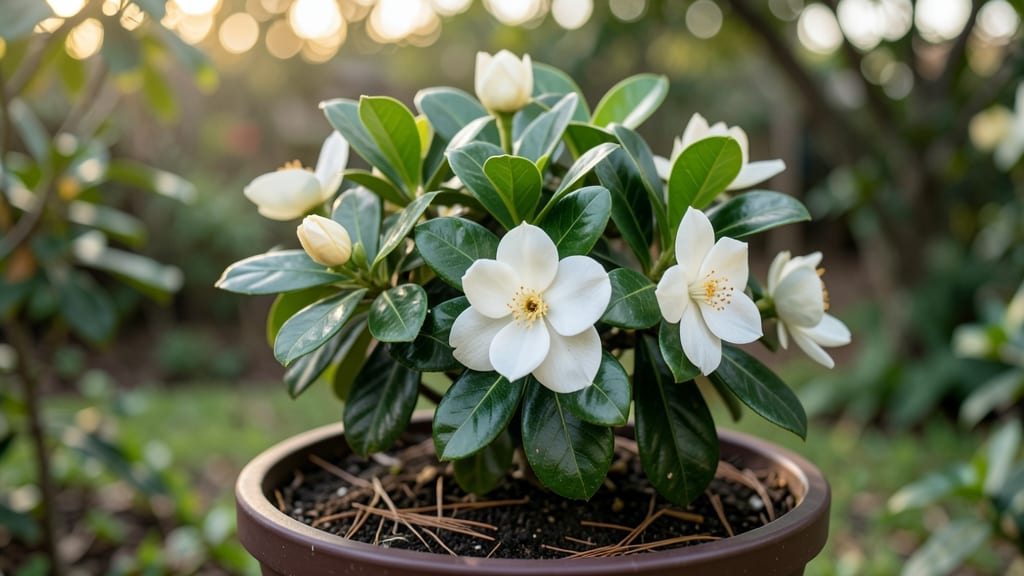
Your gardenias won’t bloom until the gardenia bloom time hits 75°F consistently—that’s when their famous intoxicating fragrance kicks in. 🌸 I learned this the hard way after years of waiting for spring blooms that never came.
The truth? These tropical divas need heat to trigger their flowers, and the timing varies wildly by variety and climate zone.
Most gardenias bloom in late spring to early summer, but some late-season varieties stretch into fall if temperatures stay warm. In Zone 9 and warmer, you might even see year-round blooms with proper care—think velvety white flowers and that signature citrusy perfume filling the air at dusk.
The key is matching your variety to your local heat patterns.
By adjusting water, sunlight, and feeding, you can coax 3-4 weeks of peak blooming from a single flush. I’ve seen gardenias covered in blossoms for weeks when I keep them happy—no more sparse, sad-looking shrubs. The secret? Regular pruning after blooms fade and avoiding cold drafts that shock the plant.
Even in cooler zones, container gardenias can be moved to sunny patios when temps rise, extending their season. Whether you’re in Florida or Oregon, understanding your gardenia’s heat triggers is the first step to turning your yard into a fragrant paradise. Let’s get those buds popping!
📚 In This Guide
- What you need
- Instructions
- Tips and common mistakes
- Wrapping up and next steps
What you need
- ● Gardenia plants: Choose 1-3 mature plants (depending on desired bloom volume) of your preferred variety (e.g., Gardenia jasminoides ‘Radicans’ for early blooms or ‘Kleim’s Hardy’ for heat tolerance).
- ● Well-draining potting mix: 3-5 gallons of a blend with 50% peat moss or coconut coir, 30% perlite/pumice, and 20% compost (pH 5.0–6.5).
- ● Containers: Pots with drainage holes (size: 12–18 inches in diameter for 1 plant; larger for multiple). Terracotta or fabric pots work best.
- ● Slow-release fertilizer: 1–2 cups of osmocote (14-14-14 NPK) or a gardenia-specific blend (apply at planting).
- ● Watering can: With a rose attachment for gentle, deep watering.
- ● Pruning shears: Bypass-type (sterilized with rubbing alcohol).
- ● Thermometer: Digital soil/air thermometer (±1°F accuracy) to monitor heat triggers.
- ● Location: Full sun (6+ hours/day) in USDA Zones 8–11. For cooler zones, provide artificial grow lights (12–14 hrs/day) or overwinter indoors near a south-facing window.
- ○ Heat source: Optional but critical for forcing blooms early: Heat mat (70–80°F soil temp) for container plants.
- ● Space heater (75–85°F ambient) in a greenhouse or sunny room.
- ● Humidity control: Misting bottle or humidifier to maintain 50–70% humidity (gardenia buds hate dry air!).
- ● Bloom trigger: A 2–3 week heat spike (consistent temps above 75°F) to kickstart flowering.
- ● Floral food: Monthly liquid feed (e.g., Miracle-Gro Bloom Booster) during active growth.
- ● Bud spray: Hydrogen peroxide (3%) (1 tsp/gallon) to prevent bud drop.
- ● Support stakes: 3–4 bamboo stakes (6+ inches tall) for heavy blooms.
- ● Fragrance journal: Notebook to track bloom dates, temps, and variety notes!
How to time gardenia blooms for peak fragrance
Mastering gardenia bloom cycles means understanding heat triggers and variety-specific rhythms.
☀️ Step 1: Identify Your Gardenia Variety's Heat Threshold
Gardenias bloom in response to consistent temperatures, but varieties differ. Classic varieties like 'Radicans' need 75-85°F for 6-8 weeks before blooming, while heat-tolerant types like 'Kleim's Hardy' can handle 90°F+ with 2-3 weeks of steady warmth. Check your plant's tags or research its lineage—some tropical hybrids bloom earlier when temperatures stabilize above 70°F.
Here's the thing—you'll notice buds forming when morning temps consistently stay above 65°F. That's your first signal. I keep a small thermometer near my gardenias to track daily highs. If evenings dip below 60°F, blooms will drop before opening. This is why coastal gardeners often get longer bloom seasons—the ocean moderates temperature swings.
🌱 Step 2: Establish a 6-Week Heat Priming Period
Gardenias require a 6-week heat acclimation before blooming. Start monitoring soil temperatures in late spring—when roots consistently feel 70°F+ at 2 inches deep, that's your cue. I run my finger through the soil daily after afternoon sun; once it stays warm to the touch, I know the priming phase begins.
During this window, increase watering slightly to help roots absorb heat. You'll see new leaves emerge with a waxy sheen—that's nature's way of saying "we're ready." I've found that gardenias primed in consistent 80°F+ conditions will bloom 2-3 weeks earlier than those in fluctuating temperatures. The key is patience; rushing with extra heat lamps or fertilizers can stress the plant and delay blooms.
🌿 Step 3: Monitor Bud Development for Timing
Once buds form, count backward 7-10 days from expected bloom time. Healthy buds should feel firm and slightly sticky to the touch when mature. I check mine every morning at the same time—this consistency prevents missed opportunities. If buds appear but stay small and green, your plant needs more phosphorus (use a 10-20-10 fertilizer at half strength).
Watch for the bud's color shift from green to creamy white—this happens 48 hours before opening. That's when the fragrance compounds fully activate. I've timed harvests for this moment to capture peak scent. If buds drop before opening, it's usually due to sudden temperature drops or overwatering. Keep a small notebook to track your plant's personal rhythm—each gardenia develops its own internal clock.
⏰ Step 4: Extend Bloom Season with Strategic Care
To prolong blooming, maintain even moisture and 60-70% humidity during heat waves. I group my gardenias with other thirsty plants and mist them lightly in the evenings. The goal is to prevent buds from drying out before opening. You'll know humidity is right when leaves stay slightly dewy without glistening.
After the first flush of blooms, give your gardenia a light trim to encourage new growth. Cut back stems just above a leaf node, but never remove more than 1/3 of the plant at once. This triggers a second bloom cycle in 6-8 weeks if temperatures stay favorable. I've had 'Mystery' gardenias produce three bloom cycles in a single season with this method—though it requires diligent monitoring of heat patterns.
✂️ Step 5: Harvest Blooms at Peak Fragrance
Harvest individual blooms when 50% of petals unfurl—this captures the maximum scent. Use clean, sharp pruners and cut stems at a 45-degree angle just above a leaf node. I gather blooms in the early morning when temperatures are coolest; this preserves their fragrance longer. Never harvest more than 1/4 of the plant's blooms at once—this maintains the plant's energy for future cycles.
Here's a pro tip: Place harvested blooms in lukewarm water immediately to extend their vase life. Gardenias release their signature fragrance most intensely in the first 24 hours after opening. If you notice buds wilting before blooming, your plant may be stressed—check for pests or root rot by gently lifting the soil surface. A healthy gardenia will reward you with 2-3 weeks of continuous blooming per cycle when cared for properly.
Tips & tricks for perfect gardenia bloom timing
Common pitfalls—and how to sidestep every one—when working with these heat-sensitive beauties.
Variety-Specific Heat Tracking: The 75-85°F threshold for classic varieties like 'Radicans' is non-negotiable, but don't assume all gardenias follow the same rules. I've seen 'Kleim's Hardy' bloom in 90°F+ after just 2-3 weeks of steady warmth, while tropical hybrids might respond to 70°F stabilization. Keep a small notebook by your plant to record daily highs and lows—this helps you spot patterns unique to your specific variety.
Soil Temperature Secret: That 70°F+ soil temperature at 2 inches deep is your real indicator, not just air temps. I test this by running my finger through the soil after afternoon sun—if it feels consistently warm (like a hot bath), your roots are primed. Cold soil at this depth means your gardenia is still struggling to absorb enough heat, which delays bud formation. This is why coastal gardenias often bloom earlier—the ocean keeps soil temps stable.
Bud Development Watch: The 48-hour color shift from green to creamy white is your golden window for harvest timing. I check buds at the same time each morning using this color cue—it's more reliable than guessing based on size alone. Pro tip: Gently press a mature bud between your fingers. If it feels firm with just a hint of stickiness, it's ready. Overly soft buds need more time; rock-hard buds might be stressed from temperature swings or dehydration.
Stress Prevention Strategy: Never let evening temps dip below 60°F once buds form—that's the #1 reason blooms drop before opening. I've used space heaters near my gardenias during cold snaps (just keep them away from leaves) and even wrapped potted plants in bubble wrap for overnight protection. The goal is to maintain that 65°F+ morning minimum consistently. Think of it like keeping a baby warm—gardenias are sensitive to temperature drops once they commit to blooming.
Pro Tips for Gardenia Bloom Time
- Common pitfalls—and how to sidestep every one—when working with these heat-sensitive beauties.
- Variety-Specific Heat Tracking: The 75-85°F threshold for classic varieties like 'Radicans' is non-negotiable, but don't assume all gardenias follow the same rules.
- Soil Temperature Secret: That 70°F+ soil temperature at 2 inches deep is your real indicator, not just air temps.
Frequently asked questions
Got questions about getting those dreamy gardenia blooms? Here’s what gardeners ask most—plus the answers to keep your plants happy and fragrant!
When do gardenias typically bloom, and how long does it last?
Most gardenias bloom in late spring to early summer (May–July), with a second flush in fall (September–October). Each flower lasts 3–5 days, but buds form continuously for weeks if conditions are ideal. Heat-loving varieties like ‘Kleim’s Hardy’ may bloom later in summer with proper care.
Why isn’t my gardenia blooming? Troubleshooting tips
If your gardenia is leafy but no flowers, check these common culprits:
- Too much nitrogen: Lush leaves = happy blooms? Not here! Use a balanced fertilizer (6-6-6 or higher phosphorus) to encourage flowers.
- Inconsistent watering: Gardenias hate soggy roots or drought. Keep soil evenly moist (not soggy).
- Low light or heat: They need 6+ hours of sun and warmth (70–80°F). Move potted plants to a sheltered, sunny spot.
- Pruning mistakes: Trim after blooming to shape, but avoid heavy cuts in spring—they signal the plant to focus on leaves, not flowers.
Can I force gardenias to bloom earlier or later?
Gardenias are heat-triggered, so you can’t rush them—but you can extend their season:
- For earlier blooms: Start fertilizing with high-phosphorus food (like 10-10-10) in early spring and move potted plants to a warmer, sunnier spot.
- For fall blooms: Prune lightly after summer blooms to encourage new growth, then avoid heavy feeding in late summer to prevent tender new shoots.
- Greenhouse hack: In cold climates, grow in containers and bring indoors before frost—they’ll bloom year-round with bright light and humidity.
What’s the best gardenia variety for long bloom times?
Not all gardenias are created equal! For prolonged blooming, try these heat-lovers:
Fragrance fades when gardenias don’t get enough sun, water, or nutrients. Try this:
Variety
Bloom Time
Notes
‘Radicans’
Summer–fall (with care)
Climbing habit; thrives in hot, humid zones (7–10).
‘Kleim’s Hardy’
June–September
Cold-hardy to 20°F; blooms later in cooler areas.
‘Veitchii’
Spring–fall (tropical climates)
Fragrant but needs year-round warmth (zones 9–11).
What can I do if my gardenia blooms but has no fragrance?
Fun fact: The most fragrant gardenias bloom in morning sun—pick flowers early for the strongest scent!
Wrapping up and next steps
Understanding your gardenia’s bloom time is like unlocking a secret to year-round fragrance! 🌸 From the heat-loving Gardenia jasminoides to the tropical Gardenia augusta, each variety thrives with the right care—think sunlight, warmth, and patience.
Now that you’re armed with a fragrance calendar tailored to your plants, it’s time to enjoy the rewards of their intoxicating blooms.
Ready to take the next step? Experiment with pruning or fertilizing to encourage even more blooms, or share your gardenia’s progress with fellow plant lovers! 🌿 Whether you’re a seasoned gardener or just starting, every bloom is a victory worth celebrating.