
Blooming
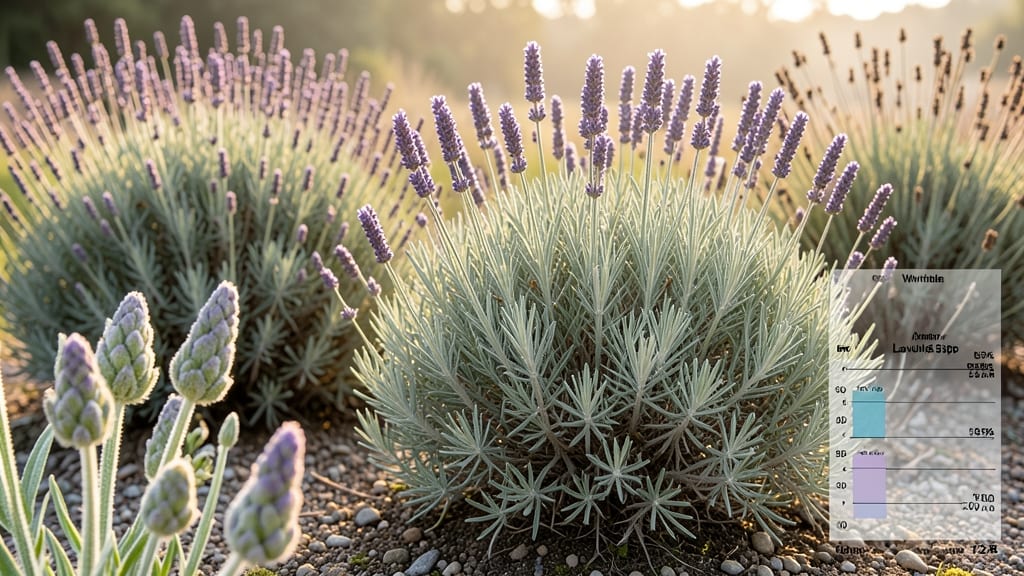
Lavender does not bloom all year, as most varieties produce flowers for 2-3 months annually, typically spring to early summer, with some late-season reblooming in mild climates. Cold-hardy types may extend blooming into fall, but dormancy halts growth in winter.
Lavender's blooming cycle is tightly linked to daylight and temperature shifts. 🌿 Most varieties—like English lavender—peak in late spring through early summer when days are longest, while French lavender might linger into early fall in warmer regions.
The key is understanding your climate zone: USDA zones 5-7 often see shorter bloom windows compared to zones 8-10, where mild winters allow extended flowering. Even in ideal conditions, lavender needs dormancy to reset for next year's blooms.
What many gardeners don't realize is that lavender's flowering isn't just about timing—it's also about stress. Proper pruning after blooming (usually in late summer) encourages new growth, while consistent watering (but not overwatering) prevents shock.
In colder zones, mulching protects roots during winter, helping plants rebound stronger for next season's flowers.
💡 In This Article
- Lavender Flowering Cycles by Variety and Climate
- Extending Lavender Blooms: Pruning and Care Tips
Lavender flowering cycles by variety and climate
Lavender's blooming rhythm is primarily governed by photoperiodism—the plant's response to daylight length. Most varieties, like English lavender (Lavandula angustifolia), begin flowering when daylight exceeds 14 hours in late spring, typically around May to June in temperate zones.
This aligns with their natural Mediterranean origins, where summer solstice triggers peak blooming. French lavender (Lavandula stoechas) often follows a similar pattern but may produce a second, smaller flush in late summer to early fall if temperatures stay above 50°F.
The Spanish lavender (Lavandula stoechas) and Grosso lavender (Lavandula x intermedia) are more adaptable. Grosso, a hybrid, frequently blooms 6-8 weeks annually (June-August) and can extend into September in USDA zones 8-10 where winters are mild.
Spanish lavender, with its distinctive "rabbit ear" bracts, often blooms slightly later than English varieties, sometimes as late as July, but its flowers are more sensitive to frost. 🌸 What's fascinating is how these varieties respond to vernalization—a cold period that "resets" their growth cycle, ensuring synchronized blooming in spring.
Climate zones dramatically alter bloom windows. In USDA zone 5 (e.g., Minnesota), lavender typically blooms for just 4-6 weeks (June-July) due to shorter growing seasons, while in zone 9 (e.g., Southern California), blooming can stretch from May to October.
The critical temperature threshold for flowering is 55-60°F—below this, growth slows, and above 90°F, buds may abort. This explains why lavender in hot, arid climates (like Arizona) often blooms later in the season when temperatures moderate.
Day-neutral varieties, like some Spanish lavender cultivars, are exceptions—they flower based on plant maturity rather than daylight. However, even these require consistent temperatures above 45°F to sustain blooming. The trade-off? Without dormancy (induced by cold), lavender becomes stressed and may produce fewer flowers the following year.
This is why gardeners in warm climates sometimes see lavender "burn out" after 3-5 years without proper winter rest.
Consider these key variety comparisons for bloom timing:
- English lavender: 6-8 weeks (May-July), peak in June
- French lavender: 8-10 weeks (May-September in mild zones), second flush possible
- Spanish lavender: 6-7 weeks (June-August), later than English but shorter duration
- Grosso lavender: 8-12 weeks (June-September), most extended blooming
The takeaway? Lavender's blooming isn't just seasonal—it's a delicate balance of light, temperature, and genetic programming. Even in ideal conditions, the plant prioritizes survival over continuous flowering, making year-round blooms a myth. 💫