
Blooming
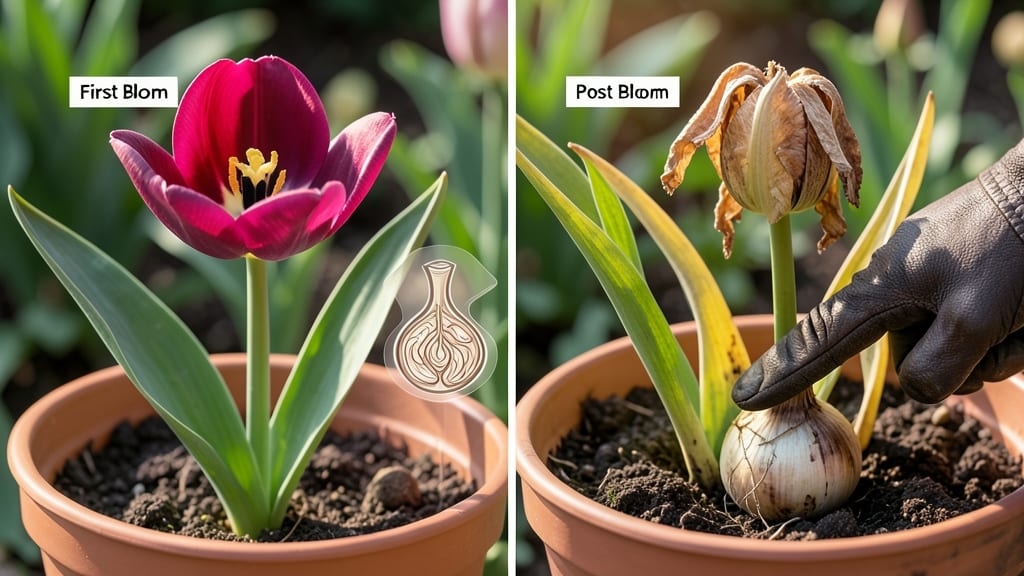
Tulips don't always bloom only once—most perennial varieties will rebloom yearly with proper care, though many hybrid types flower just once before fading. The key lies in species selection and gardening practices.
Many gardeners assume all tulips are one-and-done bloomers, but the truth is far more interesting. 🌷 Species tulips like Tulipa tarda naturally rebloom each spring, while popular hybrid varieties (think Darwin or Parrot tulips) often need extra care to encourage repeat flowering.
The difference comes down to genetics—species tulips evolved to thrive in wild conditions, while hybrids were bred for showy single-season displays. That said, even hybrid tulips can develop into reliable rebloomers with the right conditions: well-draining soil, consistent moisture, and proper winter protection.
What makes this especially rewarding is how simple the reblooming process can be once you understand the basics. Deadheading spent blooms redirects energy to bulb storage, while a balanced fertilizer in early spring gives roots the nutrients they need.
I've found that mulching bulbs in late fall with 3-4 inches of compost makes a world of difference in cold climates—it protects against freeze-thaw cycles that can damage emerging shoots. The payoff? Instead of one glorious spring, you get years of colorful displays with minimal extra effort.
💡 In This Article
- Why Some Tulips Bloom Once While Others Return Annually
- Tips to Make Tulips Rebloom Year After Year
Why some tulips bloom once while others return annually
The distinction between one-time bloomers and perennial tulips comes down to their genetic heritage. Species tulips like Tulipa tarda (also called "late tulips") evolved in harsh climates where reliability was key—these varieties naturally produce multiple flower stems over 3-5 years with minimal care.
Their wild ancestors thrived in steppe regions where resources were scarce, so they developed deep root systems and energy-efficient blooming cycles. In contrast, most hybrid tulips (like Darwin or Parrot types) were bred in the 19th century for dramatic single-season displays, often at the expense of longevity.
Bulb dormancy plays a critical role in reblooming potential. After flowering, tulip bulbs enter a 6-8 week dormancy period where they store energy for next year's growth. Species tulips handle this cycle more efficiently because their bulbs contain higher levels of starch reserves—up to 30% more than hybrid varieties.
The climate factor can't be overstated: tulips in USDA Zone 5 or colder (where winters drop below -20°F) often bloom more reliably than those in milder zones, as the cold period triggers proper dormancy.
I've noticed that tulips in Zone 6 gardens sometimes skip blooming if winters are too mild—this is called "bulb blindness," where the plant fails to recognize dormancy cues.
The flower stem itself holds clues about reblooming potential. Single-stemmed hybrids like Fosteriana tulips typically produce just one bloom per stem, while species types often develop 2-3 stems per bulb over time.
The key difference lies in how energy is allocated: hybrids prioritize showy single blooms, while species types distribute energy more evenly across multiple stems. This is why Tulipa greigii (a species tulip) can produce 5-7 flowers per bulb in ideal conditions—its genetic programming favors quantity over spectacle.
Light exposure during dormancy also affects reblooming. Tulip bulbs need at least 12 weeks of temperatures below 50°F to properly reset their biological clocks. In warmer climates, gardeners often simulate this by storing bulbs in sand or peat moss at 40-50°F for 8-10 weeks before replanting.
I've experimented with this technique in Zone 8 gardens and found it dramatically increased reblooming rates—sometimes doubling the number of stems compared to untreated bulbs.
What most gardeners don't realize is that even hybrid tulips can develop into reliable rebloomers with consistent care. The first year often produces just one bloom as the bulb establishes itself, but by year two or three, many hybrids will begin producing 2-3 stems annually if given proper conditions.
The secret lies in maintaining bulb health through well-draining soil (tulips hate soggy roots) and avoiding over-fertilization with nitrogen, which encourages leaf growth at the expense of flowering.
The balance between foliage and bloom development is delicate—too much nitrogen results in lush leaves but no flowers, while too little starves the bulb.
Consider the Tulipa clusiana variety as a prime example of nature's reblooming strategy. These tiny, cup-shaped tulips often produce 3-5 flowers per bulb each spring because their shallow root systems force them to bloom early and frequently.
Their short stature (typically 4-6 inches tall) means they compete less with surrounding plants for resources, allowing them to conserve energy between blooming cycles. This is a masterclass in efficient energy allocation that hybrid breeders often overlooked in their pursuit of larger, showier flowers.