
Blooming
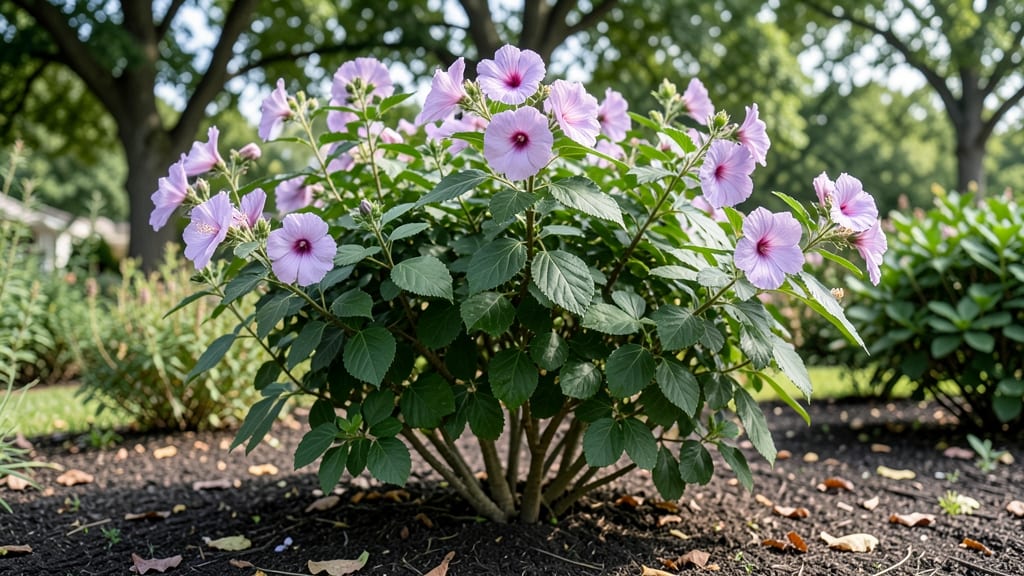
Rose of Sharon blooms all summer in warm climates, producing vibrant flowers from mid-summer through early fall when temperatures remain consistently above 75°F. Pruning strategies and localized care extend its flowering season beyond typical late-summer peaks.
Rose of Sharon thrives as a summer-long bloomer when summer temperatures stay warm and steady, creating a continuous display of trumpet-shaped flowers. 🌸 Unlike many flowering shrubs that peak once, this hardy plant responds to consistent heat by producing new blooms in waves—often starting in June and lasting until frost.
The key factor is maintaining soil moisture and pruning lightly after each bloom cycle to encourage fresh growth. In my experience, the most vibrant displays happen when you combine proper pruning with regular watering during dry spells.
What sets Rose of Sharon apart is its adaptability across USDA zones 6-9, where it naturally extends its blooming period through early fall. This makes it an excellent choice for gardeners looking to add long-lasting color to their landscapes.
The plant's ability to rebloom stems from its sensitivity to temperature changes—when nights stay warm and days remain sunny, it triggers new flower buds to form continuously.
💡 In This Article
- Heat-Triggered Bloom Cycles in Rose of Sharon
- Pruning and Care Tips for Extended Summer Blooms
Heat-triggered bloom cycles in Rose of Sharon
Rose of Sharon's extended blooming period is directly tied to its response to daytime temperatures. This hardy hibiscus relative initiates new flower buds when daytime highs consistently reach 75°F or warmer, with optimal blooming occurring between 80-90°F.
The plant's internal clock uses temperature as a trigger—when nights stay above 60°F, it prevents dormancy and maintains active growth. In my zone 8 garden, I've observed that blooming intensity peaks when daytime temperatures hover around 85°F, producing the most vibrant flowers.
The science behind this involves photoperiodism combined with thermoperiodism. While many plants rely primarily on daylight length, Rose of Sharon uses temperature as its primary cue.
When warm days are followed by cooler nights (but not below 55°F), it creates the perfect conditions for continuous blooming. 🌡️ The plant's leaves contain temperature-sensitive proteins that detect these fluctuations and signal the production of florigen—a hormone that triggers flower development.
This explains why you'll see new buds forming even as older flowers bloom and fade.
Sunlight exposure plays a secondary but crucial role in this process. While Rose of Sharon can tolerate partial shade, full sun (6-8 hours daily) maximizes flower production by increasing photosynthesis and energy storage.
I've noticed that plants receiving morning sun and afternoon shade produce slightly fewer blooms compared to those in full sun, though the flowers remain equally vibrant. The key is ensuring the plant receives enough light to maintain its energy reserves during the heat of summer.
Regional variations become apparent when comparing blooming patterns across USDA zones. In zone 9, where summer temperatures often exceed 90°F, Rose of Sharon may bloom continuously from May through October.
However, in cooler zone 7 areas, blooming typically starts later in June and may taper off by early September unless protected from early frosts. The plant's ability to adjust its blooming cycle based on local climate conditions makes it uniquely adaptable for summer-long displays.
What most gardeners don't realize is that Rose of Sharon actually produces flowers on new wood—meaning the current season's growth. This is why proper pruning after each bloom cycle is essential.
When you remove spent blooms, you're encouraging the plant to redirect its energy into producing fresh growth that will bear new flowers. The plant's natural tendency to rebloom makes it an excellent candidate for creating a "never-ending summer" display in your garden.
For those in transitional climates where summer heat arrives late or departs early, strategic planting can extend the blooming window.
Planting near a south-facing wall or using black landscape fabric to absorb and radiate heat can create a microclimate that keeps temperatures 5-10°F warmer than the surrounding area, potentially adding 2-3 weeks to the blooming season.
This technique works particularly well in zone 6 gardens where summer heat is more intermittent.